REVIEW · BUENOS AIRES
Recoleta Cemetery – Small Group Tour of History & Secrets
Book on GetYourGuide →Operated by Esteban_Nigro · Bookable on GetYourGuide
Recoleta Cemetery reads like a city biography in stone. This 150-minute small-group tour turns the marble facades of Recoleta into stories you can actually picture, from Evita Perón to Europe-imported monuments. It’s history with teeth: power, prestige, and a few eerie legends tucked into the details.
I really like two things here. First, the small-group size (never more than 15) keeps the pace human and makes it easier to ask questions as you walk. Second, the tour gives you real context for what you’re seeing, so you’re not just hunting names and dates—you’re learning why these families built monuments the way they did.
One consideration: the cemetery entrance fee is not included. You’ll need to plan for the 22,600 Argentine Pesos ticket on site, and you’ll want comfortable shoes because it’s a walking tour inside an active cemetery.
In This Review
- Key highlights worth centering your day on
- Why Recoleta Cemetery feels like Buenos Aires history in stone
- The 150-minute flow: a tight walk with story stops (not a sprint)
- Meeting outside the cemetery: Plazoleta Chabuca Granda and spotting your guide
- Entering La Recoleta Cemetery: art, respect, and how to look
- The stories behind the marble: legends that connect to power and class
- Evita Perón’s mausoleum: the most visited stop, explained
- Europe-inspired mausoleums: when the design clues do the talking
- What makes Esteban’s approach work (and why reviews keep praising it)
- Price and tickets: where the $49 value actually comes from
- Who should book this tour (and who might DIY instead)
- Should you book the Recoleta Cemetery History and Secrets tour?
- FAQ
- How long is the Recoleta Cemetery tour?
- What does the tour cost?
- How big is the group?
- Do I need to buy an entrance ticket to Recoleta Cemetery?
- Where do I meet the guide, and how can I recognize them?
- Is the tour guide speaking English?
- Is the tour wheelchair accessible?
- Is the tour suitable for families and kids?
Key highlights worth centering your day on
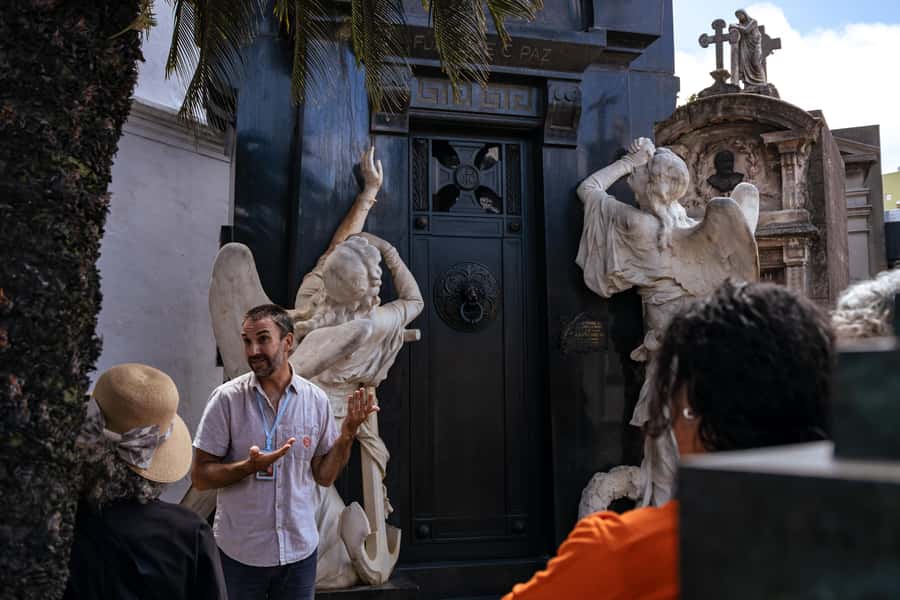
- Evita Perón’s mausoleum visit: The most visited stop is handled as part of a wider story, not just a quick photo stop.
- Stories behind the stone: Legends include a couple with bitterness etched into stone and a woman buried alive.
- Europe-inspired mausoleums: Many monuments are described as imported from Europe, which helps you spot the architectural clues.
- Small group pacing: With up to 15 people, the guide can slow down for questions and details.
- English live guide: The tour is led in English, with strong storytelling skills (Esteban is frequently cited for clear English and big projection).
- Shade and weather-aware guiding: On rainy days, umbrellas have been mentioned in reviews, and the guide looks for shade during stops.
Why Recoleta Cemetery feels like Buenos Aires history in stone
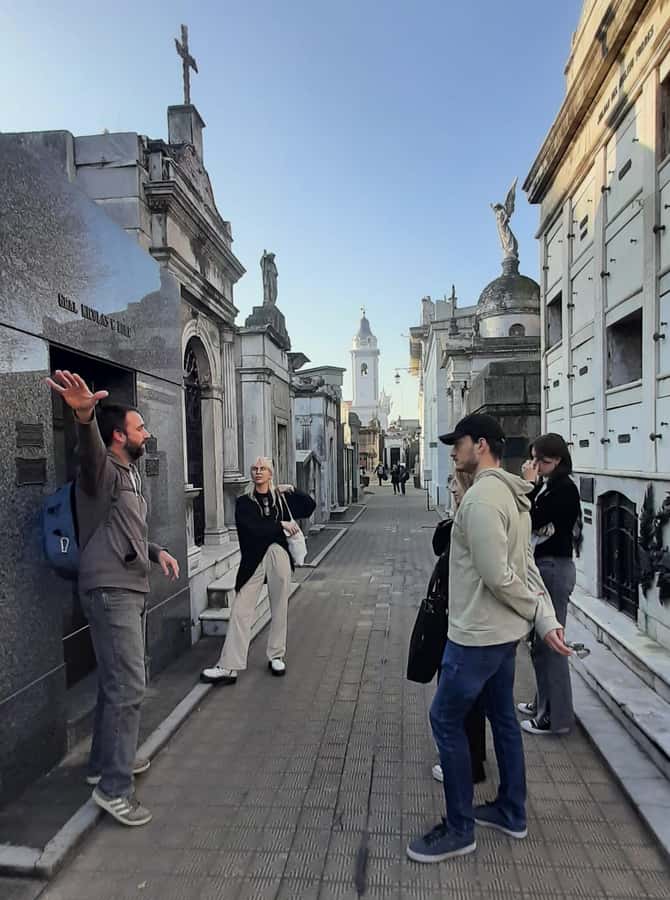
Recoleta Cemetery isn’t a calm, distant museum. It’s an active cemetery where art, class, and memory all collide on the same block. And because it’s an outdoor walking tour, the stories come with the texture of the place: marble, sculpture, and that unmistakable Buenos Aires mix of old money and modern crowds.
The best part is how the tour frames the cemetery as a reflection of Buenos Aires in the 1880s. Wealthy families didn’t just build places for living—they commissioned monuments for the dead. You start to see the logic behind the extravagance: power wanted permanence.
If you like history but hate lectures, this format works. The guide moves you from facade to facade, connecting what you see (material, design, symbols) to why it mattered.
You can also read our reviews of more historical tours in Buenos Aires


The 150-minute flow: a tight walk with story stops (not a sprint)
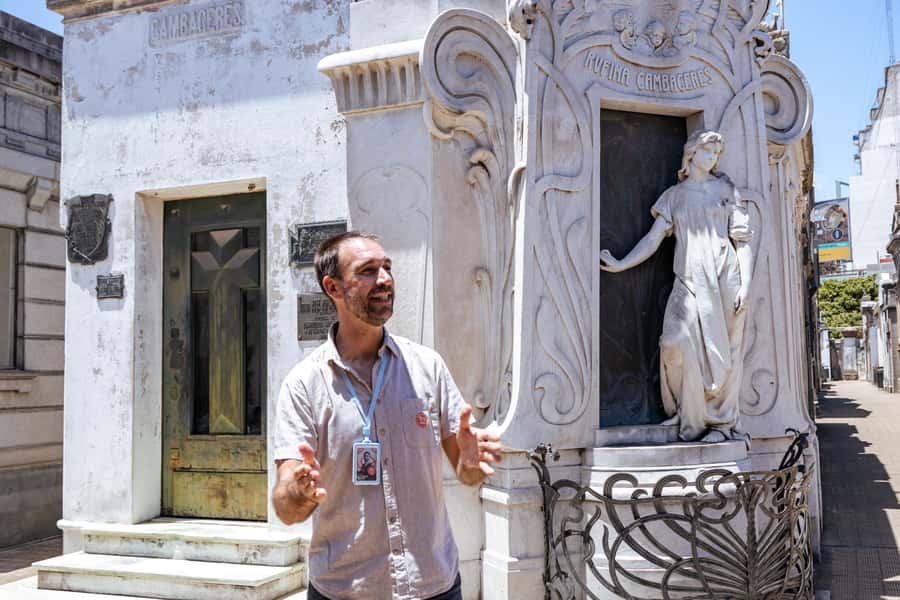
This is a 150-minute guided walking experience, planned to fit in a morning or afternoon without eating your whole day. The structure is simple: you meet outside the cemetery, then you tour La Recoleta Cemetery with story-led stops and a dedicated visit to Evita Perón’s mausoleum.
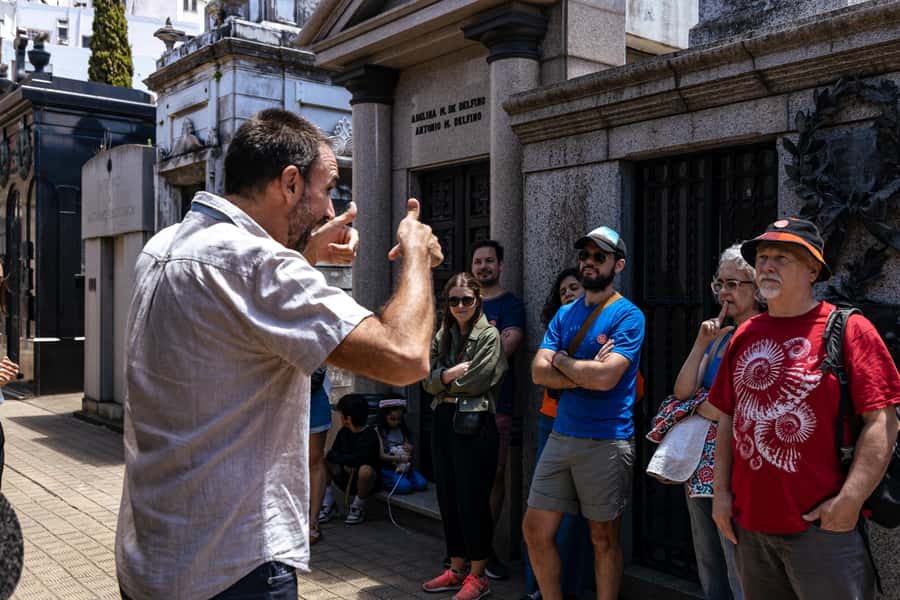
In a tour this length, pacing matters. The small-group size helps, and reviews consistently mention the guide keeps a good rhythm and answers questions as you go. You’re unlikely to feel rushed through the “best” monuments, because the tour is built around key narratives rather than a checklist.
One practical note: you’ll be walking on uneven surfaces, and you’re in an active cemetery. Comfortable shoes are not optional if you want to enjoy the details instead of counting steps.
Meeting outside the cemetery: Plazoleta Chabuca Granda and spotting your guide
The tour meeting point is outside the cemetery area, at Plazoleta Chabuca Granda. Your guide will be there, and you’ll be able to identify them by a blue cap.
If you’re using taxi or Uber, the simplest move is to tell the driver you’re going to the bar La Biela at Avenida Presidente Manuel Quintana 596. It’s a clear landmark near Recoleta, and it reduces the chance you end up staring at the wrong gate.
Also worth knowing: some participants reported getting a WhatsApp message the day before with meeting details. That kind of message can save time and stress, especially if it’s your first time in Buenos Aires.
Entering La Recoleta Cemetery: art, respect, and how to look
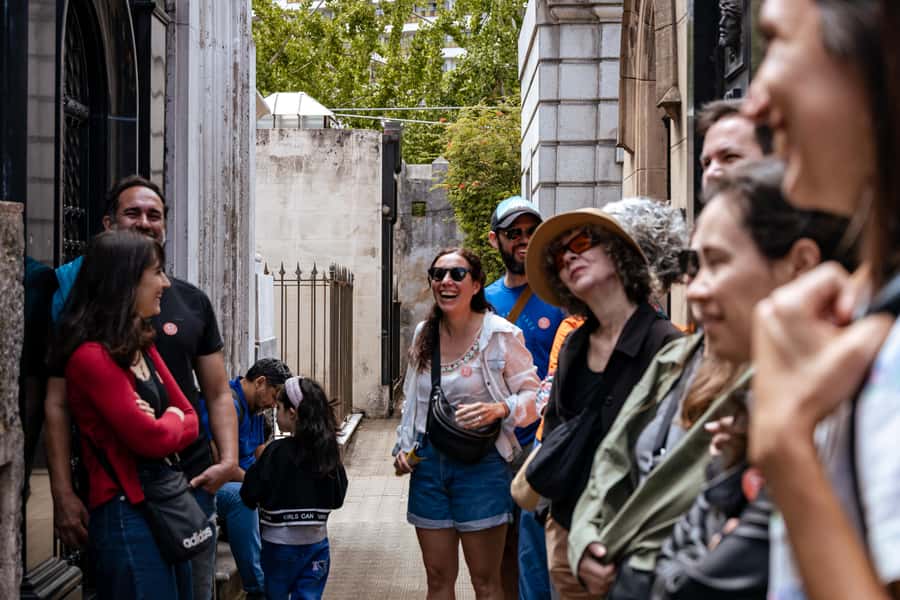
Recoleta Cemetery is iconic for its architecture, but it’s also very much a real place where families come to pay respects. The tour keeps the tone respectful, and you should do the same: quiet voice, discreet behavior, and careful photography.
Photography is allowed, but the guidance is to be discreet and respectful. That usually means you shouldn’t treat every mausoleum like a photo studio set. Look first, then take your shots from angles that don’t block others.
What I find helpful is that the tour doesn’t ask you to “admire from afar.” You’re taught what to notice—sculptural details, facade choices, and symbols that reflect the cemetery’s era of wealthy self-presentation.
The stories behind the marble: legends that connect to power and class
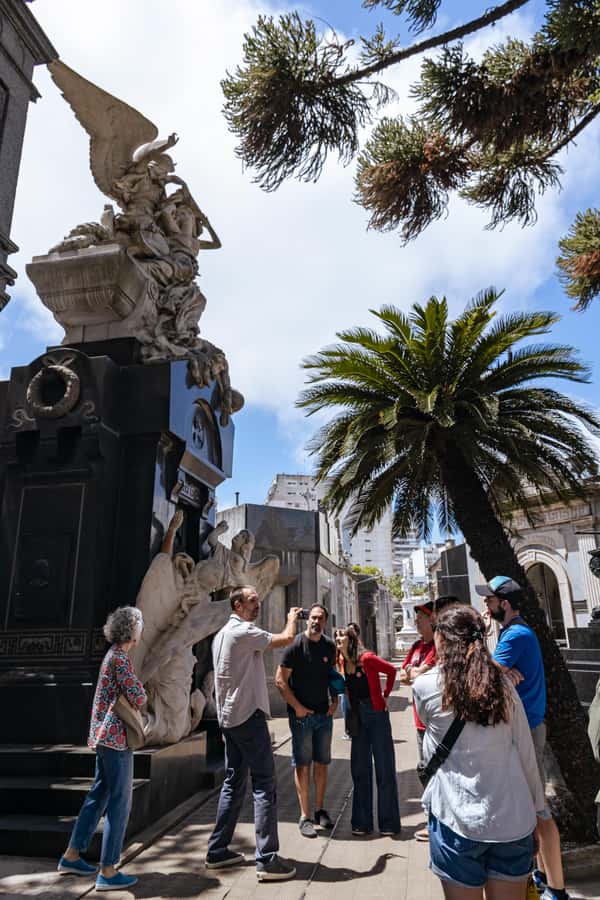
The tour’s core appeal is the way it turns stone into narrative. You’re not only learning who is buried where; you’re getting the why behind the drama.
Three story types get emphasized:
- Love and bitterness in stone
You’ll hear about a couple whose bitterness was etched into stone for eternity. It’s the kind of detail that makes you stop and really look at the monument instead of drifting forward.
- Urban legend: buried alive
There’s a haunting legend about a woman allegedly buried alive. Whether you treat it as literal history or a cultural story, it changes how you read the atmosphere of the cemetery.
- The big cultural figure: Evita Perón
Evita’s mausoleum is treated as a key chapter, not an isolated stop. The guide helps you understand why this monument draws attention from so many people.
These legends work because Recoleta’s architecture carries messages. The monuments were designed to project identity. When the guide ties the stone to social status, grief, and reputation, the cemetery becomes more than decoration—it becomes documentation of human stakes.






Evita Perón’s mausoleum: the most visited stop, explained
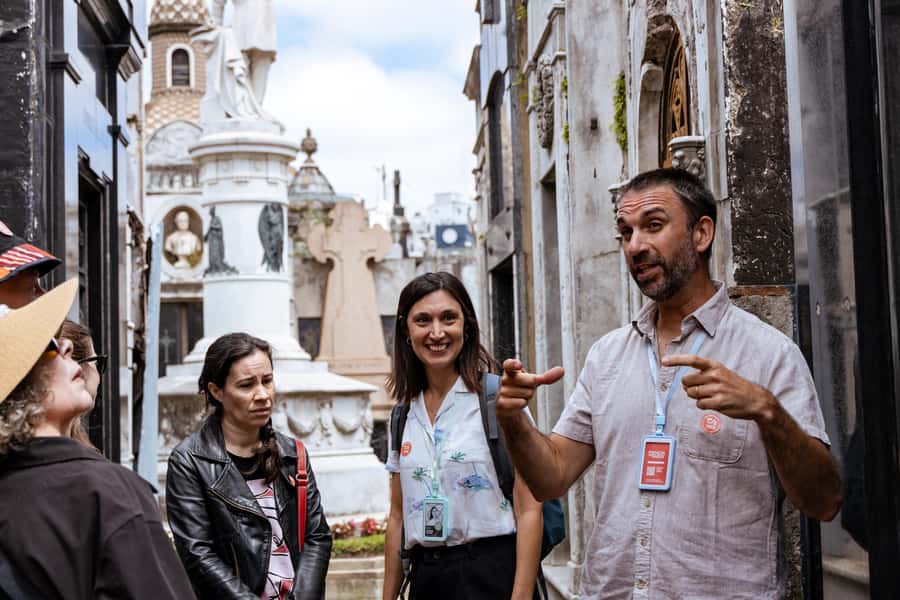
Evita Perón’s mausoleum is the headline for many visitors, and the tour makes time for it. This stop matters because Evita isn’t just a person you read about—she’s a cultural reference point that Buenos Aires keeps returning to.
What I like about how the tour handles it: you’re not just told where to stand. You get explanation that links the monument to the broader cemetery story—why families and communities used art and architecture to preserve memory.
If you care about photography, expect this to be the busiest area during most visits. Go in with patience, and use the guide’s timing to balance looking and capturing.
Europe-inspired mausoleums: when the design clues do the talking
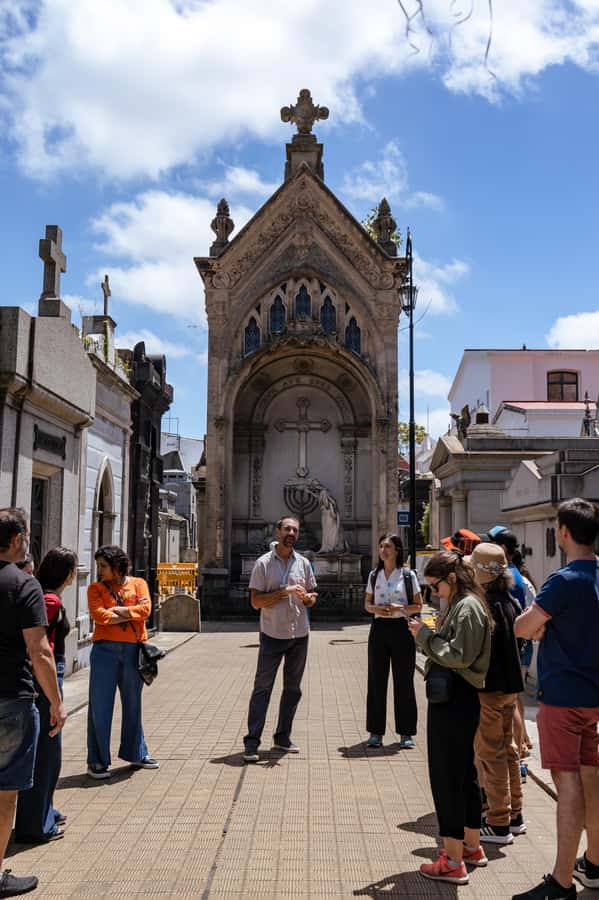
One of the most practical ways to enjoy Recoleta is to learn how to spot European influence. The tour specifically highlights that many mausoleums are imported from Europe, which is a huge clue to what you’re seeing.
Once you understand that, the cemetery’s design choices make more sense. You start noticing stylistic patterns—sculpture styles, the way facades are composed, and the overall monument language that signals wealth and artistic investment. It’s not random decoration. It’s the result of families commissioning big-name aesthetics to create a lasting statement.
This is a great angle for anyone who thinks they might not understand “cemetery art.” You don’t need a formal art degree. The guide gives you the map for reading the stones.
What makes Esteban’s approach work (and why reviews keep praising it)
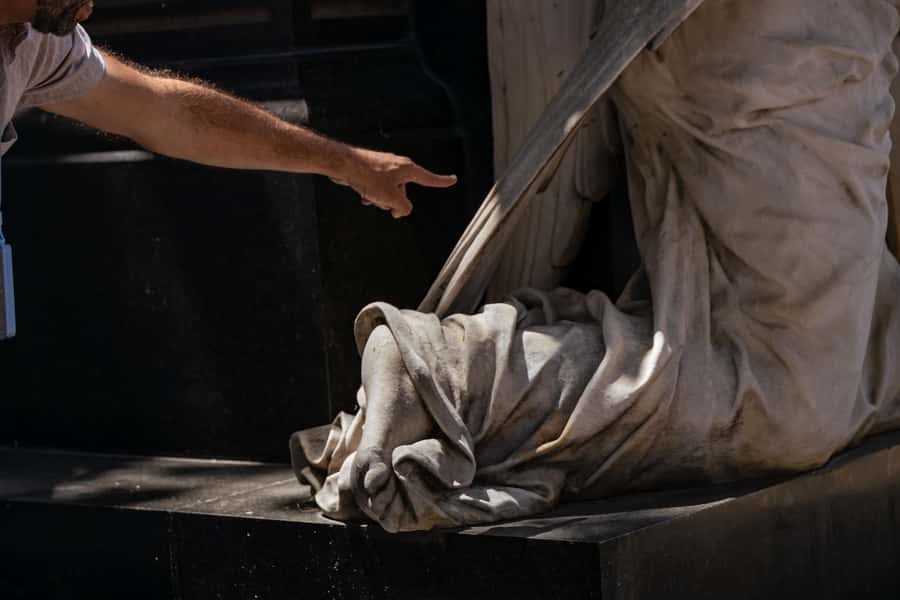
A lot of people mention the same thing about Esteban: he’s engaging, funny in a natural way, and very good at storytelling. Reviews also point to strong English and clear projection, which matters on a walking tour—especially in a place where you’re outside and sound can drift.
Another common praise: Esteban answers questions continuously and keeps a good pace. That turns the experience into a dialogue instead of a monologue.
There’s also a practical side that matters more than you’d expect. Participants noted shade stops, and in at least one case, umbrellas were available when rain hit. Those small logistics keep you comfortable enough to actually pay attention.
Price and tickets: where the $49 value actually comes from
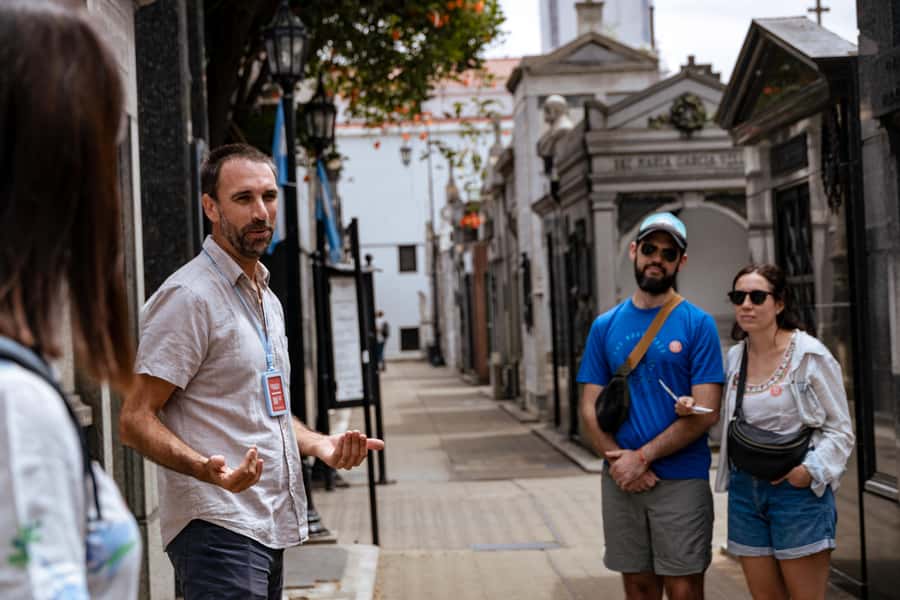
The tour price is $49 per person for about 150 minutes of guided walking. That price covers the live English guide, the story-focused tour of the cemetery, and the visit to Evita Perón’s mausoleum.
The cemetery entrance ticket is not included. You’ll need to pay 22,600 Argentine Pesos separately for entry. So the true budgeting picture is: you’re paying for the guide experience plus a separate entrance fee for the cemetery itself.
Here’s the value logic: if you go solo, you’ll likely spend time figuring out what to see and how to read the monuments. With a guide, you trade that guesswork for organized storytelling and better use of your time. For many people, that’s worth it—especially because Recoleta is visually overwhelming if you don’t know what matters.
One small tradeoff: since the entrance ticket is separate, it adds one more payment step before you start.
Who should book this tour (and who might DIY instead)
This tour is a strong match if you want:
- A history-and-art experience without having to be an expert first.
- A cemetery visit that includes legends and cultural context.
- A guide-led walk that makes the “what am I looking at” question disappear.
It’s also family-friendly in a very practical way. The tour specifically notes that families and kids are welcome, and the storytelling approach is designed to keep attention on the route rather than burying it in dates.
You might prefer a DIY visit if:
- You already know exactly which mausoleums you want and you don’t want a guided narrative.
- You’d rather move at your own pace with no tour structure.
But if you’re visiting Recoleta as one of your limited Buenos Aires priorities, guided time here usually pays off.
Should you book the Recoleta Cemetery History and Secrets tour?
I’d book it if you want Recoleta to feel like a coherent story, not a chaotic maze of marble. The best reason is the combination of small-group pacing and narrative detail—plus a focused Evita Perón stop that sits inside the bigger cemetery context.
I’d think twice only if you strongly dislike paying separate entry fees. Since the 22,600 Argentine Pesos cemetery ticket isn’t included, you’ll want to budget for that and plan to buy it before or on arrival.
Overall, this is one of those tours where the guide does the heavy lifting: you leave with clearer eyes and a cemetery you can actually explain to other people.
FAQ
How long is the Recoleta Cemetery tour?
The tour lasts 150 minutes (about 2.5 hours).
What does the tour cost?
The price is $49 per person.
How big is the group?
It is a small-group tour, with a maximum of 15 people.
Do I need to buy an entrance ticket to Recoleta Cemetery?
Yes. Cemetery entrance tickets are not included. The ticket price listed is 22,600 Argentine Pesos.
Where do I meet the guide, and how can I recognize them?
You meet outside the cemetery at Plazoleta Chabuca Granda. If you arrive by taxi or Uber, you can ask to be dropped at the bar La Biela (Avenida Presidente Manuel Quintana 596). The guide will be wearing a blue cap.
Is the tour guide speaking English?
Yes. The live tour guide conducts the tour in English.
Is the tour wheelchair accessible?
Yes, the tour is wheelchair accessible.
Is the tour suitable for families and kids?
Yes. The experience is described as engaging for all ages, and kids are welcome.