REVIEW · BUENOS AIRES
Buenos Aires: Historic District Private Guided Walking Tour
Book on GetYourGuide →Operated by BUENOS AIRES PASS · Bookable on GetYourGuide
Buenos Aires has a way of pulling you into the past fast. This private Historic District walking tour pairs city-sense sightseeing with straight talk about independence, traditions, and the big institutions that shaped Argentina. You’ll also get a practical pass at the right places, including entrance tickets to major landmarks, so you spend less time figuring things out and more time looking.
My favorite part is how the walk moves from the symbolic (the Plaza de Mayo story) to the stone-and-steam real-world power centers like Casa Rosada and the Cabildo. The other standout is the chance to admire the Metropolitan Cathedral and its unusual neoclassical look without treating it like a museum stop. One thing to consider: it’s a walking tour with no hotel pickup, so you’ll want to arrive at the meeting point outside Café Tortoni a bit early and follow any day-of instructions closely.
In This Review
- Key highlights you’ll notice right away
- Why this short private walk works in Buenos Aires
- Starting outside Café Tortoni: your landmark meeting point
- Panoramic views and the historic district feel
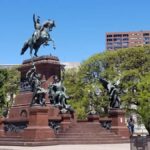
- Plaza de Mayo: where the city’s story begins
- The Cabildo: colonial town council in stone form
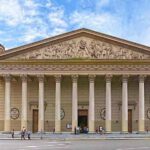
- Metropolitan Cathedral: unusual neoclassical architecture you can actually see
- Plaza de Mayo’s subway station: the start of BA’s metro
- What you learn beyond the buildings
- Private group value: pacing, questions, and less friction
- Logistics to plan for: walking, no pickup, and where to stand
- Who this tour suits best (and who might want a different style)
- Should you book this Buenos Aires Historic District private walk?
- FAQ
- FAQ
- Where does the tour meet?
- How long is the walking tour?
- What is included in the price?
- Do I need hotel pickup?
- Is the tour private?
- What languages are available for the guide?
- Can I skip lines for the cathedral and Cabildo?
- Is the tour wheelchair accessible?
- What’s the cancellation policy?
- Is there a way to reserve without paying today?
Key highlights you’ll notice right away
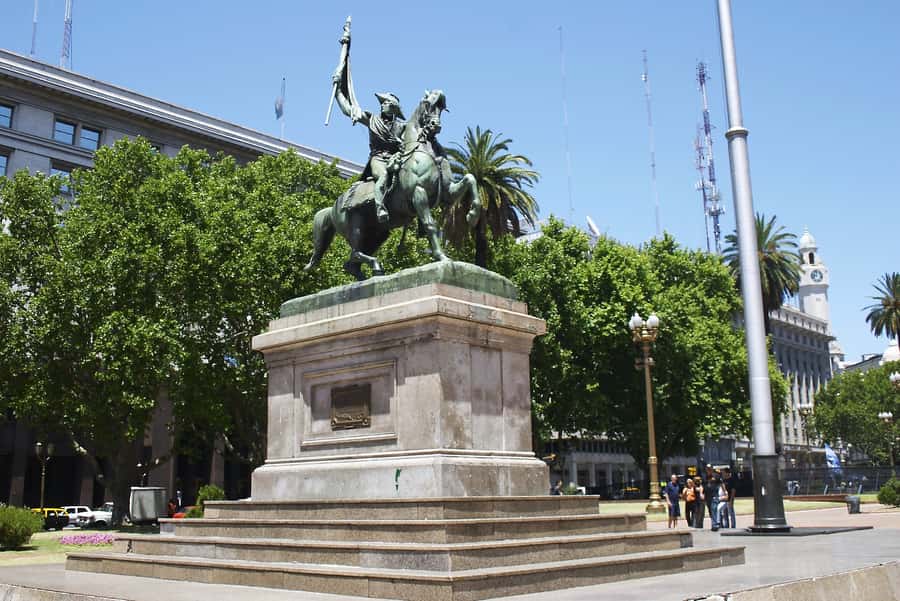
- Plaza de Mayo (founded 1580): you’ll stand in the square tied to Buenos Aires’ founding era.
- Casa Rosada and the presidency zone: you’ll see where the presidential office sits in the historic core.
- Cabildo access: you’ll visit the building that once served as the colonial town council seat.
- Metropolitan Cathedral interior/entry: skip waiting and admire the unusual neoclassical architecture.
- Subway origin spot: you’ll pass the Plaza de Mayo subway station where Buenos Aires’ subway began.
- Private, multilingual guide: English, Portuguese, and Samoan are available, and your group stays compact.
Why this short private walk works in Buenos Aires
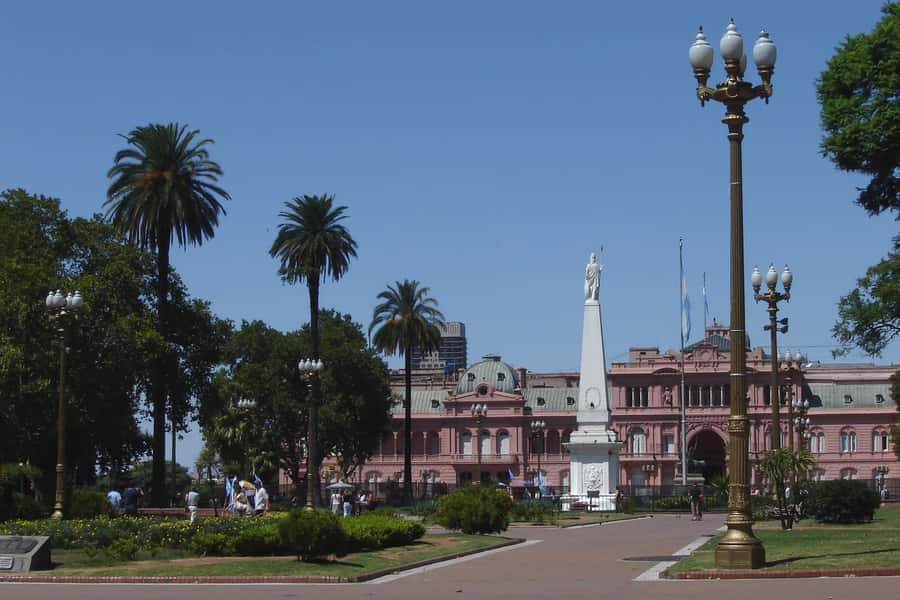
Buenos Aires is big enough that time disappears if you try to do the center alone. This tour keeps it tight: 2 hours focused on the historic district’s most important squares and buildings. That matters because the central streets around Plaza de Mayo can feel like a swirl of people, traffic, and conflicting signage. With a guide, the “what am I looking at?” questions get answered on the spot.
It’s also a smart mix of famous names and physical places. You learn about Argentina’s independence, history, and traditions, but you’re doing it while you’re actually in the spaces tied to those stories. In other words, it’s not history-from-a-poster. You’re walking the same institutional geography that shaped power and civic life.
You can also read our reviews of more walking tours in Buenos Aires

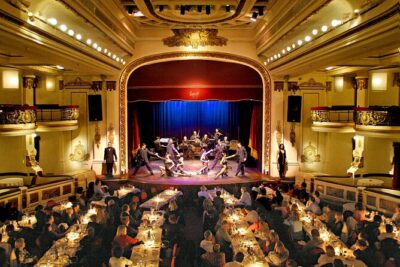
Starting outside Café Tortoni: your landmark meeting point
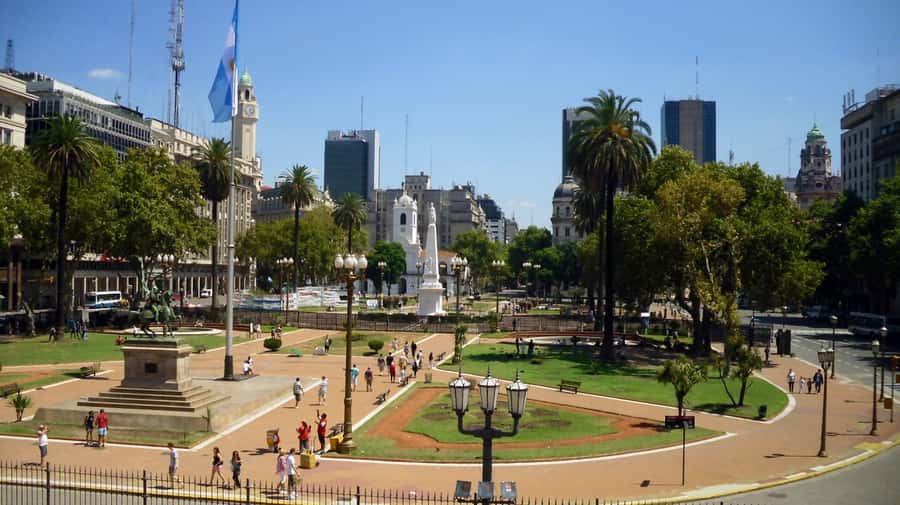
The meeting point is outside Café Tortoni, which is a helpful anchor because it’s recognizable and central. You’ll begin there and then head into the historic core on foot with your guide.
One reason I like tours that start at a known public place: it reduces the mental load. You don’t need hotel logistics, and you don’t need to guess which back entrance some building uses. Just plan to show up a little early, especially if you’re coordinating with a group.
The guide introductions matter too. This tour is private, so you’re not squeezed into a big herd. Guides in this experience have been called out for clear communication—names like Juan Manuel Sánchez and Juan Miguel appear in past feedback for strong English and solid history explanations.
Panoramic views and the historic district feel
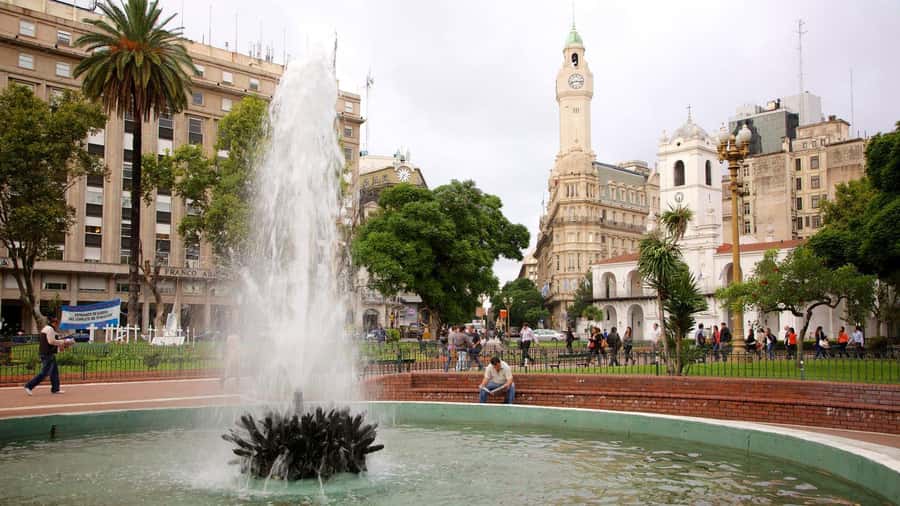
The highlights include panoramic views of the city from one of Buenos Aires’ dazzling neighborhoods. Even though the tour stays mainly centered on the institutional buildings, you still get that “oh right, I’m in a city” moment.
Why I think this is valuable: a lot of walking tours in historic districts forget context. They focus only on facades. A viewpoint break helps you understand spacing—where the square sits relative to surrounding streets, and how the city’s scale affects your route on foot. It’s also a nice mental reset after you’ve been concentrating on details.
You should bring comfortable shoes because you’ll be on your feet throughout. And keep in mind that central Buenos Aires sidewalks can be lively. If you like steady pacing and quick stops for photos, this format fits.
Plaza de Mayo: where the city’s story begins
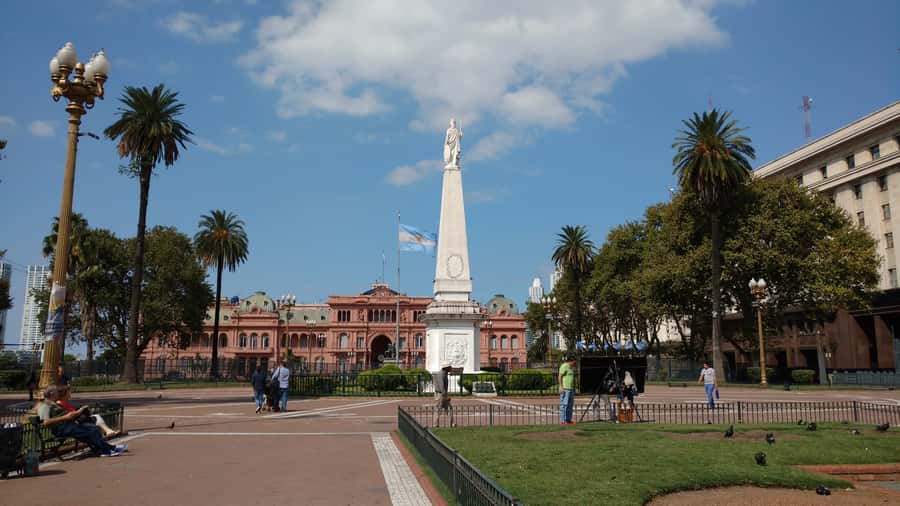
Your next major stop is Plaza de Mayo, where Buenos Aires was founded in 1580. Standing in that square helps you connect dates to space. You’re not learning history in the abstract; you’re using the square as your reference point.
From here, you’ll see Casa Rosada, the Argentine president’s office. This is one of those places where the building isn’t just architecture—it’s a symbol of governance. Even if you don’t memorize every detail, you’ll start to understand how political power uses public spaces in the city.
What makes this part work best is the mix of civic symbolism and practical orientation. The guide connects the dots between independence and traditions and what you’re seeing in front of you. If you’ve ever walked through a plaza and felt like you missed the meaning, this stop is designed to fix that.
The Cabildo: colonial town council in stone form
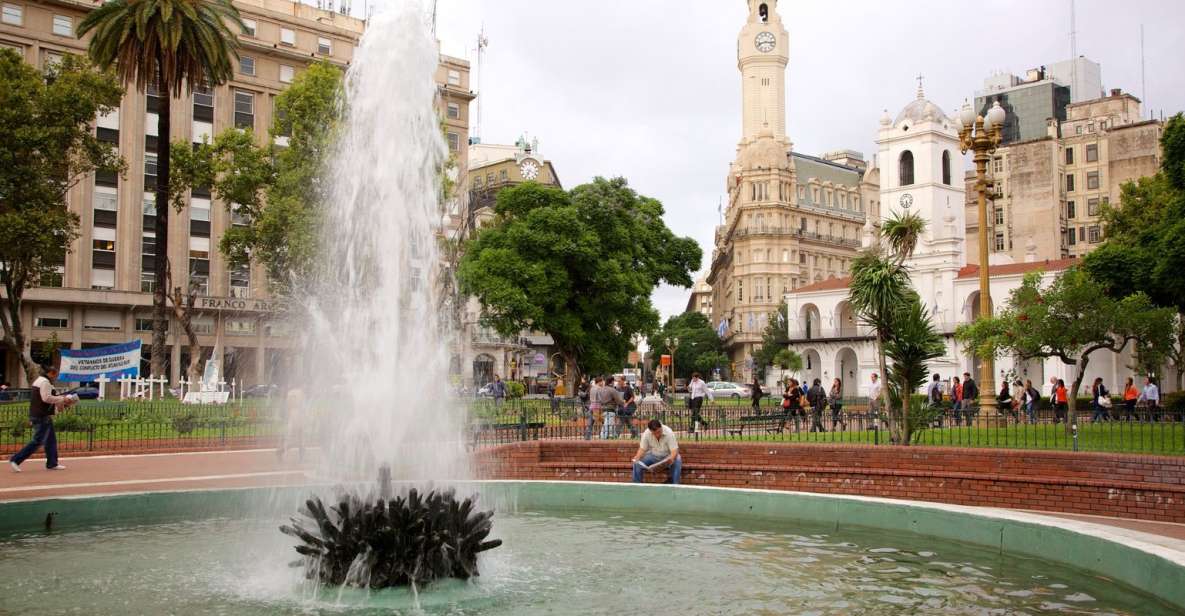
Next up is the Cabildo, a historic building that served as the seat of the town council during colonial times. This stop is especially good for people who like their history to have a “who ran what” element.
The Cabildo helps you understand how colonial governance operated—what institutions looked like, where decisions were centralized, and why the center of the city mattered. It’s also included with entrance access, which is a real value in busy areas. You don’t want your walk turning into a ticket-line project.
Architecturally, this is the kind of building that rewards slow looking. Don’t worry if you can’t catch every inscription or detail. The guide’s job is to give you the map, and then you can use your eyes to confirm it.
You can also read our reviews of more guided tours in Buenos Aires

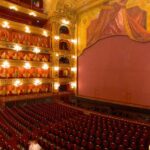


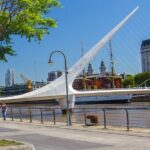
Metropolitan Cathedral: unusual neoclassical architecture you can actually see
Near the Cabildo, you’ll visit the Metropolitan Cathedral, and you’ll admire its unusual neoclassical design. This is one of those landmarks where most people know it exists, but fewer people stop long enough to really notice what makes it different.
Why this matters: neoclassical design often means symmetry and authority. Seeing it in the middle of Buenos Aires’ civic core helps the architecture make sense. It’s not just pretty stone; it’s an expression of institutional presence—faith, legitimacy, and public identity all in one setting.
Here’s the practical advantage: entrance to the Metropolitan Cathedral is included, so you skip extra waiting and stay on the tour rhythm. Past feedback has highlighted that guides keep explanations clear and engaging—names like Juan Manoel and Juan Manuel Sánchez have been mentioned for strong, easy-to-follow English and good answers.
Plaza de Mayo’s subway station: the start of BA’s metro
Right by the cathedral, you can see the Plaza de Mayo subway station, where Buenos Aires’ subway system began. This is a small detail compared to the big landmarks, but it’s a great “how the city grew” checkpoint.
Why I like tucking in a transport-history moment: it reminds you that Buenos Aires didn’t just evolve as a colonial capital. It modernized, built new systems, and reshaped movement through the same center that used to focus on civic rule.
Even if you’re not a transit nerd, it gives you a quick mental timeline. You’ll look at the square and understand it as both historic and still-functioning—people pass through it today, not just on postcards.
What you learn beyond the buildings
This tour is about more than photo stops. You’ll learn about Argentina’s independence, history, and traditions, explained by your guide during the walk. The best part is that the learning is attached to the route. Instead of a lecture, you get points that line up with what you’re looking at: the founding square, the seat of town council power, the cathedral’s style, and the presidential center.
In other words, you’re getting context with your feet moving. That tends to stick better than information delivered all at once.
Also, language options include English, Portuguese, and Samoan, and the guide is live. If you speak Portuguese, it’s a nice bonus. If you’re traveling with mixed language needs, a private format helps you avoid the awkwardness of everyone hearing something different.
Private group value: pacing, questions, and less friction
At $52 per person, the big question is value. In Buenos Aires’ center, the cost makes sense when you consider what’s included: a guide, walking time, and entrance to both the Cabildo and Metropolitan Cathedral. That inclusion matters because it reduces “extras” that can creep in when you DIY this route.
But the real value is the private pacing. You’re not fighting for position at the most popular angles, and you can ask questions without it turning into a group shuffle. Past feedback also points to guides being personable and responsive—people specifically praised the clarity of English (for example, Juan Manuel Sánchez) and the ability to answer questions.
You’ll still want to be ready for a typical downtown pace: you’re walking, looking, listening, and occasionally stopping. But it feels more controlled than joining a long bus-and-walk crowd.
Logistics to plan for: walking, no pickup, and where to stand
This tour does not include hotel pickup and drop-off, so it’s on you to get to the starting spot outside Café Tortoni. That’s common for central walking tours, but it does change how you should plan your day.
My practical tip: build in buffer time. Arrive a little early and get your bearings before the tour start. If you’re using your phone for maps or messages, it’s also smart to have internet access, since the experience advises bringing it.
Also note: the tour includes skip the ticket line for the sites included. That’s great, but you still should arrive ready to move—don’t show up late and expect the tour to wait.
One possible drawback, based on the overall experience pattern: meeting-point confusion can happen if instructions change close to the start time. I’d handle this by confirming details the day of and showing up right on time at Café Tortoni, not ten minutes later.
Who this tour suits best (and who might want a different style)
This tour is a strong fit if you:
- want a focused 2-hour introduction to Buenos Aires’ civic-historic core
- like architecture that comes with explanation, not just sightseeing
- prefer a private group where you can ask questions
- would rather pay for guide time and included entrances than piece together tickets and timing yourself
It’s also a good match for history-minded travelers who like institutions—how cities govern, how they commemorate, and how public space does double duty as politics and tradition.
If you’re someone who hates walking or wants a relaxed, stop-anywhere pace, you might find a 2-hour walk too structured. For everyone else, it’s a tidy way to get oriented fast.
Should you book this Buenos Aires Historic District private walk?
If you’re planning a first visit to central Buenos Aires, I think this is worth booking. The price is reasonable for what you get—guide time plus entrance to the Cabildo and Metropolitan Cathedral, with the convenience of skipping the ticket line. Most importantly, it gives you meaning, not just landmarks. You’ll leave with a clearer sense of why Plaza de Mayo and the surrounding buildings matter.
I’d book it especially if you enjoy guided explanations and want a clean route with minimal hassle. Just do one thing before you go: plan for the meeting point outside Café Tortoni, and give yourself a small buffer so you’re not scrambling.
FAQ
FAQ
Where does the tour meet?
The meeting point is outside Café Tortoni.
How long is the walking tour?
The duration is 2 hours.
What is included in the price?
You get a live guide, a walking tour, and entrance to the Metropolitan Cathedral and the Cabildo.
Do I need hotel pickup?
No. Hotel pickup and drop-off are not included, so you’ll go directly to the meeting point.
Is the tour private?
Yes, it’s listed as a private group.
What languages are available for the guide?
The tour is available with live guides in English, Portuguese, and Samoan.
Can I skip lines for the cathedral and Cabildo?
Yes. The tour includes skip the ticket line.
Is the tour wheelchair accessible?
Yes. It is listed as wheelchair accessible.
What’s the cancellation policy?
You can cancel up to 24 hours in advance for a full refund.
Is there a way to reserve without paying today?
Yes. It offers Reserve now & pay later, so you can book your spot and pay nothing today.