REVIEW · BUENOS AIRES
Buenos Aires Hop-On Hop-Off Bus, Free Walking Tours & Discounts
Book on Viator →Operated by Gray Line Argentina · Bookable on Viator
A big city needs a smart shortcut. This hop-on hop-off bus makes Buenos Aires feel manageable, and I like the air-conditioned double-decker setup with an open top and sunroof for big views. You can also rely on a multilingual audio guide, so you can hop off when a neighborhood catches your eye.
The trade-off is that Buenos Aires can be slow and the route can be chaotic. Some stops are easy to miss, and the audio/stop numbering can run a little off, so you’ll want patience (and a backup plan) when you’re trying to board fast.
In This Review
- Key points to know before you ride
- Price and what $39 gets you in Buenos Aires
- Getting on the bus: stops, timing, and how the loop really feels
- The audio guide and walking-tour bonus: where the value lands
- Stop-by-stop ride: the neighborhoods this loop connects
- Downtown first: Diagonal Norte, Congreso, and Paseo de la Historieta
- Historic streets: San Telmo / Plaza Dorrego
- Art and big sports energy: Usina del Arte and Bombonera
- La Boca and Caminito, then the waterfront reset: Costanera Sur
- Puerto Madero and the riverfront: Estación Fluvial
- Classic culture stop: Galerías Pacífico and El Ateneo
- Plaza San Martín, Floralis Genérica, and MALBA
- Planetario and beyond: toward Club de Pescadores and Parque de la Memoria
- Big-city landmarks and modern districts: Monumental, Barrio Chino, and Campo de Polo
- Museums and theater in the final stretch: Museo de Arte Decorativo, Recoleta, Teatro Colón
- How to plan your day with 1, 2, or 3-day passes
- When this bus is a great fit (and when it’s not)
- Should you book this Buenos Aires hop-on hop-off bus?
- FAQ
- FAQ
- How long is the Buenos Aires hop-on hop-off bus experience?
- Do I choose a 1-, 2-, or 3-day option?
- What’s included with the ticket?
- Are hotel pickup and drop-off included?
- Are food and drinks included?
- Are the walking tours included for free?
- What should I do about the walking tour schedule?
- Is there a refund if I miss the walking tour?
- If I booked a certain duration, can I change it?
- Is cancellation free?
Key points to know before you ride

- Open-top, double-decker buses with air conditioning and a sunroof
- Hop on and hop off using a loop that covers many key neighborhoods in one day
- Multilingual audio guide plus bus stop numbers (helpful, but sometimes imperfect)
- Free optional walking tours run on a voluntary payment system for the guide
- Voucherbook discounts at selected locations around Buenos Aires
- Stops can be hard to find and some stop numbering/navigation can be inconsistent
Price and what $39 gets you in Buenos Aires
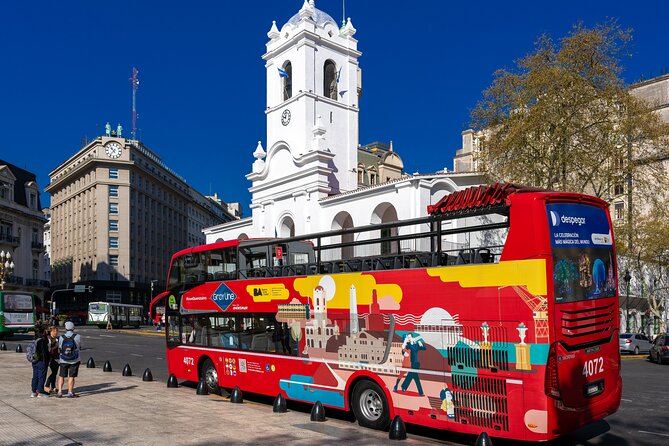
At $39.00 per person, this is priced like a solid “time-saver” for a first pass through Buenos Aires. You’re paying for convenience: prebook your ticket, ride a bus loop at your own pace, and spend your legs where you actually want to explore.
You also aren’t just buying a seat. The ticket includes an air-conditioned open-top double-decker ride, a multilingual audio guide, access to exclusive walking tours (optional), and a voucherbook of benefits with discounts at selected spots. If you choose a higher option, you also get additional activities tied to that choice.
One thing to keep your expectations grounded: the bus route is approximate 3 hours for the loop, and traffic can stretch the day. If you’re trying to “stack” timed plans right after, you’ll want buffer time.
You can also read our reviews of more walking tours in Buenos Aires



Getting on the bus: stops, timing, and how the loop really feels
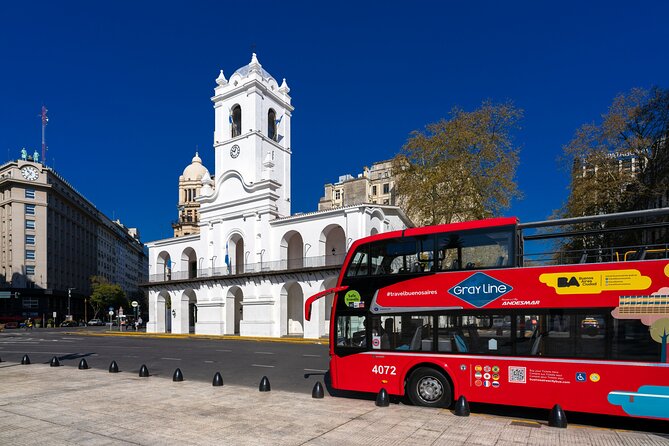
The route moves through central Buenos Aires and beyond, with a long list of stops tied to neighborhoods and major sights. In practice, the loop works best if you treat it like a rolling orientation: ride, look, get a sense of distance, then hop off only where you want to commit.
Here’s the first reality check: stop-finding can be frustrating. Multiple people struggled to locate the exact pickup spot, especially when stops weren’t clearly marked. A few also reported that stop numbers on the bus/map didn’t line up perfectly with what they saw outside.
Then there’s timing. The bus is frequent, but waiting in the hot sun can happen if you arrive at a stop that’s easy to miss or if there’s a routing change. I’d plan to start early in the day and expect the full loop may take longer than you hope, especially during heavy traffic.
Practical tip: when you arrive at a stop, confirm you’re in the right spot by checking the stop number being announced on the bus (and use the map you’re given). If the audio feels off, don’t assume you’re lost—re-check the stop number method and switch tactics fast.
The audio guide and walking-tour bonus: where the value lands
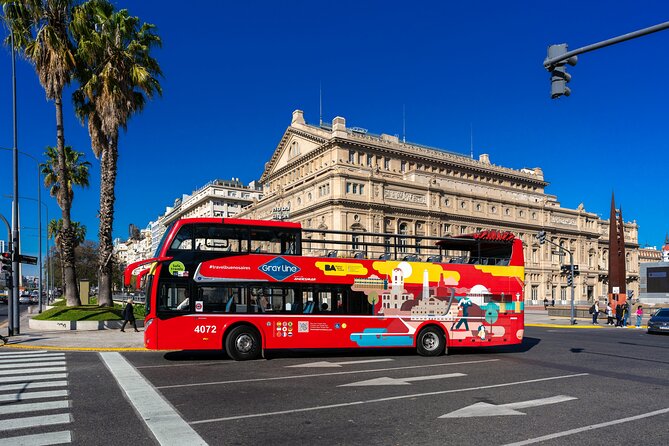
The experience includes a multilingual audio guide, and that’s a big part of why this works for many people. It’s designed to help you connect street-level sights with what you’re seeing from the upper deck.
Still, don’t treat the audio like a flawless GPS companion. Some folks reported that the audio wasn’t synced to where the bus actually was, that it sometimes pointed to the wrong stop number, and that it could be unclear or cut out. Others felt the ride wasn’t truly narrated with information—more like you’re getting stop references rather than deep stories.
That’s where the walking tours matter. The tour package includes exclusive fee walking tours, but the walking tour itself is free and optional and uses a voluntary payment system for the guide. You’ll need to show up at the correct stop, and you’ll need to reconfirm the schedule by contacting the guide on board the bus. Weather can affect whether it runs.
One useful clue: walking tours at two major points tend to be where people get the most out of the “real explanation” side—Usina del Arte and Costanera Sur. Also, walking tours are often Spanish, though some groups have had luck with more mixed language delivery.
Bottom line: if you want stories and context, plan to use the walking tours as your “information engine,” and use the bus ride as your fast route and photo platform.
Stop-by-stop ride: the neighborhoods this loop connects
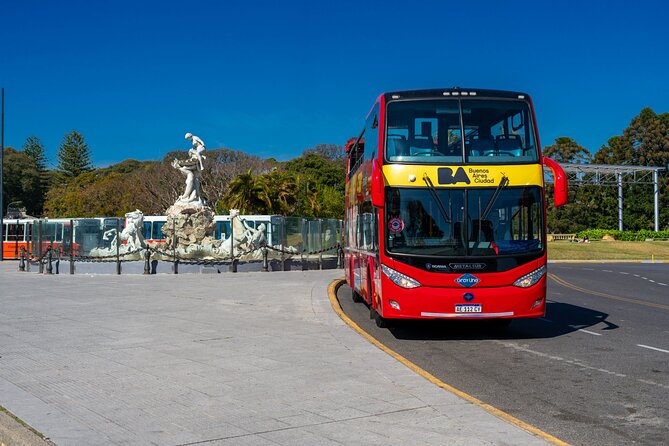
This route is built like a Buenos Aires sampler. You’ll pass through different “styles” of the city—downtown streets, historic neighborhoods, waterfronts, museums, and big landmarks—so you can pick your own day plan.
Downtown first: Diagonal Norte, Congreso, and Paseo de la Historieta
The loop begins near Diagonal Norte, then heads toward areas around Congreso and Paseo de la Historieta. These stops are a practical way to orient yourself because they’re tied to central Buenos Aires.
If you’re using the audio guide, this is where you’ll likely get the quickest mental map of the city grid and major corridors. It’s also a good moment to decide if you want to spend more time downtown or move on to neighborhoods that feel more “distinct” on foot.




Historic streets: San Telmo / Plaza Dorrego
Next up is San Telmo / Plaza Dorrego. This is one of the points people often associate with Buenos Aires on a walking level, so it’s a smart place to hop off if you want to slow down from the bus and wander.
The drawback is that stops can be far apart. If you hop off for one neighborhood feature but it’s not right at your exact point of interest, you may end up walking more than planned. Still, getting an early feel for the area can help you choose where to return later.
Art and big sports energy: Usina del Arte and Bombonera
The route then reaches Usina del Arte and Bombonera. This is a strong pairing because it gives you contrast: one stop is more about creative culture, and the other is the kind of destination people usually seek out for a specific reason.
These are also two stops where the walking-tour value tends to show up. If you want to reduce the frustration from audio glitches, this is a good zone to look for the walking tour offering tied to the day.
La Boca and Caminito, then the waterfront reset: Costanera Sur
From there, you move to La Boca – Caminito. Many people like this stop because it’s easy to recognize as a “Buenos Aires” postcard area, and the bus makes it simple to reach without threading through traffic.
After La Boca, you’ll hit Costanera Sur, with different stop addresses depending on the day:
- Monday to Friday: one Costanera Sur stop address
- Saturday and Sunday: a different Costanera Sur stop address
That split matters. It can be a reason for missed boarding if you’re expecting one specific spot every day. If you’re riding on the weekend, double-check you’re at the right Costanera Sur pickup location.
Puerto Madero and the riverfront: Estación Fluvial
You’ll then reach Puerto Madero and Estación Fluvial. For many people, this section is where the ride feels like a “breather” after busy neighborhood streets.
It’s also a great place to hop off if you want a calmer pace and easy walking from a major zone. And if you’re trying to beat heat, you’ll often appreciate the bus’s air conditioning on the ride segments between stops.
Classic culture stop: Galerías Pacífico and El Ateneo
The loop continues to Galerías Pacífico and El Ateneo. These stops are convenient because they’re both central and strongly tied to things people usually want to see by choosing their own hours.
If your audio isn’t behaving perfectly, this is still a useful stretch. You can ride past, get your bearings, and then decide where to spend real time based on what you actually feel like doing that day.
Plaza San Martín, Floralis Genérica, and MALBA
Next comes Plaza San Martín, then Floralis Genérica, then MALBA. This is where the loop starts mixing public-space moments with museum time.
If you like structure, pick one “anchor” stop here and commit. Don’t try to hop off at every named place unless you’re staying for a long day—stops can be spread out, and you’ll burn time transferring, walking, and waiting.
Planetario and beyond: toward Club de Pescadores and Parque de la Memoria
The route then reaches Planetario, followed by Club de Pescadores and Parque de la Memoria. This is another shift in feel: more space, more open views, and a different side of Buenos Aires than the dense center.
One smart strategy here is to hop off, walk for a bit, then re-board without forcing a full “checklist.” You’ll get more out of the day if you let the bus act like a flexible shuttle rather than a race.
Big-city landmarks and modern districts: Monumental, Barrio Chino, and Campo de Polo
Further along, you’ll find Monumental, then Barrio Chino, then Campo Argentino de Polo, plus Monumento a los Españoles. This part of the loop is good if you’re trying to cover ground fast and sample different identities of the city.
Also, if you’re the kind of person who likes to return later by metro or taxi, this section is useful for learning direction and distance before you go off on your own.
Museums and theater in the final stretch: Museo de Arte Decorativo, Recoleta, Teatro Colón
Toward the end, you’ll pass Museo Nacional de Arte Decorativo, Recoleta, and Teatro Colón. This is a strong area for a “wrap-up” because it connects to several classic Buenos Aires moments.
If you’ve been doing a full loop, ending around here gives you options for your final evening plans. Just remember: the day can run long because traffic can slow the circuit.
How to plan your day with 1, 2, or 3-day passes
The biggest advantage of a pass is that it doesn’t force one rigid schedule. You can do a full loop first, then return to the neighborhoods you actually liked.
For a first-timer, I’d use the first day like this:
- Ride the loop enough to understand where things are
- Hop off only for 1 or 2 anchors you can enjoy without rushing
Then on day two (or day three), focus on the neighborhoods that matched your taste: historic streets, waterfront time, or culture stops.
If you’re short on time, a single day can work, but don’t expect to hit everything. People report the loop is thorough, but stops can be far apart and some are not easy to locate. A multi-day pass reduces stress because you’re not guessing under a countdown clock.
When this bus is a great fit (and when it’s not)
This experience shines if you want easy transportation and a fast “get your bearings” pass through the city. It’s also a good fit if you hate the idea of planning routes between multiple neighborhoods in Buenos Aires traffic.
It’s less ideal if you depend on flawless audio navigation. If you’re the type who really wants turn-by-turn stop-by-stop narration, you may find the audio can be inconsistent or hard to hear.
Also, if you’re sensitive to air conditioning, note that a request to reduce it has been denied for at least one group. Bring a light layer so you’re comfortable either way.
Should you book this Buenos Aires hop-on hop-off bus?
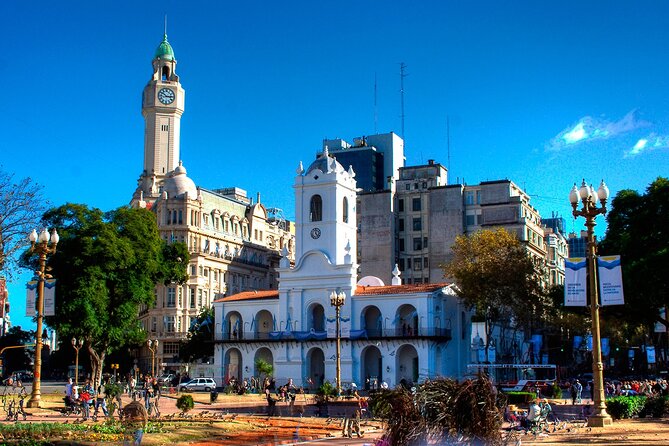
If your goal is to see a lot of Buenos Aires fast, this is a good buy. The bus format is practical, the upper deck makes photos easier, and the included walking tours can help you get context when the audio isn’t perfect.
I’d book it if:
- you want a low-effort way to reach neighborhoods like San Telmo, La Boca, and Puerto Madero
- you’d enjoy hopping off two or three times instead of sprinting to every stop
- you like the idea of pairing bus time with walking-tour explanations
I’d skip it (or at least plan a backup) if:
- you hate finding exact pickup points and dislike waiting in the sun
- you need audio to be perfectly synced to stop numbers
- your day is tight and you can’t handle delays from traffic or routing changes
FAQ
FAQ
How long is the Buenos Aires hop-on hop-off bus experience?
The loop is about 3 hours long (approx.), but real timing can vary with traffic.
Do I choose a 1-, 2-, or 3-day option?
Yes. The ticket comes with 1-, 2-, or 3-day pass options, and bus ticket duration matches the option you choose.
What’s included with the ticket?
You get open-top double-decker buses with air conditioning and a sunroof, a multilingual audio guide, your bus ticket (based on the selected duration), access to the exclusive fee walking tours, and a voucherbook with discounts. Some options also include additional activities.
Are hotel pickup and drop-off included?
No, hotel pickup and drop-off are not included.
Are food and drinks included?
No. Food and beverages are not included.
Are the walking tours included for free?
The walking tour is free and optional, and it runs on a voluntary payment system for the guide.
What should I do about the walking tour schedule?
To reconfirm the schedule each day, you should contact the guide on board the bus. You also need to arrive at the correct stop.
Is there a refund if I miss the walking tour?
No refund is issued if the tour is not taken. It also depends on weather and operating conditions.
If I booked a certain duration, can I change it?
If you want to change ticket duration, you need to cancel the current reservation and generate a new one, because the QR code is automatically issued with each new reservation.
Is cancellation free?
Yes. You can cancel for a full refund up to 24 hours before the experience start time. Free cancellation is offered up to that cutoff.