REVIEW · BUENOS AIRES
Buenos Aires: Hop-On Hop-Off City Bus Tour
Book on GetYourGuide →Operated by Gray Line Argentina · Bookable on GetYourGuide
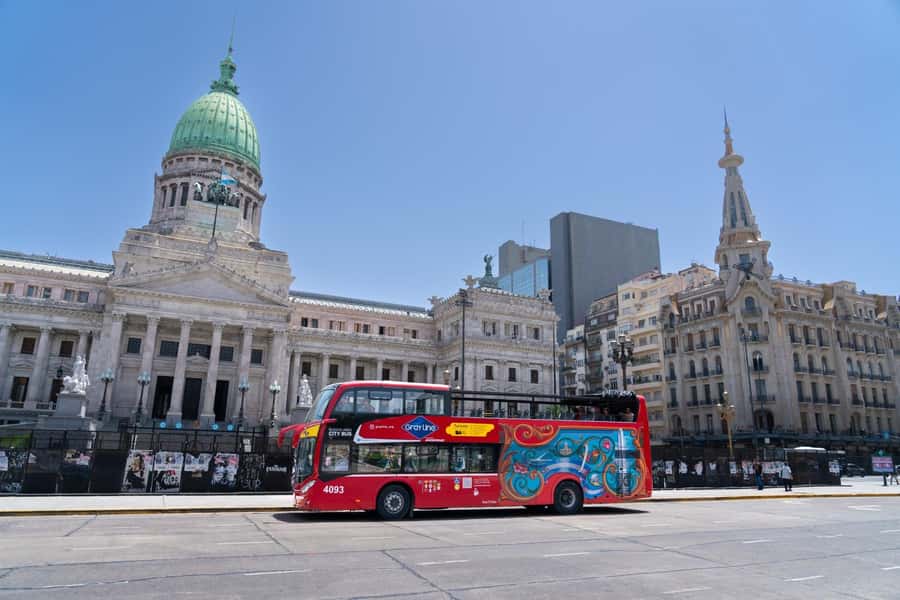
Buenos Aires clicks into place from a double-decker seat. This hop-on hop-off loop helps you map out big neighborhoods fast, with stops tied to real landmarks and an included multilingual audio guide you can follow at your pace. You get the kind of overview that saves time when the city feels huge.
I also love the comfort mix: open-top double-decker views when the weather is good, plus air conditioning and a sunroof for the hotter stretches. You’ll get to decide what’s worth your time to linger, because the frequency stays steady through the day. One possible drawback: a full circuit can run about 3 hours, so if you only have one day you may not hop off as often as you planned (and onboard Wi‑Fi can be hit or miss).
In This Review
- Key Things That Make This Bus Tour Worth Your Time
- Getting Your Bearings: How the Hop-On Hop-Off Loop Works
- Ticket Length and Value: 24 vs 48 vs 72 Hours
- Start Points: Choosing Av. Sáenz Peña or Plaza San Martín
- Onboard Comfort and Listening: A/C, Sunroof, and Audio That Helps
- Stop-by-Stop: What Each Landmark Is Good For (and What to Watch)
- Stop 1 (Congreso) + Starting Anchors
- Stop 2: Palace of the Argentine National Congress
- Stop 3: El Loco Chávez – Paseo de la Historieta
- Stop 4: Plaza Dorrego
- Stop 5: Usina del Arte (and Boca Museum access)
- Stop 6: La Bombonera (stadium-area landmark)
- Stop 7: Caminito
- Stop 8: Costanera Sur
- Stop 9: Puerto Madero
- Stop 10: Bus Turístico Circuito Rojo y Amarillo – Estación Fluvial
- Stop 11: Galerías Pacífico
- Stop 12: Plaza General San Martín
- Stop 13: Floralis Genérica
- Stop 14: Museum of Latin American Art of Buenos Aires
- Stop 15: Planetario Galileo Galilei
- Stop 16: Club de Pescadores
- Stop 17: Jorge Newbery Airfield
- Stop 18: Parque de la Memoria de Buenos Aires
- Stop 19: Estadio Monumental Antonio Vespucio Liberti (and River Museum access)
- Stop 20: Chinatown, Buenos Aires
- Stop 21: Argentine Polo Association
- Stop 22: Carta Magna Monument
- Stop 23: Recoleta
- Stop 24: Teatro Colón
- How to Time It Like a Pro (So You Don’t Waste a Day)
- Common Snags and Small Fixes
- Should You Book This Buenos Aires Hop-On Hop-Off Bus?
Key Things That Make This Bus Tour Worth Your Time
- 25 stops built for flexible sightseeing, so you can structure your day instead of guessing distances
- Every ~25 minutes during operating hours, which helps you actually stick to a plan
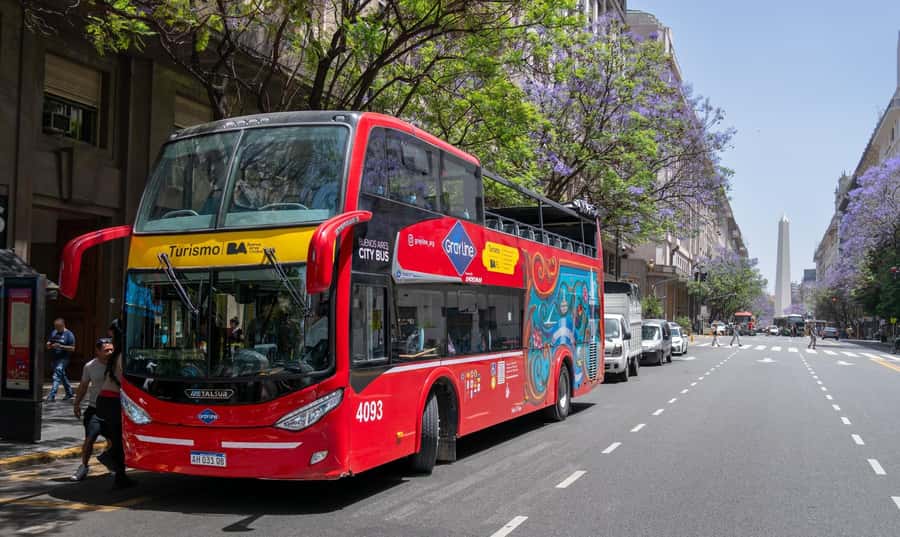
- Open-top double-decker with A/C + sunroof, a great combo in Buenos Aires weather
- Multilingual audio plus a live guide on board (Spanish, English, Portuguese), with lots of listening languages available
- Two key museum connections: Boca Museum via the stop by La Bombonera area, and River Museum via Estadio Monumental
- A late-day reality check: after the last buses at 5:30 p.m., you only get a half return along the route
Getting Your Bearings: How the Hop-On Hop-Off Loop Works
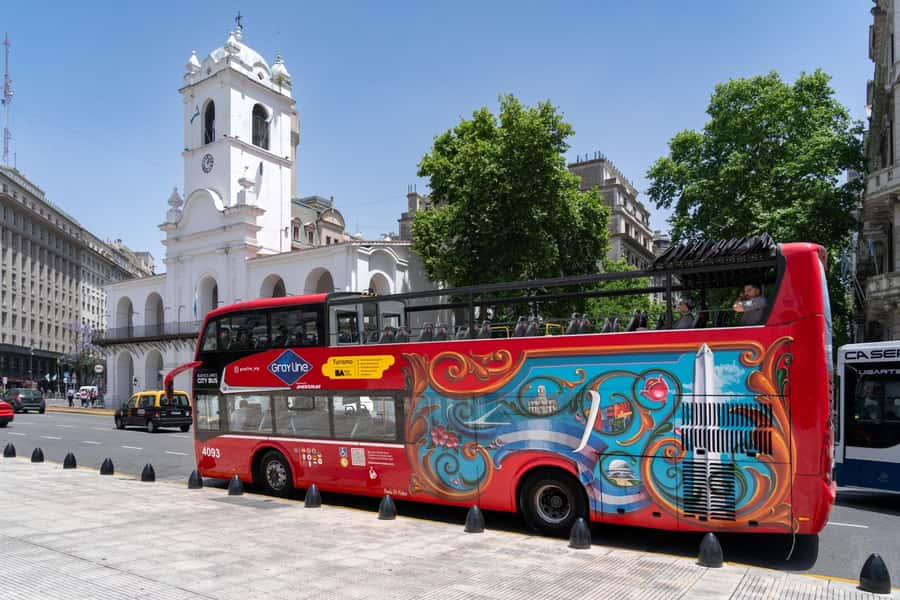
If you’re landing in Buenos Aires with a list of places and no time to get lost, this bus does a smart job. You buy a ticket for 24, 48, or 72 hours, then ride the loop as many times as you want during that window—hop off when something catches your eye, hop back on when you’re ready to move on.
The schedule is what makes it practical. The buses run Monday through Sunday from 9:30 a.m. to 6:00 p.m. and begin circulating at 9:20 a.m. from the two main start areas (Av. Pres. Roque Sáenz Peña 728 and Av. Santa Fe 808). During the day, frequency is about every 25 minutes, which means you’re not stuck waiting forever when you’re trying to connect with a specific stop.
The other big thing: this isn’t just a drive-by “look out the window” setup. There’s a multilingual audio guide and also a live tour guide on board (Spanish, English, Portuguese). That matters because Buenos Aires can be a lot to process—so having commentary that lines up with what you’re seeing helps you build context as you ride.
You can also read our reviews of more city tours in Buenos Aires

Ticket Length and Value: 24 vs 48 vs 72 Hours
The price is listed at $35 per person (and you choose a 24-, 48-, or 72-hour option). The value comes from how Buenos Aires is laid out: things are spread out, and some neighborhoods take time to enjoy on foot.
Here’s how I’d match the options to your travel style:
- 24-hour ticket: Best if you want a fast orientation and are okay hopping off only a couple times. A full loop can take around 3 hours, so with only one day you’ll likely prioritize 2–4 stops you really care about.
- 48-hour ticket: This is the sweet spot for most people. It gives you time to ride the loop once for overview and then come back for a second pass at the stops you actually want to explore.
- 72-hour ticket: This fits if you’re planning extra walking days and want the bus as your “reset button” between neighborhoods.
One practical tip: because your ticket time starts when you first board on your reserved day, you don’t gain extra days by “waiting around.” If you know you’ll use it, activate it early and let the extra time work for you.
Start Points: Choosing Av. Sáenz Peña or Plaza San Martín
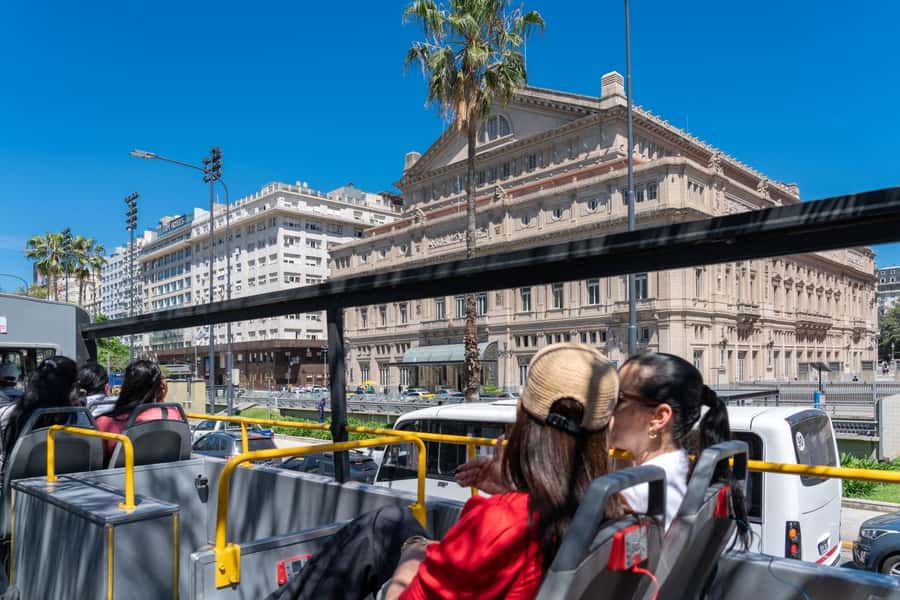
You can start the tour at any stop. That flexibility is handy if you’re staying near one end of the route or you don’t want to backtrack.
Two main starting references are:
- Diagonal Norte area (Av. Pres. Roque Sáenz Peña 728)
- Plaza San Martín (Av. Santa Fe 808), where the office is located
There’s also a useful reference point: the stop nearest El Gato Negro is Stop 1 (Congreso). So if you’re timing your day around a specific neighborhood meet-up, it’s worth orienting yourself around that stop number.
And don’t overlook this: the bus begins circulating at 9:20 a.m. from both start areas. If you want the most comfortable experience (seats up top, fewer crowds), start early.
Onboard Comfort and Listening: A/C, Sunroof, and Audio That Helps
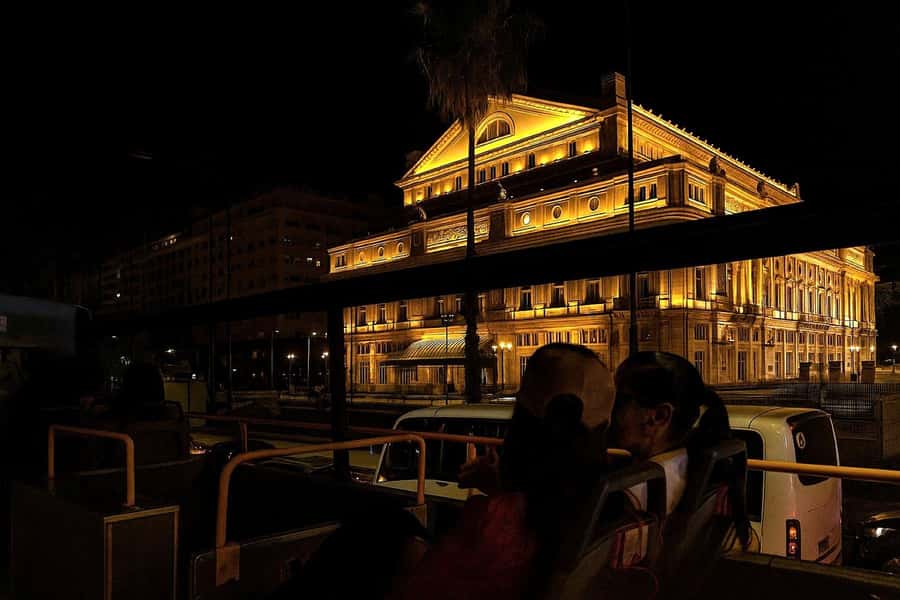
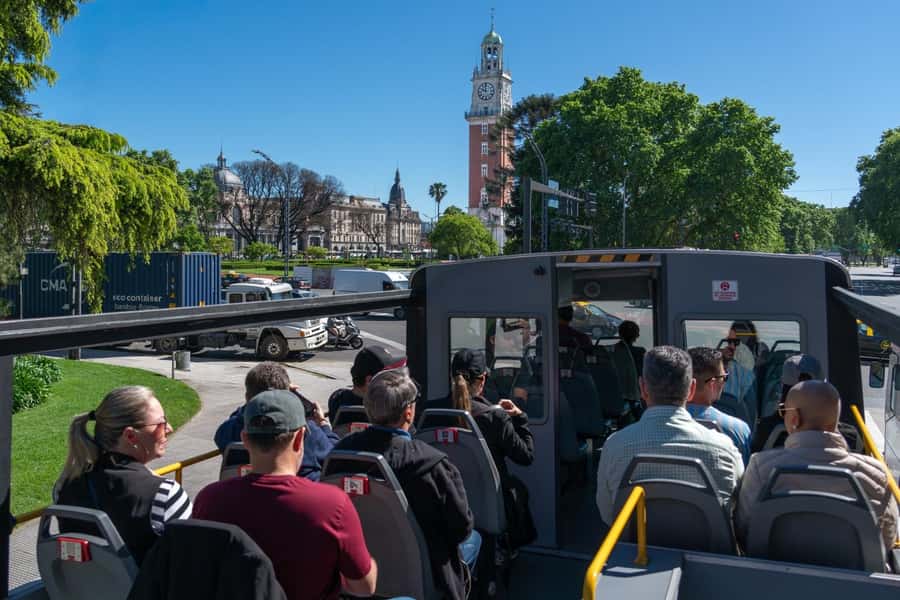
Buenos Aires is not one-temperature all day, and that’s where the bus design pays off. The buses are open-top double-deckers with air conditioning and a sunroof. You can switch between airy views and temperature control without changing vehicles.
For audio, you get:
- A multilingual audio guide, with listed languages including Spanish, English, Portuguese, Japanese, Chinese, Russian, Italian, French, German, Ukrainian, and Korean.
- A live tour guide speaking Spanish, English, Portuguese.
Audio quality matters because sometimes you’ll be looking up at buildings while listening. I’d plan to keep your volume comfortable rather than cranking it—if you blast it, you’ll miss the quieter details.
One small practical note: some people find that the earphone setup can feel short for the upstairs seats. If you’re sensitive about audio distance, bring your own earbuds (or be ready to adjust how you sit).
And about Wi‑Fi: it’s advertised as free onboard and at bus stops, but real-world performance can vary. If you depend on Wi‑Fi for navigation or messages, keep a backup plan (offline maps/data).
Stop-by-Stop: What Each Landmark Is Good For (and What to Watch)
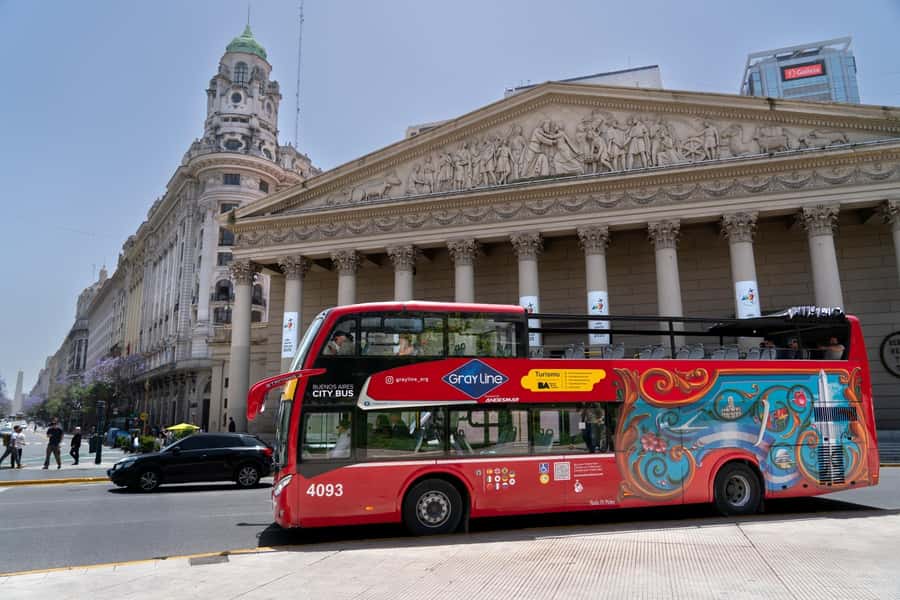
The route runs a full loop through big-name areas and landmarks. Below, I’ll walk you through each listed stop so you can decide where to hop off—and where you might just enjoy the view from your seat.





Stop 1 (Congreso) + Starting Anchors
This is the part of the route tied to Congreso and it’s also noted as the nearest stop to El Gato Negro. Use it as your launch point if you want to structure the rest of the day around the route core.
Watch for this: the city can be slow-moving, and boarding at busy points can affect your timing. If you’re rushing to a specific plan later, start as early as you can.
Stop 2: Palace of the Argentine National Congress
You pass Palace of the Argentine National Congress. Even if you don’t get off, it’s a strong visual marker for the civic core and a good way to ground yourself.
This stop is mostly about orientation. If you want photos or a closer look, you’ll need to plan your hop strategically.
Stop 3: El Loco Chávez – Paseo de la Historieta
This is one of the more unusual names on the list, and that’s the point. If public art, themed walks, or quirky local flavor is your thing, you’ll know in seconds whether you want to jump off.
If you prefer major monuments only, you can treat this as a “listen and watch” moment from the bus.
Stop 4: Plaza Dorrego
Plaza Dorrego is a classic kind of stop: a place you can use as a meeting point for yourself during the day. Hop off if you want to slow down and let the neighborhood rhythm hit you.
Drawback to keep in mind: plazas are popular. If you’re trying to sprint back to the bus on a tight schedule, give yourself a cushion.
Stop 5: Usina del Arte (and Boca Museum access)
This stop covers Usina del Arte, and it’s also noted as the access point to the Boca Museum. That makes it a strong choice if you want culture plus a football-linked area on the same day.
On match days, timing matters. The tour notes that on days when Boca plays at their stadium, the tours won’t take place. If your dates overlap, plan a different day for this bus.
Stop 6: La Bombonera (stadium-area landmark)
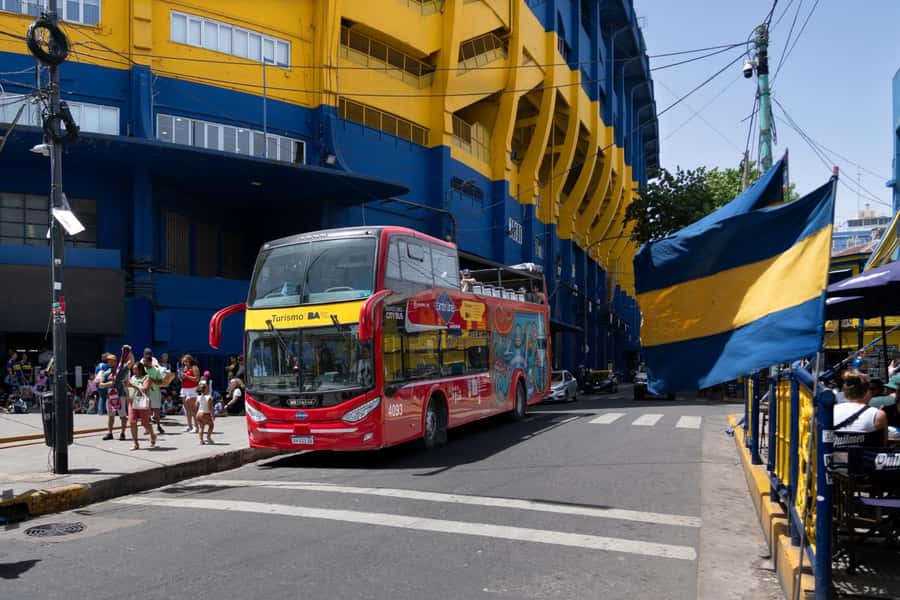
You pass La Bombonera. This is one of the route’s big football landmarks. Even if you’re not attending a match, it’s a recognizable stop that gives context to the surrounding neighborhood.
Again, if Boca match days are in your travel window, double-check your schedule because tours may not operate on those days.
Stop 7: Caminito
Caminito is the next big neighborhood marker. This is one of those stops where you’re likely to decide quickly if you want time on foot or just a photo from the top deck.
Tip: if your goal is to explore La Boca-style streets, prioritize this stop early in your day so you’re not rushed.
Stop 8: Costanera Sur
Costanera Sur is a useful “change of pace” stop. It breaks up the dense city feel and gives you a more open, scenic angle from the bus route.
If you’re planning photos, late morning is often easier than mid-day glare—but the main thing is to hop off only when you have enough time to actually walk.
Stop 9: Puerto Madero
Puerto Madero is where the city starts feeling more modern and polished, and it’s a nice contrast against older neighborhood stops. Hop off if you want waterfront views and easy strolling.
Consideration: this kind of area can be visually satisfying but not always the best for budget time. If you only have one day, treat it as a highlight you might visit for an hour, not an all-day mission.
Stop 10: Bus Turístico Circuito Rojo y Amarillo – Estación Fluvial
This stop is a labeled crossover point: Circuito Rojo y Amarillo at Estación Fluvial. Even if you don’t switch tours, it’s helpful because it’s clearly marked on the route as a place where different circuits are referenced.
One smart move: if you’re trying to maximize coverage, use this as your “checkpoint.” Ask the staff which route variation is currently most relevant to the stops you care about.
Stop 11: Galerías Pacífico
Galerías Pacífico is a stop that signals a more central, indoor-outdoor mix. It’s handy if you want a break from walking or you like shopping/arcade-style spaces.
If you’re using the bus to keep energy up, this is a good “pause and recharge” candidate.
Stop 12: Plaza General San Martín
Plaza General San Martín is a major square on the loop and also connected to the operator office starting area (Av. Santa Fe 808). If you want a familiar anchor for lunch or a reset break, this is it.
If you’re starting here, remember the bus begins circulating at 9:20 a.m. from this point.
Stop 13: Floralis Genérica
Floralis Genérica is a recognizable landmark stop by name. If you’re the type who enjoys quick photo ops and short hops, this is the kind of stop that works well even when you’re tight on time.
The drawback: if you’re chasing only “must-see” indoor spots, a landmark stop might feel brief.
Stop 14: Museum of Latin American Art of Buenos Aires
This is your straightforward museum stop: Museum of Latin American Art of Buenos Aires. Admission is not included, so use the bus to get you close, then decide whether the museum fits your day.
If you’re museum-focused, pair it with another nearby walkable stop and don’t try to do everything in one go.
Stop 15: Planetario Galileo Galilei
Planetario Galileo Galilei gives you an option for science/astronomy-style interests. Like other ticketed places, entrance isn’t included, so the bus is a transport tool here.
If you’re hoping for a specific show, plan around what’s open that day. From the tour side, the key is that this stop puts you in the right area.
Stop 16: Club de Pescadores
This stop is named Club de Pescadores, which makes it a good choice if your interests lean toward the waterfront and local institutions. Even if you don’t go inside, hopping off briefly can help you understand how the city connects to water.
Drawback: without a tight plan, waterfront-area exploration can stretch longer than expected.
Stop 17: Jorge Newbery Airfield
Jorge Newbery Airfield is another landmark stop that helps you understand Buenos Aires geography. If you’re also visiting aviation-related sites or you just want the route context, hop on/off here.
Keep in mind it’s a big-name area, so it may be a place where crowds form depending on the day.
Stop 18: Parque de la Memoria de Buenos Aires
Parque de la Memoria de Buenos Aires is a meaningful stop. Even from the bus, it’s a clear marker of a city that holds remembrance as part of its public spaces.
If you choose to get off, give yourself enough time to slow down. This is the kind of stop where “quick photo and back on” might leave you unsatisfied.
Stop 19: Estadio Monumental Antonio Vespucio Liberti (and River Museum access)
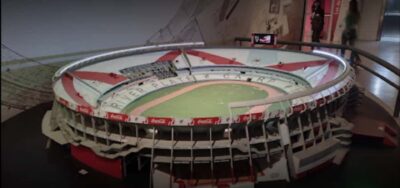
Estadio Monumental Antonio Vespucio Liberti is the River Plate stadium-area landmark. It’s also noted as the access point to the River Museum, so this is a strong pairing if you want football culture plus a museum stop.
Critical note: on days when River plays, the tour won’t take place. So if your dates line up with a match schedule, shift your bus-day.
Stop 20: Chinatown, Buenos Aires
Chinatown, Buenos Aires is a fun contrast stop. It’s useful because it gives you a clear neighborhood target on the loop, so you can plan food breaks or walking time around it.
If you’re hungry, treat it as your flexible stop—because you can decide what you want once you’re there.
Stop 21: Argentine Polo Association
This stop is tied to the Argentine Polo Association. If polo history or sport-related spaces interest you, this is your “right place, right day” indicator on the route.
Otherwise, it’s fine as a pass-by landmark and a map marker.
Stop 22: Carta Magna Monument
Carta Magna Monument is a landmark that can work well for a quick hop and photo if that topic interests you. If not, just enjoy it as part of the story the bus audio tells while you move through different Buenos Aires areas.
Stop 23: Recoleta
Recoleta is a major neighborhood stop. It’s a smart place to hop off if you want to anchor part of your walking day without committing to a single museum.
Because Recoleta can be a busy area, give yourself time to find your way back to the stop.
Stop 24: Teatro Colón
Teatro Colón is one of Buenos Aires’ headline landmarks. This is a great stop for photos from the outside and for anyone who wants to connect the bus loop to the city’s arts scene.
Admission isn’t included, so if you want an inside visit, you’ll need separate tickets and time planning.
How to Time It Like a Pro (So You Don’t Waste a Day)
If you only do one loop, plan to treat it as scouting. Then on day two (or the second pass if you have 48 hours), choose your real priority stops.
A useful rhythm:
- Start early, ride your first loop for context.
- Mark 2–4 stops to return to.
- Use the bus as transport, not as a timer. Let walking and interest set the pace.
Also, keep in mind the late-day schedule. The buses run until 5:30 p.m., and the last buses make only half a return along the route. If you’re hoping to ride the full loop late, adjust your plan so you’re not stuck short of where you wanted to end.
Finally, match days can disrupt things. Because the tour notes that on days when River or Boca play at their stadiums, no tours will take place, you should check your travel dates and avoid relying on this bus as your sole transport plan.
Common Snags and Small Fixes
No system is perfect, and Buenos Aires traffic is real. Here are the issues I’d plan around:
- Buses can run behind sometimes, often due to traffic and boarding time at stops. This doesn’t make the tour unusable, but it does mean you should keep your schedule flexible.
- Commentary timing can lag. Some people report hearing descriptions after passing the landmark. If you care about every detail, try to remain attentive during the approach to each stop.
- Wi‑Fi can fail. It’s included, but if it’s down when you need it, you’ll still be fine—just don’t build your whole navigation plan on it.
- Real-time maps may be tricky to find. If your phone map is your main guide, save the route info ahead of time and ask staff if you can’t locate the right stop quickly.
- Full loop takes time. The loop can be a longer ride than you expect, so if you plan to hop off for lunch, pick your lunch stop early or you’ll end up staying onboard longer than planned.
On the positive side, the staff support can be strong. There are reports of help locating a lost backpack and returning it the next day. That’s reassuring if you’re worried about leaving personal items on the bus.
Should You Book This Buenos Aires Hop-On Hop-Off Bus?
I’d book it if you fit at least one of these:
- You want a first-time overview of Buenos Aires neighborhoods without guessing transit.
- You want a flexible schedule where you decide what to explore on foot.
- You like learning as you go, and you’ll actually listen to audio while you ride.
I’d think twice if:
- You have only a few hours and you hate long loops—because a full circuit can take a while.
- Your travel dates overlap with River or Boca match days, when tours may not run.
- You rely heavily on onboard Wi‑Fi for real-time navigation.
For most visitors, this bus is a practical way to reduce decision stress. It turns Buenos Aires from a list of names into a route you can understand, repeat, and enjoy at your own pace.