REVIEW · BUENOS AIRES
100% History and architecture of Buenos Aires
Book on GetYourGuide →Operated by Swell Experiences · Bookable on GetYourGuide
A good city walk is really about rhythm. This one follows Buenos Aires’ power centers and grand streets, turning a short timeline into a clear picture of how politics and architecture shaped daily life. Expect a guided loop that starts at Plaza de Mayo, then moves through the main ceremonial avenue and ends at the National Congress area.
I especially like the focus on big, readable landmarks. You get architecture on full display (including Café Tortoni and Barolo Palace as key stops) and you also get the story behind them, anchored to places where Argentina’s public life happens. I also like that the tour includes more than just outdoor photos: Cathedral and Chapter access are part of the package.
One caution: the tour’s overall rating is 4/5, and there’s a serious note about a guide not showing up at the indicated time. If you book, plan to arrive a few minutes early and make sure you’re matching the meeting-point details exactly.
In This Review
- Key things you’ll notice on this Buenos Aires history and architecture walk
- How a 2-hour route gives you the city’s main story
- Meeting at the Pyramid of May, black umbrella included
- Plaza de Mayo: where Argentina’s public life has always gathered
- Avenida de Mayo for one focused hour of European-style grandeur
- Café Tortoni and Barolo Palace: architecture you can name
- The Cathedral and Chapter: the one part you can step into
- National Congress: ending with Argentina’s democratic centerpiece
- Price and value: what $12 buys you in Buenos Aires
- Who should book this tour (and who might want something else)
- What I’d watch for to avoid a bad start
- Should you book 100% History and Architecture of Buenos Aires?
- FAQ
- Where does the tour start, and how do I recognize the guide?
- How long is the tour?
- What are the main places you’ll visit?
- Is the tour wheelchair accessible?
- What does the tour include besides the guided walk?
- Is there free cancellation and a pay-later option?
Key things you’ll notice on this Buenos Aires history and architecture walk
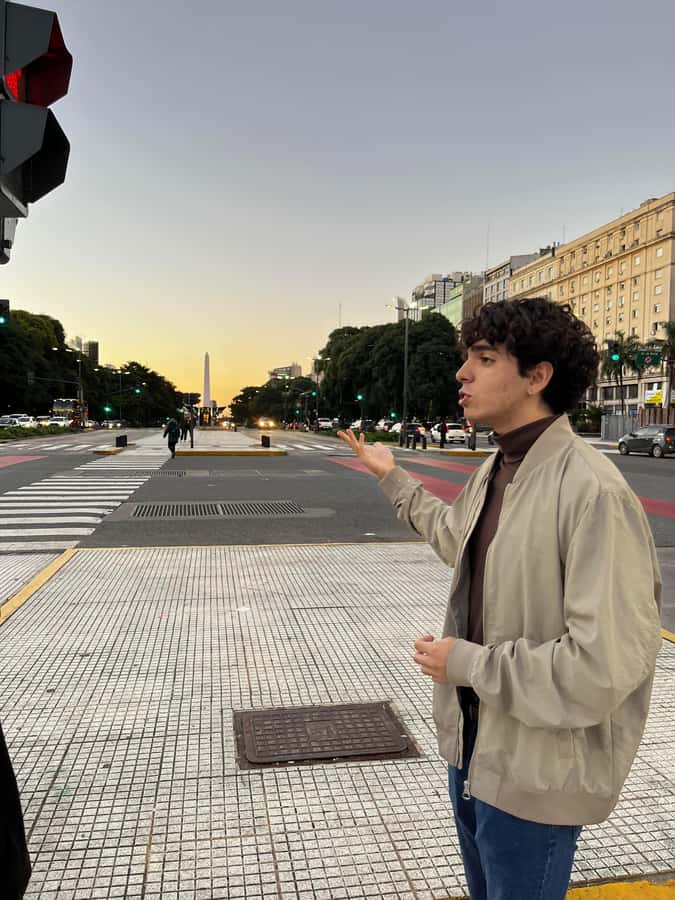
- Plaza de Mayo as the starting pulse: the tour begins at the square tied to major political moments
- Avenida de Mayo’s guided hour: you’ll walk the main ceremonial street and watch European-style architecture come into view
- Café Tortoni and Barolo Palace stops: famous façades along the route that help you connect architecture to everyday Buenos Aires
- National Congress as the endpoint vibe: the final stretch points you toward democracy in stone and scale
- Cathedral and Chapter entrance included: you don’t just look at history—you get into a key site
- Short route, clear focus: 2 hours is tight enough to keep it energetic, not exhausting
How a 2-hour route gives you the city’s main story
Buenos Aires is huge, and it can feel like you’re bouncing between neighborhoods. This tour keeps you in the historic core and builds a simple arc: start at the civic center, walk the grand boulevard, then return to Plaza de Mayo before finishing near the National Congress.
That structure matters. You’re not trying to absorb every building in the city. Instead, you get a guided thread that helps you see patterns—how squares function, why certain streets became ceremonial stages, and how the architecture signals authority, tradition, and ambition.
Price is part of what makes this work. At $12 per person, you’re paying for live interpretation and a short, organized route—not for a long full-day excursion. If you’re on a tight schedule, this is one of the easiest ways to get a lot of context without sacrificing your whole day.
You can also read our reviews of more historical tours in Buenos Aires


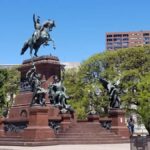
Meeting at the Pyramid of May, black umbrella included
The tour’s meeting point is specific: you should be in front of the Pyramid of May, with a black umbrella. That detail seems small, but in central Buenos Aires it’s huge. Crowds form fast, and people sometimes assume guides will be easy to spot. With this one, they’re telling you exactly what to look for.
The tour is listed as a private group and has a live Spanish-speaking guide. Private doesn’t always mean no walking partners nearby, but it does usually mean your group experience is managed as a unit rather than a giant herd. For short history walks, that usually makes questions easier and keeps the pace comfortable.
Also plan for a 2-hour format. That’s short enough that you’ll want to be ready when the guide starts moving—comfortable shoes help, and it’s smart to carry water, especially in warmer months.
Plaza de Mayo: where Argentina’s public life has always gathered
Plaza de Mayo isn’t just a pretty square. It’s a stage for major political and social events, and the guide anchors that idea as soon as you arrive. Starting here gives you an immediate sense of scale and purpose. You’re standing in the right place to understand why nearby buildings feel formal and important.
During your time in Plaza de Mayo, you’re getting more than landmark spotting. You’re learning why the square matters—how it became a center for Argentina’s civic identity. That context changes how you look at the architecture. You stop treating buildings like background and start treating them like messages.
One practical note: you’ll likely spend a chunk of the tour back in Plaza de Mayo after walking the main avenue. If you’re the type who likes to take photos, this is a good setup—first you see the square as a starting anchor, later you return to see it with better understanding.
Avenida de Mayo for one focused hour of European-style grandeur
After Plaza de Mayo, you head to Avenida de Mayo for a guided hour. This is where the tour shifts from the civic-center feel into an avenue-style experience: longer sightlines, more façade views, and more “this street was designed to impress you” energy.
The tour description calls it Europe-like in charm, and even if you don’t care about labels, you’ll feel what that means in person. Grand buildings, formal street rhythm, and a sense that the city wanted to look outward. This portion works well for first-timers because it’s easy to follow. The guide keeps you on the main street and helps you read what you’re seeing.
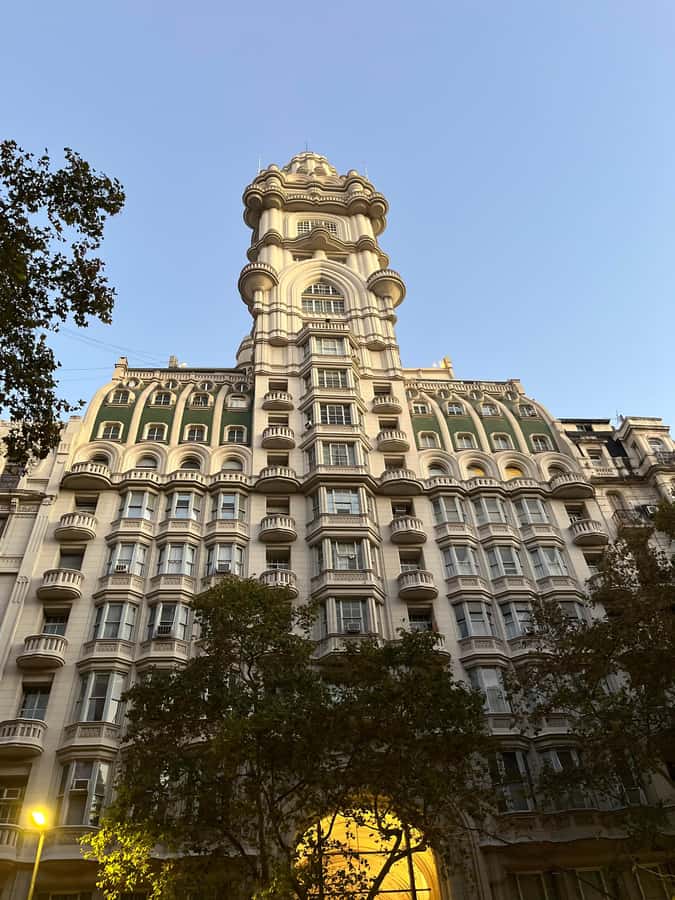
You’ll also likely pass some of the highlights tied to the avenue. Café Tortoni and Barolo Palace are both listed as key moments. Even if you only pause for a quick exterior look, those names help you connect this architectural walk to classic Buenos Aires identity—street culture, old-world styling, and public imagination.
Café Tortoni and Barolo Palace: architecture you can name
I like including famous buildings in a short city walk because it gives you something to remember later. Café Tortoni and Barolo Palace are more than trivia. They act like bookmarks along the avenue—points where the guide can explain why certain architecture became part of the city’s story.
What to do with this information as you walk: don’t just photograph. Try to notice what the guides highlight—materials, scale, and how the building’s presence changes the street view. Then when you return later on your own, you’ll recognize the building instantly and you’ll know why it mattered.
If you’re the type who hates tours that feel like one long pointing session, this is a good sign. Named stops usually mean the guide can slow down for context without turning the experience into pure motion.




The Cathedral and Chapter: the one part you can step into
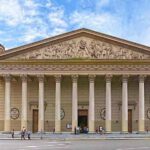
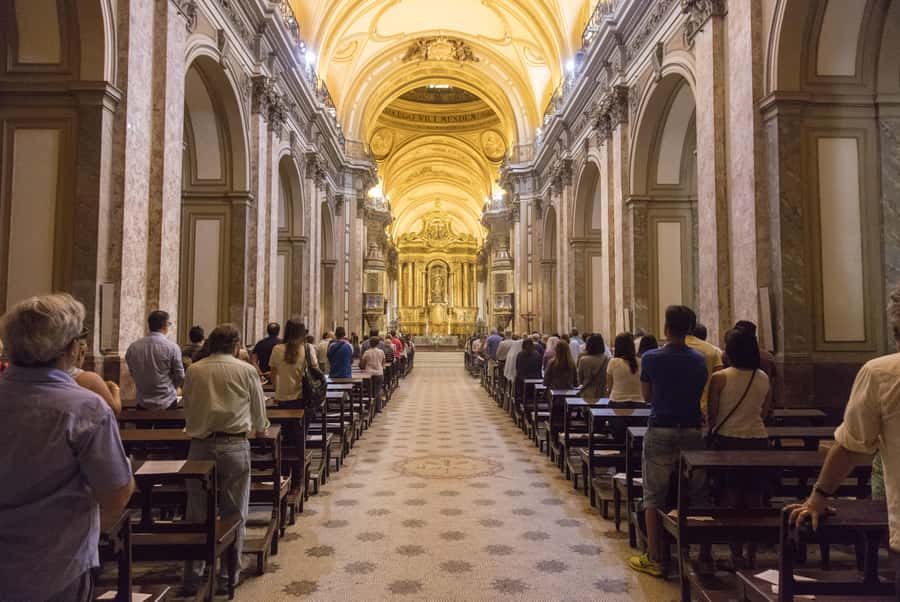
This tour includes entrance to the Cathedral and Chapter. That matters because it adds a “hands-on” element to an otherwise streets-and-façades experience. Outdoor architecture is great, but interiors can explain the city more clearly—especially in places tied to public identity.
In the context of your route, this fits naturally with the Plaza de Mayo portion. The square is tied to the Cathedral, and the tour’s plan includes guided time in that area. When an attraction is included, you’re not stuck searching for the right ticket window or trying to guess whether it’s open.
What you should plan for: expect a guided explanation connected to what you’re already seeing outside. The best effect of including entrance is that it turns earlier observations into something more detailed. You look at the building differently because the guide gives you context, not just a date.
National Congress: ending with Argentina’s democratic centerpiece
The route finishes at the Congreso de la Nación Argentina, the National Congress. Ending here is a smart choice for a history-and-architecture walk because it keeps the civic theme intact. You start with the civic heart (Plaza de Mayo), walk through the city’s main ceremonial avenue, then move toward the formal institution that represents governance.
The scale of such a building can hit you quickly. Even if you don’t memorize every architectural detail, you’ll understand the message: this is where decisions are supposed to be made, and the architecture is part of that promise.
One detail to keep in mind: the tour description also notes the activity ends back at the meeting point. That means your “finish” location may be followed by a return walk or a regrouping back near the Pyramid of May. Don’t be surprised if your total movement feels like a loop rather than a straight line. It’s still centered on the core landmarks.
Price and value: what $12 buys you in Buenos Aires
At $12 per person, you’re paying for three things that add real value on a short schedule: a live guide in Spanish, a route that ties key civic landmarks together, and Cathedral/Chapter entrance included.
If you tried to build this yourself, you’d still be spending time locating spots and working out what order makes sense. You might also miss context that helps you understand why buildings look the way they do and why those squares and avenues gained symbolic power.
The value also depends on your expectations:
- If you want deep architectural analysis and lots of interior time, 2 hours may feel short.
- If you want a focused, high-signal orientation to the historic center, 2 hours is a sweet spot.
With a 4/5 overall rating, the experience seems generally strong for what it promises: a compact, guided history-and-architecture circuit. Still, because there’s one major complaint about a missed meeting, I’d treat the meeting point details as non-negotiable.
Who should book this tour (and who might want something else)
This is a great match if you:
- want a first-time Buenos Aires orientation focused on the historic core
- like architecture but also want the stories behind the street and square
- want a short plan you can fit into a day without burning it all
It may not be your best option if you:
- need very flexible timing or are likely to be delayed, since the guide experience depends on meeting at the listed spot
- prefer neighborhood-hopping or smaller, less-famous architecture (this tour stays centered on major landmarks)
Language is Spanish, and the tour guide is live. If Spanish is not your comfort zone, you might still enjoy the visuals, but your understanding will likely depend on how much you can follow.
What I’d watch for to avoid a bad start
Based on the tour’s rating and the one clearly negative note, the biggest risk isn’t the landmarks—it’s the start. To reduce the chance of confusion:
- arrive a bit early at the Pyramid of May
- look specifically for the black umbrella marker
- keep your phone handy in case you need quick confirmation
This is common-sense travel advice, but it’s especially relevant here because meeting point accuracy is central to the experience.
Should you book 100% History and Architecture of Buenos Aires?
I’d book this if you want a tight, landmark-heavy walk that connects Plaza de Mayo, Avenida de Mayo, and the National Congress with a guided explanation—and you like the idea of getting inside the Cathedral/Chapter rather than staying outside.
Skip it or compare alternatives if your biggest priority is total comfort around scheduling, since one reported issue involved a guide not appearing at the indicated time. If you’re organized at check-in and you can make the meeting point work, this tour’s value for $12 is hard to beat.
FAQ
Where does the tour start, and how do I recognize the guide?
The tour starts in front of the Pyramid of May. You should look for a black umbrella with the guide.
How long is the tour?
The duration is listed as 2 hours. Starting times depend on availability.
What are the main places you’ll visit?
You’ll spend time around Plaza de Mayo, walk Avenida de Mayo, return to Plaza de Mayo, and the route ends at the Congreso de la Nación Argentina (with the activity described as returning to the meeting point).
Is the tour wheelchair accessible?
Yes. The activity is listed as wheelchair accessible.
What does the tour include besides the guided walk?
It includes entrance to the Cathedral and the Chapter.
Is there free cancellation and a pay-later option?
Free cancellation is listed up to 24 hours in advance for a full refund, and there’s a reserve now & pay later option (book your spot and pay nothing today).