REVIEW · BUENOS AIRES
Best of Buenos Aires Private Walking Tour
Book on Viator →Operated by Buenos Aires Walking Tours · Bookable on Viator
Buenos Aires has a secret thread of Europe. On this private 3-hour walk, I love how the route connects Calle Florida street life with the Kavanagh Art Deco skyline through nonstop, human-scale stories. The trade-off: this is mostly “keep moving” sightseeing, so you’ll want comfortable shoes and the stamina for a solid pace.
What makes it click is the way the tour mixes big landmarks with the details that explain Buenos Aires itself. You’ll look at the British legacy around Torre Monumental and the Malvinas memorial, then slide into the French-looking elegance of Barrio Norte and finish in Recoleta with a ticketed cemetery visit. If you prefer slow museum time over long walks, this might feel like too much in one go.
In This Review
- Key highlights to expect on this Buenos Aires private walk
- Why this tour reads like a Europe-in-Buenos-Aires story
- Meeting at Florida Garden and starting on the right street
- Calle Florida: shopping street, but also city origin
- Basilica del Santisimo Sacramento: a family-built cathedral with drama
- Edificio Kavanagh: Art Deco power in a tight 14-month story
- What I like about this stop
- What to watch
- Torre Monumental and the Malvinas memorial across the street
- Why this part matters
- Plaza General San Martín: independence stories layered on older ground
- Palacio Paz, Palacio San Martín, and the Anchorena family thread
- The common theme you should notice
- Embassies, memorials, and those “how did that happen here?” moments
- A quick note on tone
- Patio Bullrich: from British-style auction building to posh mall
- Barrio Norte reputation and what Avenida Alvear is really showing you
- Recoleta: Paris-style townhouses and then the churches
- What you’ll feel here
- Recoleta Cemetery: your guided hour with Evita and the named lives
- Important expectation to manage
- Ending at La Biela: where your walk turns into your afternoon plan
- Price and value: is $109 worth it here?
- The real deal on guide quality (Mariano, Martin, Carlos)
- Who should book this private walking tour, and who should skip
- Should you book this tour?
- FAQ
- FAQ
- How long is the Best of Buenos Aires Private Walking Tour?
- Where do I meet for the tour?
- Where does the tour end?
- Is the tour private?
- What’s included in the price?
- What is not included?
- Does it run in the rain?
- Are kids allowed?
- Will I need to buy cemetery tickets?
- Can I cancel for a full refund?
Key highlights to expect on this Buenos Aires private walk
- Calle Florida: one of the oldest downtown streets, tied to the city’s early layout and shopping hub energy
- Edificio Kavanagh: the Art Deco skyscraper with a UNESCO heritage story and a surprisingly fast build timeline
- Torre Monumental + Malvinas memorial: British influence on the skyline, paired with 1982 memory right across the street
- Barrio Norte palaces: French-style city-palace architecture and immigration-era context as you stroll Avenida Alvear and nearby mansion streets
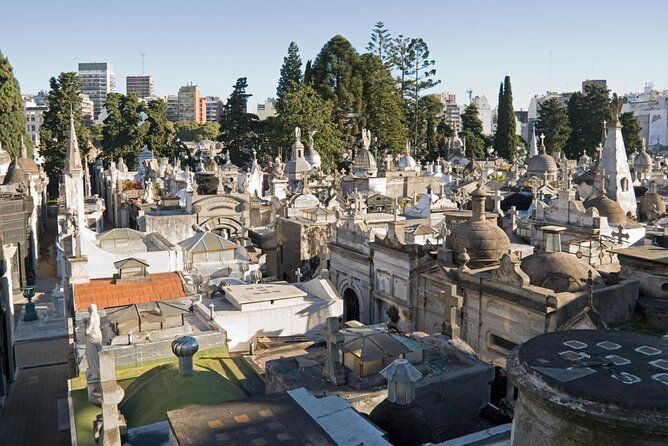
- Recoleta Cemetery visit: admission included, with a guided stop that covers Evita’s memorial and lots of famous names
- A finish at La Biela: you end right by a top café and restaurant area, easy to turn the day into your own plan
Why this tour reads like a Europe-in-Buenos-Aires story
Buenos Aires gets called the Paris of the South for a reason, and this walk treats that nickname like a clue. You’ll see French-flavored architecture close-up, then you’ll also hit unmistakable British influences tied to history and politics—sometimes in places you wouldn’t think about on a first visit.
The value here is how the guide stitches the city’s buildings to the people behind them. Instead of a list of monuments, you get cause-and-effect explanations: who built what, why those styles landed here, and how world events echoed locally.
You can also read our reviews of more walking tours in Buenos Aires
Meeting at Florida Garden and starting on the right street
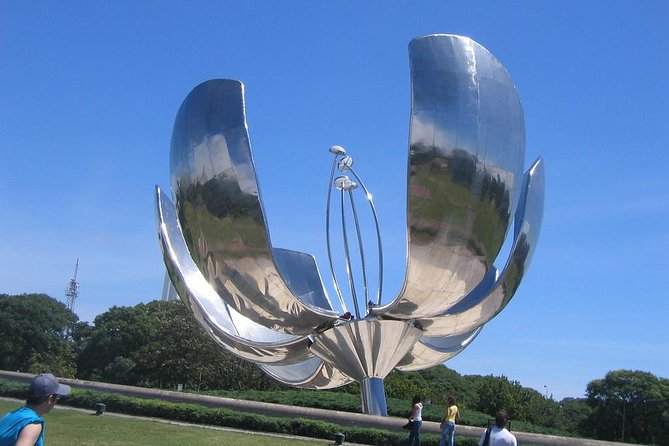
You’ll meet at Florida Garden, Florida 899 (in practice, outside the café corner door at the corner with Paraguay St.). The tour starts no later than 10am, and you should look for the guides holding a small BA Walking Tours sign.
I like this start point because it’s central and straightforward. Within minutes, you’re on Calle Florida, one of Buenos Aires’ classic downtown streets—old enough that it’s basically acting like a timeline, connecting Plaza de Mayo with Plaza San Martín.
Calle Florida: shopping street, but also city origin
Along Calle Florida, you’re not just browsing storefronts. The guide uses the street’s role as a connector to talk about Buenos Aires’ foundational area and the growth of the city center. It’s a good warm-up: you get orientation fast, and the stories help the street feel like more than a shopping strip.
Basilica del Santisimo Sacramento: a family-built cathedral with drama
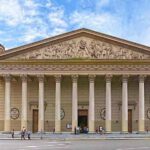
One of the first stops is Basilica del Santisimo Sacramento. It was built in 1916 by Lady Mercedes Anchorena for her family, and the tour frames it as astonishingly beautiful—with “love/hate/power” style stories you’ll hear as you stand there.
This is the kind of stop that pays off later in the walk. The same neighborhoods you see as elegant today also carry the footprints of wealth, rivalry, and influence from the early 1900s, and the guide keeps pointing those patterns out.
Edificio Kavanagh: Art Deco power in a tight 14-month story
Next up is Edificio Kavanagh, the tallest Art Deco skyscraper in Buenos Aires. It overlooks Plaza San Martín and was declared a UNESCO heritage building, but the better part is the “how did this happen here?” explanation.
The tour highlights that its construction took only 14 months and that it was commissioned in 1934 by Corina Kavanagh, a millionaire woman of Irish descent. You’ll also hear the bold personal backstory: she sold two ranches at age 39 to erect her landmark.
You can also read our reviews of more private tours in Buenos Aires



What I like about this stop
This is architecture as evidence. Stand in the right spot and you can see why the city wanted to project modern status—then you can relate that ambition to the palaces and international references you’ll see in Barrio Norte.
What to watch
It’s an exterior stop. You’ll get the impact and the story, not an indoor visit—so set expectations for quick looks and take your photos while you have the angle.
Torre Monumental and the Malvinas memorial across the street
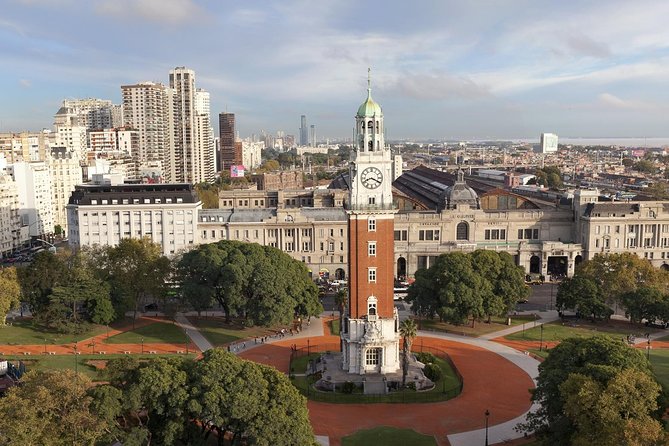
The walk then shifts to Torre Monumental, also described as the British Clock Tower. The guide uses this moment to explain the long legacy of England in Argentina, so you’re not just seeing a clock tower—you’re seeing how influence can become scenery.
Opposite the tower is the memorial to Combatientes de Malvinas, and the tour doesn’t treat this as a random plaque. You’ll get the 1982 South Atlantic war context (Malvinas/Falklands) and a discussion of the love/hate relationship with England and what British presence looks like in the economy.
Why this part matters
This is one of the most meaningful sequences because it connects skyline symbolism to real political memory. It also helps you understand why Buenos Aires history can feel personal: monuments sit in the flow of everyday streets, not behind museum walls.
Plaza General San Martín: independence stories layered on older ground
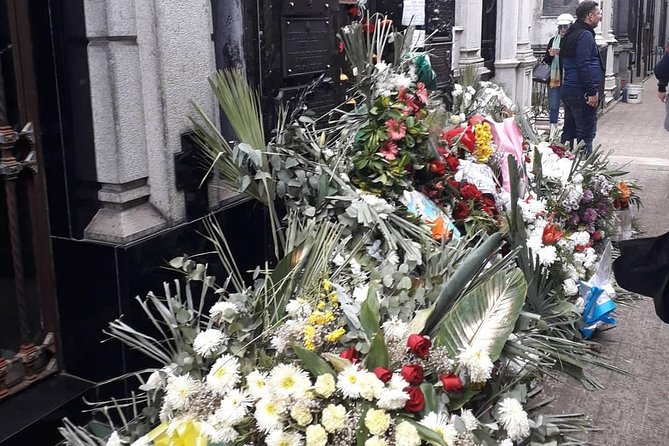
Plaza General San Martín is packed with history on the surface and beneath it. The tour points out that the park sits close to old slave depots and even mentions the area having housed a fort and a bullfight ring.
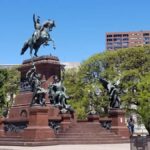
Then you get the centerpiece: the magnificent monument to General José de San Martín and the full story of the man connected to Argentina’s independence. Even if you’ve seen the statue before, the guided narrative changes how you read the space.
Palacio Paz, Palacio San Martín, and the Anchorena family thread
Now the walk turns toward city-palace elegance, mostly around Barrio Norte. You’ll see Palacio Paz first, built in 1914 for José C. Paz, tied to his newspaper business and political aspirations. The detail that makes it memorable: the palace was built entirely with material imported from France, and it had 120 rooms for a family of four.
Nearby is Palacio San Martin, described as the Anchorena family palace, with the name changed for political reasons. The tour explains about Mercedes Anchorena, and you’ll also hear about a nearby fabulous church built for her family.
The common theme you should notice
As the guide moves through these stops, you start to recognize a pattern: foreign styles were not just decoration. They were a language of status, power, and aspiration, translated into stone and imported materials.
Embassies, memorials, and those “how did that happen here?” moments
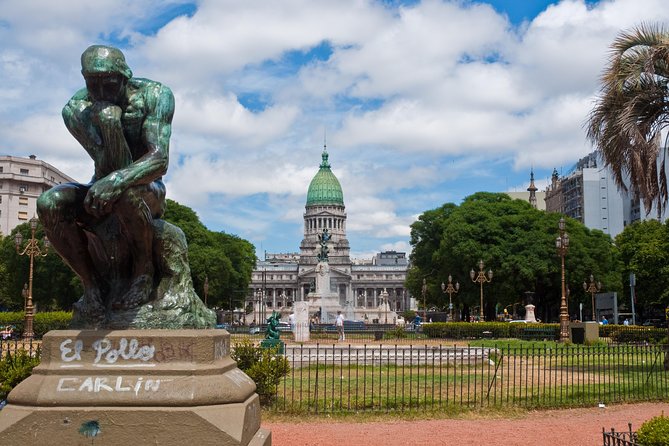
A few stops later, the route includes other big-story addresses.
At Plaza Israeli Embassy, you’ll learn about the 1992 bombing that destroyed the embassy and killed 24 people. The guide explains what happened and why it mattered, then adds a bit of politics and justice in Argentina.
Next is Embajada de Francia. This building is linked to the Ortiz-Basualdo Palace, and the tour frames it with historical gossip worth hearing—like the visit tied to Edward the 7th of England and his American wife-to-be.
Then comes Embajada De La Santa Sede Nunciatura Apostolica. The tour asks a practical cultural question: why is there an Argentine pope? It also ties in relationships between ultra-rich women (Anchorena/Harilaos/Alvear) and the church, including the story of Adelia Harilaos donating her palace to the Vatican.
A quick note on tone
This section can feel heavier than the architecture stops. That’s not a bad thing—it’s Buenos Aires being honest—but if you want only cheerful landmarks, you’ll notice the emotional swings.
Patio Bullrich: from British-style auction building to posh mall
Shopping Patio Bullrich is another stop where the guide makes you look twice. You’d never guess this place used to be a British horse-and-cattle auction building turned into a posh mall around 1990.
The tour gives the original purpose from 1867: built as an auction house for the Bullrich family, it became a premier sales floor for livestock (especially prize bulls and thoroughbreds) and also served as a consignment house for valuable heirlooms and collectibles. Designed by English Argentine architect Juan Waldorp, it’s a neat reminder that British influence wasn’t only “street furniture”—it shaped commerce too.
Barrio Norte reputation and what Avenida Alvear is really showing you
After the embassy and palace stops, the walk spends real time in the elegant lanes of Barrio Norte. The guide explains immigration in Argentina, and specifically mentions 1880–1930, with Spanish, Italians, French, British, and more.
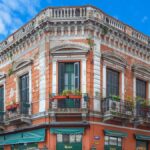
You’ll stroll Avenida Alvear, described as one of Argentina’s most elegant avenues, and you’ll see lavish mansions that match the Paris nickname. This is also where Buenos Aires starts feeling like a neighborhood you could wander on your own—once the stories give you context.
Recoleta: Paris-style townhouses and then the churches
Recoleta is next, and the tour slows down just a bit in tone. You’ll hear about Recoleta Franciscan monks and why the area was given land as a gift, and you’ll see Paris-style townhouses and lavish former palaces in an affluent setting.
Then it’s Basilica de Nuestra Senora Del Pilar in Recoleta. It’s a colonial basilica completed in 1732, and the tour notes it’s the second-oldest church in Buenos Aires. The stop includes admission, which matters because it lets you see the interior rather than only taking exterior photos.
What you’ll feel here
Recoleta is the portion of the tour that feels most like “Buenos Aires as mood.” The architecture and church history align, and it’s a good emotional landing before the cemetery portion.
Recoleta Cemetery: your guided hour with Evita and the named lives
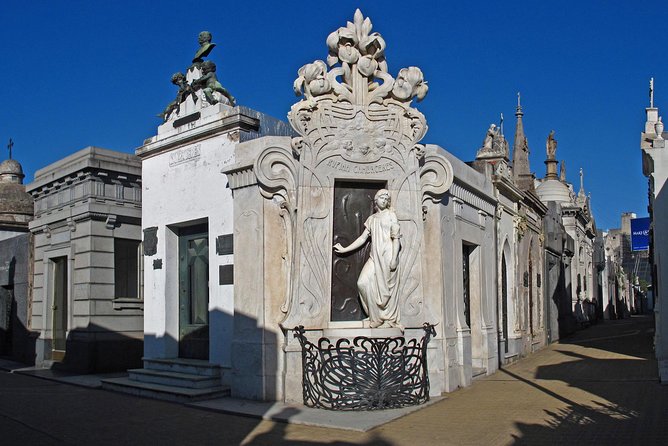
La Recoleta Cemetery is where the tour becomes memorable in a different way. The cemetery visit is detailed and takes about an hour, and the admission ticket is included.
This is the moment you get the names and stories people associate with the cemetery, including Evita Perón’s memorial and story. The guided list also covers other figures such as Rufina Cambaceres, Admiral Brown, the ultra-rich Leloir family, and General Guido, among others.
The tour also includes planned highlights inside the grounds, including:
- Pilar Basilica visit
- Cultural Center & old monastery
- Bourdelle’s monument to Alvear
- Palais de Glace, framed as where tango became of age
- Cultural references that connect tango, ports, and immigration
- Art and design stops like Monument to France & Argentina and the National Fine Arts Museum area (as described on the walk)
Important expectation to manage
The tour notes that the full itinerary can depend on weather and city timing. One earlier experience report even suggested the cemetery visit didn’t match expectations on that day. So come ready for the core idea—Recoleta Cemetery with admission included—but also accept that your guide may adapt the timing if the day forces it.
Ending at La Biela: where your walk turns into your afternoon plan
The tour ends outside La Biela, a landmark café at Av. Pres. Manuel Quintana 596. The guide leaves you there so you can choose what to do next in the Recoleta area.
I like this ending because it’s not some far-off drop you have to solve. You finish in a restaurant and attraction district, and you can either stick around for a meal or keep wandering nearby streets on your own.
Price and value: is $109 worth it here?
At $109 per person for a private walking tour lasting about 3 hours (and described as around 2.5 hours in the main pacing), you’re paying for two things: time with a guide and access/entry where it counts.
The guide is English-speaking, and cemetery admission is included. Several of the stops are “admission ticket free,” meaning you’re mostly getting commentary and guidance, not buying lots of separate tickets. Meals and hotel pickup/drop-off are not included, so you’ll want to handle your own getting there.
In practical terms, I think this is good value if you want architecture plus context in one morning. You’re not just collecting photos—you’re learning how Buenos Aires’ European influences, political memory, and neighborhood wealth show up in buildings you can actually stand in front of.
The real deal on guide quality (Mariano, Martin, Carlos)
A big reason this tour works is the guide performance. I’ve seen strong praise for English delivery and storytelling from guides like Mariano, Martin, and Carlos.
- Mariano is described as very knowledgeable and funny, with excellent English and lots of facts tied to what you’re seeing.
- Martin gets credit for being professional and presenting things with an impressive command of English, plus humor.
- Carlos is noted for being amusing and for covering architecture in Recoleta in a way that made the area feel alive.
There’s also at least one caution from an experience report about the guide spending time trying to sell other tours. You can treat that as a heads-up: if you’re not interested, politely redirect back to questions about what’s in front of you.
Who should book this private walking tour, and who should skip
This is a good fit if you:
- Want a first deep look at central Buenos Aires and Recoleta
- Care about architecture and the stories behind it
- Like guided explanation more than scrolling through your phone solo
- Want a structured morning that ends in a great café area
You might want to skip or choose something else if:
- You dislike long stretches of walking (this walk is described as solid, with many exterior stops)
- You only want museum-style interiors (the tour includes Basilica de Nuestra Senora del Pilar and Recoleta Cemetery interiors; most other stops are exterior)
- You get stressed by days that run on weather and city timing (the itinerary can adapt)
Should you book this tour?
If you’re the type who likes your landmarks with context, yes—book it. This walk turns Buenos Aires’ famous skyline moments (like Kavanagh and Torre Monumental) into a readable story about Europe’s imprint and Argentina’s local response, then it lands with the emotional gravity of Recoleta Cemetery.
If you’re short on time and want one guide-led morning that mixes French-looking elegance, British legacy, and cemetery-level storytelling, this is one of the best ways to spend it.
FAQ
FAQ
How long is the Best of Buenos Aires Private Walking Tour?
It runs about 3 hours approximately, with the main pacing described as around 2.5 hours on foot.
Where do I meet for the tour?
You meet at Florida Garden, Florida 899, and look for the guides near the café corner door at the corner with Paraguay St.
Where does the tour end?
The tour ends at La Biela, Av. Pres. Manuel Quintana 596, in the Recoleta area.
Is the tour private?
Yes. It’s a private tour/activity, so only your group participates.
What’s included in the price?
A professional English-speaking guide and a cemetery admission ticket are included.
What is not included?
Meals are not included, and there’s no hotel pickup and drop-off.
Does it run in the rain?
Yes. The tour operates rain or shine.
Are kids allowed?
Children aged 8 years and under are free of charge when accompanied by an adult.
Will I need to buy cemetery tickets?
No. The cemetery admission ticket is included.
Can I cancel for a full refund?
You can cancel up to 24 hours in advance for a full refund. Canceling less than 24 hours before start time is not refunded.