REVIEW · BUENOS AIRES
Palermo: Graffiti and Street Art Guided Tour in English
Book on GetYourGuide →Operated by Buenos Aires Free Walks · Bookable on GetYourGuide
Graffiti here has real political roots. This Palermo Soho walking tour turns street art into a clear timeline, with an English guide connecting murals to Argentina’s public life. I especially like how the guide explains why people used walls to send messages in tense political times.
I also like the focus on real, specific photo stops, including the Trump Wall graffiti at Madison Avenue Bar. You may hear different storytelling styles from guides like Elina or Vito, but the goal stays the same: help you see the details, not just take pictures. One consideration: it’s a mostly outdoor walk, and the route moves at a lively city pace, so comfortable shoes matter.
In This Review
- Key Things to Know Before You Walk
- Street Art as a Political Language in Palermo Soho
- Finding the Tour: Plaza Serrano Meets the Orange T-Shirt
- The Route Starts in Palermo: Walking Through a Neighborhood That Talks
- From 1920s Politics to Wall Messages That Sold a Side
- Aerosol Paint Arrives in 1969: Why Speed Changed the Streets
- How Protest Became Part of Daily Life
- Madison Avenue Bar and the Trump Wall: A Smart Photo Stop
- What You’ll Actually See: Styles, Sports Murals, and Small Details
- Two Hours and $13: Is This Good Value?
- Rain Plan, Pacing, and Practical Comfort
- Who This Tour Is For (and Who Might Skip It)
- Should You Book Palermo’s Graffiti and Street Art Tour?
- FAQ
- How long is the Palermo graffiti and street art guided tour?
- Where do I meet the guide?
- Is the tour in English?
- Does the tour run in the rain?
- How much does it cost?
- Is the tour wheelchair accessible?
Key Things to Know Before You Walk
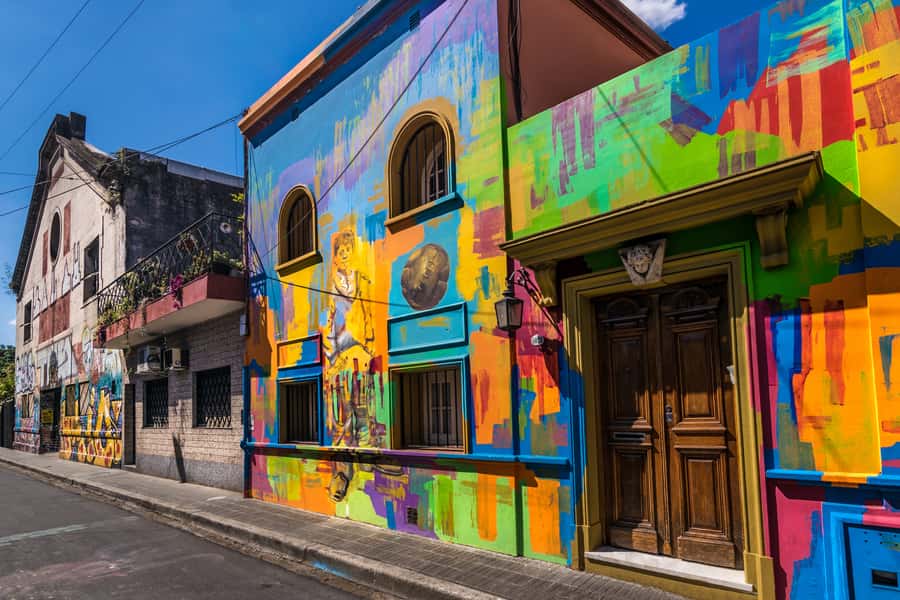
- Palermo Soho route: you’ll be moving through one of the neighborhood’s most art-saturated stretches on foot.
- Politics first: the story is about protest, endorsement, and propaganda, not just aesthetics.
- Trump Wall photo moment: you get pointed, intentional time to capture the Madison Avenue Bar spot.
- From 1920s posters to 1970s protest: you’ll connect street art to key shifts in Argentina’s modern history.
- Spray-paint turning points: the tour explains why aerosol paints changed how messages spread.
- Guides bring it to life: many guides (like Elina, Aylen, Vito, and Juan) are both funny and serious about the subject.
Street Art as a Political Language in Palermo Soho
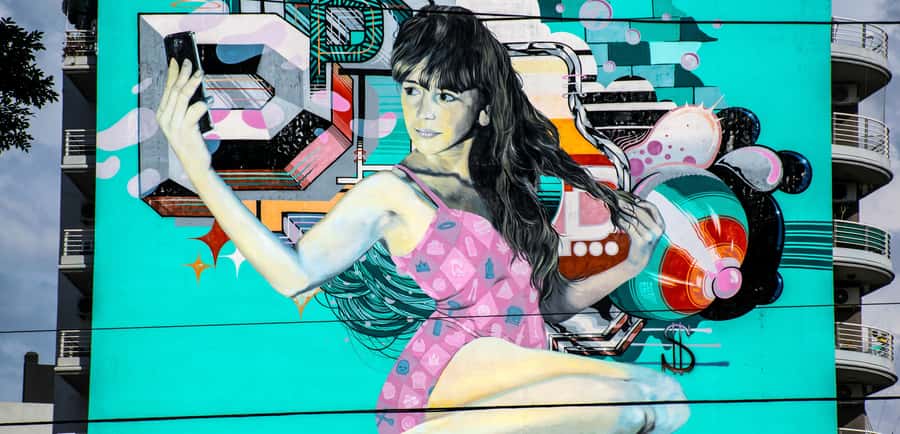
Buenos Aires can look like pure glamour from a distance. On this walk, I like that the city’s street art gets treated as communication, the way flyers, speeches, and campaign slogans work. You start seeing graffiti as public debate written in color.
The big idea is simple: when political tension rises, people still look for ways to be heard. In Argentina, walls became one of those channels, and the guide helps you understand why that mattered at different moments in the 20th century. You’re not just looking at paint; you’re reading intent.
You can also read our reviews of more guided tours in Buenos Aires
Finding the Tour: Plaza Serrano Meets the Orange T-Shirt
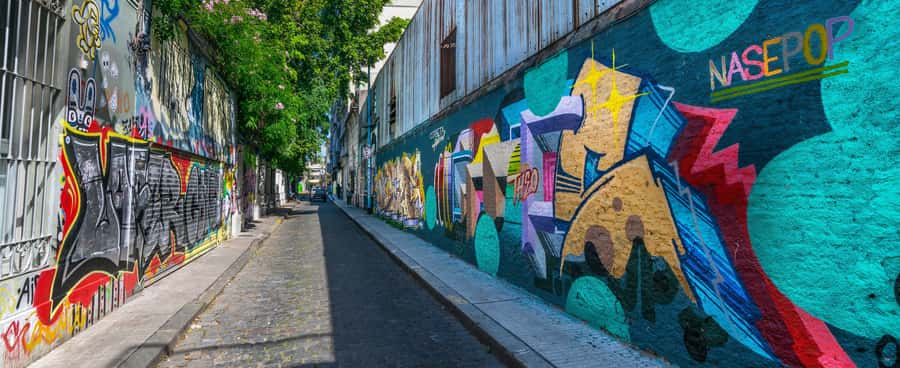
You’ll meet at Plaza Serrano, also called Plaza Cortazar, at the corner of Jorge Luis Borges and Honduras streets. The instruction is straightforward: look for the guide in an orange t-shirt with a big PALERMO sign.
This is one of those meeting points that makes sense. Plaza Serrano is already a landmark in Palermo, so you can get oriented fast. If you arrive early, you can take a minute to scan the area so you feel steady before the walk starts.
The tour is 2 hours on foot, and there’s no hotel pickup/drop-off. You’re doing this one on your own legs, which keeps things simple—and keeps the schedule tight.
The Route Starts in Palermo: Walking Through a Neighborhood That Talks
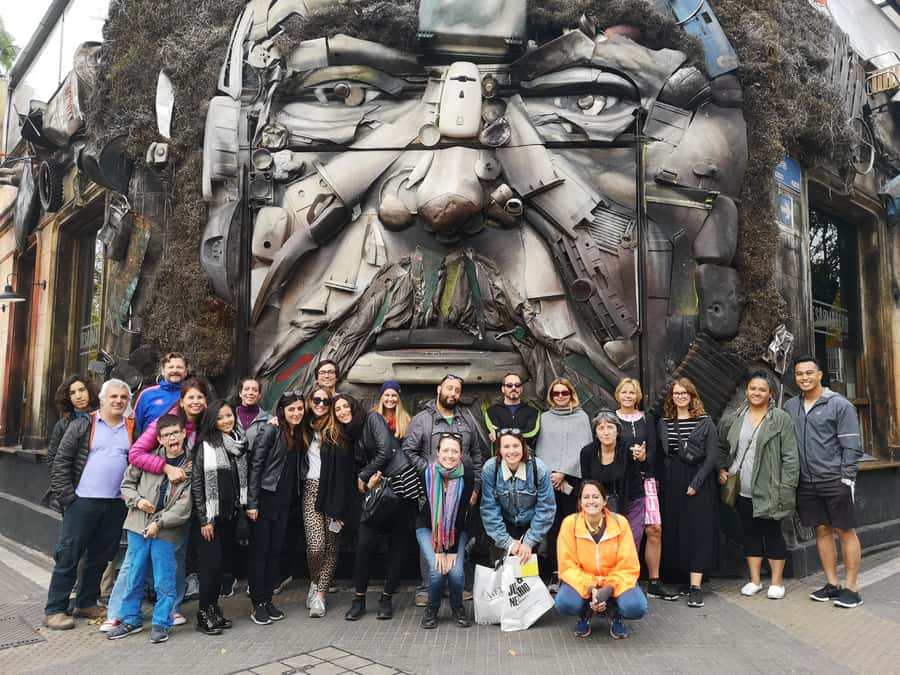
The walk is designed like a guided loop through Palermo’s street-art ecosystem. You begin around Plazoleta Julio Cortazar and you finish at Plaza Inmigrantes de Armenia.
Along the way, you’re meant to connect what you see to what you’re learning. The guide points out how styles and messages reflect the social climate, not just who had the best handwriting. That’s why the pace works for most people: it gives you time to stop, look, and listen without dragging too long.
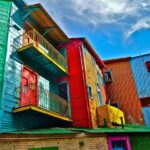
You’ll likely notice the neighborhood’s mix of art styles as you go. In Palermo, you can spot everything from sports-themed murals to whimsical motifs like butterflies, depending on what’s up on the walls that day.
From 1920s Politics to Wall Messages That Sold a Side
One of the most useful parts of this tour is how it starts earlier than most people expect. The guide brings you back to the 1920s, when political movements in Argentina were gaining traction and public messages were starting to matter even more.
At this stage, graffiti wasn’t just random tagging. The explanation focuses on how street markings could be seen as a form of endorsement—basically a public signal that something mattered. The guide also connects wall art to propaganda and election campaigns, where messages needed to travel fast through everyday life.
This framing changes how you look at older-looking work. You start asking questions like: Who would want this seen? What group is it for? What emotion is it trying to trigger? Even if a piece is visually simple, the guide’s political context gives it weight.
Aerosol Paint Arrives in 1969: Why Speed Changed the Streets
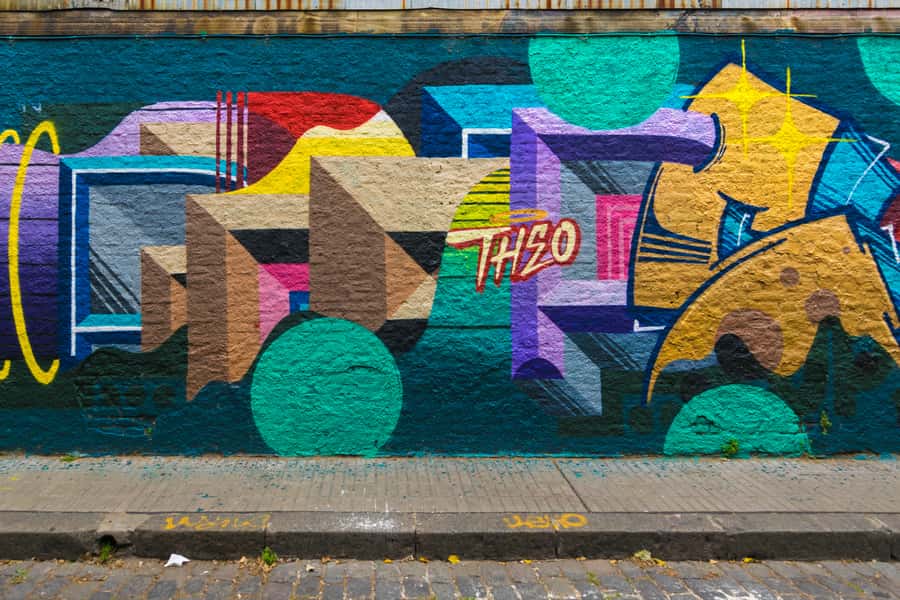
Then the story shifts to a major technical turning point: the arrival of aerosol paints in 1969. The guide explains that this new material made it much easier to write messages quickly compared with what came before.
That matters because speed affects everything about a protest culture. When the tools get faster, people can respond faster—and movement energy can spread through neighborhoods before authorities can slow it down.
The tour links this to the influence of a different military government and to what followed in the 1970s. The message you’re getting is that material technology and politics didn’t move separately. They interacted, and the street reflected those changes in real time.
You can also read our reviews of more tours and experiences in Buenos Aires
How Protest Became Part of Daily Life
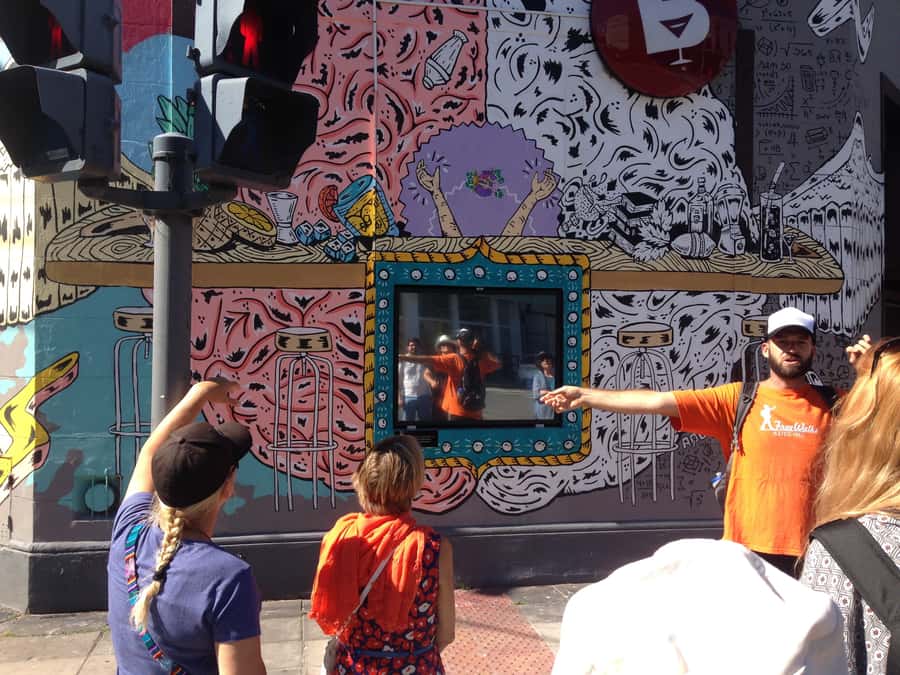
The guide doesn’t treat protest as a single event. You learn how Argentinians became progressively more involved in protesting—right up to the social conflict of the time.
This is one of those “context” lessons that really pays off. You’ll walk past a wall and suddenly understand why a message might feel urgent, repetitive, or targeted. Instead of reading street art as decoration, you read it as a response to pressure.
A good guide is key here, and the tour has strong energy. Many guides—like Aylen, Juan, or Victor—are described as enthusiastic and humorous, which helps when the topic turns serious. The humor doesn’t erase the politics. It just keeps you listening instead of tuning out.
Madison Avenue Bar and the Trump Wall: A Smart Photo Stop
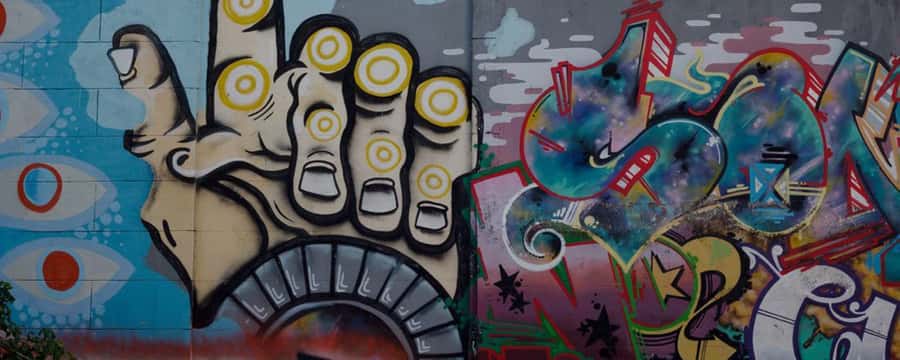
The tour includes a dedicated moment for the Trump Wall graffiti at Madison Avenue Bar. That stop is valuable because it’s specific. You know exactly what you’re walking toward, and the guide tells you what to notice so your photos don’t end up just being blurry color.
This is also a useful stop for learning how to look. The guide’s framing helps you see how contemporary street art can still carry political messaging—even when it feels like pop culture. You walk away with a photo, but more importantly, you walk away with a new lens.
If you’re the kind of traveler who loves street art but often wonders what you’re missing, this is the kind of stop that answers that question quickly.
What You’ll Actually See: Styles, Sports Murals, and Small Details
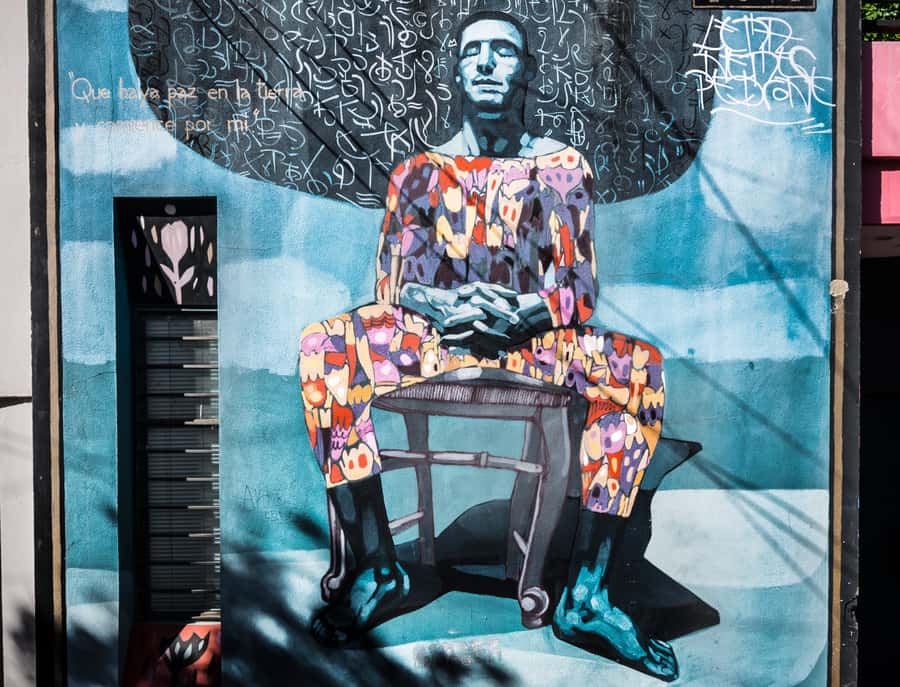
Palermo street art is a visual mix, and the tour helps you sort it. On the walk, you might see different approaches—some pieces feel more like graphic posters, others more like quick statements. Some walls lean into humor, and others look designed to confront.
From the guide’s descriptions, sports imagery is part of the experience too. You may notice football-themed murals, and the guide can tie that to how Argentinians express identity in public space. Even if you’re not a die-hard soccer fan, it’s an easy entry point into the culture.
You’ll also get help with detail-spotting. Guides point out features you might otherwise skip: how lettering is formed, how colors guide your attention, and how a piece’s placement relates to the street around it. That’s what turns the tour into more than a sightseeing loop.
Two Hours and $13: Is This Good Value?
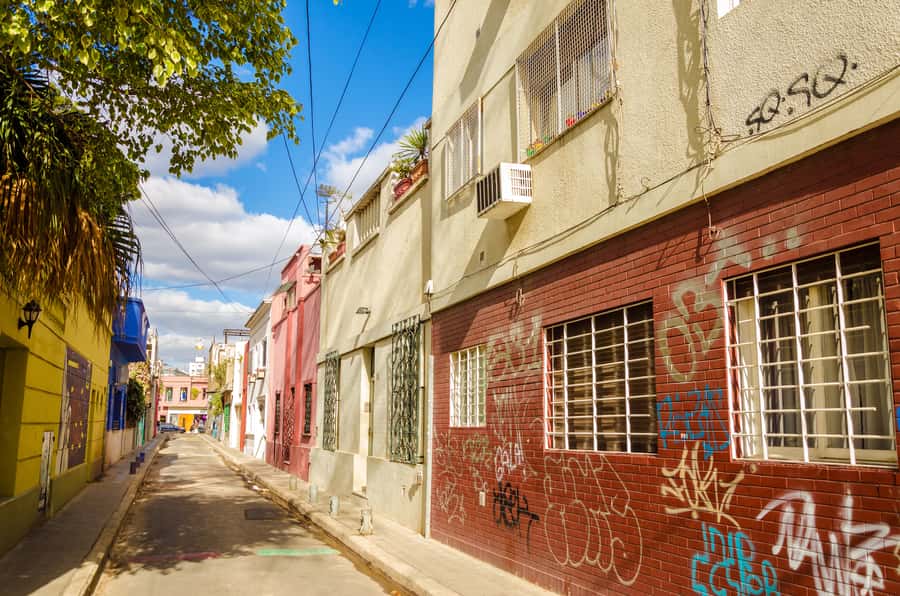
At $13 per person for a 2-hour guided walking tour, the value is in the teaching component. You’re not just paying for someone to point at walls—you’re paying for a guided story that changes how you interpret what you’re seeing.
Street art tours can vary wildly in quality. This one leans toward context and explanation, and the strong guide energy makes a real difference. When a guide can answer questions and keep the group together, you get more than a photo walk. You get a better understanding of why the art exists.
Also, the time is right. Two hours is long enough to connect ideas across multiple stops, but short enough that you won’t feel exhausted halfway through. If you’re spending a few days in Buenos Aires, it fits neatly into an afternoon.
Rain Plan, Pacing, and Practical Comfort
The tour runs even if it rains. That’s a big deal in Buenos Aires, because weather can change quickly. You’ll want a light rain layer or umbrella so you can keep listening without getting soaked.
Pacing is straightforward: it’s a walking tour, and the route moves through active sidewalks. This is why comfortable shoes aren’t optional. If you show up in worn-out sneakers, the last part of the walk can feel less fun than it should.
One more practical note: the guide manages groups so everyone can hear. That matters if the group is larger on your departure time. Even then, the tour is built to keep the experience cohesive.
Who This Tour Is For (and Who Might Skip It)
This tour is a great match if you:
- Want street art with political context, not just aesthetics
- Like learning city history through what people write on walls
- Enjoy guided photo moments, like the Madison Avenue Bar stop
- Prefer an active 2-hour outing you can fit into a busy schedule
You might hesitate if you only want passive sightseeing, with minimal walking and minimal discussion. This experience uses the streets as a classroom, so you’ll get more out of it if you’re ready to listen.
It also works well for English speakers, since the tour is offered in English. And if you need accessibility support, the tour is listed as wheelchair accessible, which helps you plan with confidence.
Should You Book Palermo’s Graffiti and Street Art Tour?
I’d book it if you want to understand Palermo and Buenos Aires beyond postcard sights. This tour teaches you how graffiti became a public voice—how it shifted with new materials like aerosol paint, and how protest culture grew in response to political pressure.
It’s also a good bet for first-time street-art visitors. You’ll walk away with photos, but you’ll also know what to look for next time you see a wall in Argentina. And with guided, English narration plus a price that doesn’t blow up your budget, it’s a smart afternoon move.
If you’re unsure, don’t overthink it: it’s only 2 hours, the route has clear meeting and finish points, and it operates even in rain. If flexibility matters, it’s offered with free cancellation up to 24 hours in advance and a reserve now & pay later option, so you can keep your plans fluid.
FAQ
How long is the Palermo graffiti and street art guided tour?
It lasts 2 hours.
Where do I meet the guide?
Meet at Plaza Serrano (Plaza Cortazar) in Palermo, at the corner of Jorge Luis Borges and Honduras St. Look for the guide in an orange t-shirt with a big PALERMO sign.
Is the tour in English?
Yes, the live tour guide speaks English.
Does the tour run in the rain?
Yes, the tour still takes place even if it rains.
How much does it cost?
It’s $13 per person.
Is the tour wheelchair accessible?
Yes, it is listed as wheelchair accessible.