REVIEW · BUENOS AIRES
Montevideo Private Full Day Tour from Buenos Aires
Book on Viator →Operated by Signature Tours · Bookable on Viator
Uruguay starts on a ferry, and this day trip strings together sweeping river views with guided time in Ciudad Vieja and the Mirador Panorámico. I love how the route mixes big-picture context (history, politics, daily life) with walkable streets and real neighborhoods, not just photo stops. I also like the coast time at the Rambla, where Montevideo’s beach culture is easy to feel. One watch-out: this is a long day starting at 6:00 am, and if there’s traffic or weather, the schedule can feel like a marathon.
What makes it practical is the hotel pickup and drop-off plus ferry tickets, which means you spend your energy on Montevideo, not on figuring out terminals. You may get an English-speaking guide such as Andrea and Manuel, Beatrice, Paola, Pilar, Maria, or Patricia, and drivers have included Horacio, Martin, Lorenzo, Adrian, and Fernando (names that show up in prior departures). Lunch is on you, but the stops are set up so you can eat once and still cover a lot without feeling rushed.
In This Review
- Key points worth knowing
- Crossing the Rio de la Plata: why the ferry ride matters
- Hotel pickup, a private group, and the 6:00 am reality check
- Mirador Panorámico de Montevideo: the skyline you’ll use all day
- The Rambla stretch: coastal life in Montevideo
- Plaza Virgilio and the sea-themed sculpture at sea
- Carrasco’s Avenida Arocena: luxury homes, not just postcards
- Parque Batlle: the green lung and the architecture mix
- Ciudad Vieja: colonial, baroque, classic facades and street-level time travel
- Palacio Legislativo: the neo-classical Greek-influenced centerpiece
- Mercado Agrícola MAM: food shopping without leaving the city tour
- Price and value: what $545 buys you (and what to watch)
- Who should book this Montevideo day trip from Buenos Aires
- Should you book this tour?
- FAQ
- How long is the Montevideo private full-day tour?
- What time does the tour start?
- What’s included in the price?
- Is lunch included?
- Do I need tickets or pay entry fees at the stops?
- Is this tour private?
- Is it kid-friendly?
- Do I need a passport?
- Is the tour refundable if I cancel?
Key points worth knowing
- Ferry time is part of the sightseeing: expect real river views on both the way out and back.
- An 80-meter viewpoint early: Mirador Panorámico de Montevideo gives you a skyline moment before you start walking.
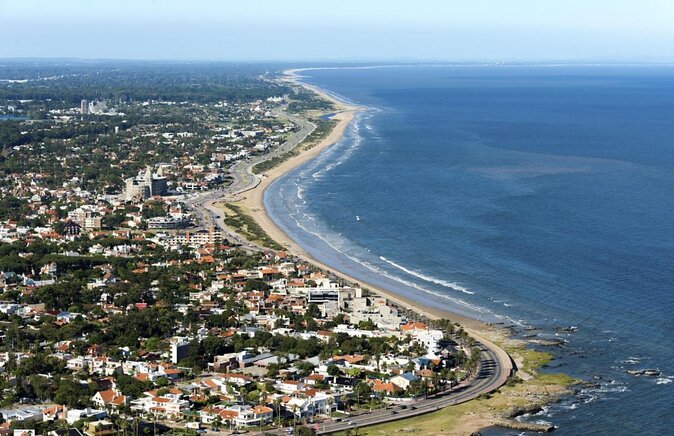
- A long coastal promenade: the Rambla stretches about 30 kilometers and is where locals walk and work out daily.
- Old City + a major government landmark: Ciudad Vieja pairs perfectly with a quick look at the neo-classical Palacio Legislativo.
- Food stop that goes beyond souvenirs: Mercado Agrícola MAM focuses on fresh and packaged foods with a grocery-market feel.
- Watch your day length: even though it’s a full-day excursion, it can run close to 18 hours.
Crossing the Rio de la Plata: why the ferry ride matters
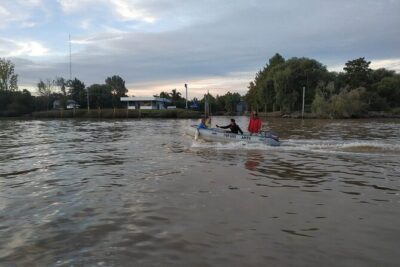
If you’re doing Montevideo from Buenos Aires, the ferry isn’t just transportation. It’s your warm-up act. Crossing the Rio de la Plata gives you changing light, river activity, and a sense that you’re leaving Argentina behind in a tangible way.
You’ll typically have the guide and plan waiting for you on the Montevideo side, so the crossing doesn’t turn into a stressful “where do we meet?” scramble. Still, I’d plan mentally for the day to be long. Multiple parts of the day are time-linked to docking and connections, so delays can ripple through the schedule.
The practical upside: once you land, you’re not starting from zero. You’ve already moved into Uruguay, and the day’s route is built around what’s most recognizable and worth seeing.
You can also read our reviews of more private tours in Buenos Aires

Hotel pickup, a private group, and the 6:00 am reality check
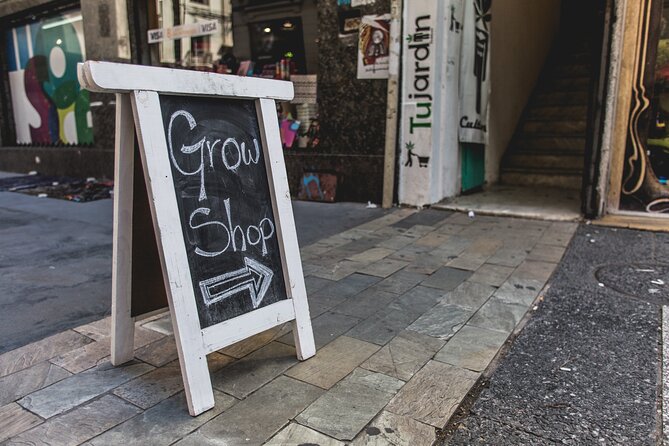
Start time is 6:00 am. That’s early enough to feel like you’re cheating your sleep, but it’s also what makes a one-day Uruguay visit possible.
This is a private tour, so only your group participates. That matters because the guide can pace the day to your questions and walking comfort. It also usually means fewer “herding” moments than big group tours.
You’re covered for:
- Professional guide
- Hotel pickup and drop-off
- Ferry tickets
- Montevideo city tour
What’s not covered:
- Food and drinks (lunch is your choice at a popular local spot)
One more realistic point: your schedule may flex a bit if rain or traffic hits hard. If weather turns, it’s better when your guide can adjust the order or reduce time in bad conditions—this tour is set up so the guide is actively steering the day.
Mirador Panorámico de Montevideo: the skyline you’ll use all day
Your first viewpoint stop is Mirador Panorámico de Montevideo, almost 80 meters up. You get a wide, “whole city in one look” perspective, which makes the later neighborhoods feel easier to place.
This spot has been operating since 1979, and it originally offered a restaurant and cafeteria that hosted different kinds of social events. That’s a useful detail because it reminds you the viewpoint isn’t only about scenery—it’s also been a place for people to gather and watch the city work and change.
You’ll spend about 30 minutes here, and that time is exactly right for:
- taking photos without rushing
- getting oriented before you start walking
- spotting how the city relates to the Rio de la Plata
If you get motion-sensitive, viewpoints are a calmer start than city walking. It’s a good way to wake up gently.
The Rambla stretch: coastal life in Montevideo
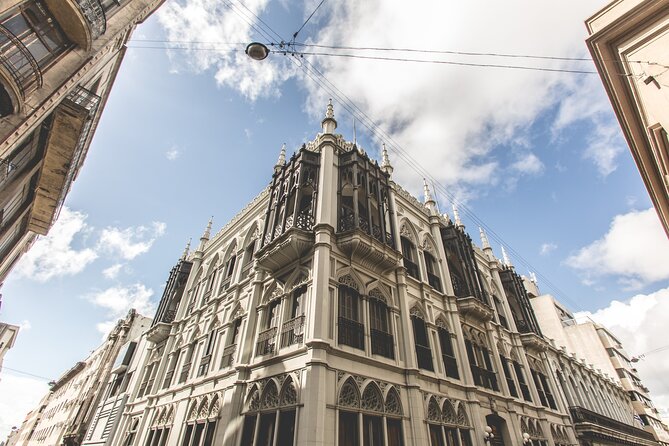
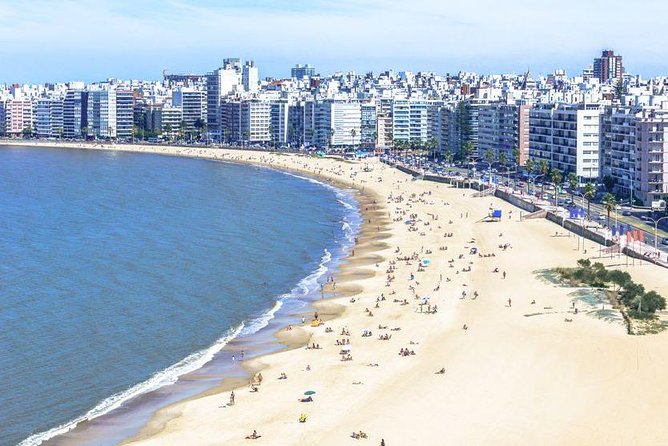
After the viewpoint, you’ll head to the Rambla de Montevideo. This is one of the city’s biggest open-air attractions: beaches lined by a boulevard of almost 30 kilometers.
The Rambla is where locals go daily. That means you’re not only looking at scenery; you’re seeing how Montevideans move—walking, jogging, cycling, chatting, and lingering. Even if you only spend around an hour, you’ll get the rhythm fast.
Practical tip: plan to dress for wind. The river can bring a breeze, and Montevideo weather can shift quickly. You’ll feel it more along the coast than in sheltered streets.
I like that this stop isn’t framed as a “look and go.” It’s an opportunity to slow down, breathe, and let the city’s coastline culture settle in.
Plaza Virgilio and the sea-themed sculpture at sea
Plaza Virgilio is a small stop that packs in meaning. It’s a meeting point for locals from Malvinas and Punta Gorda, so the vibe is more neighborhood than tourist zone.
You’ll also get a panoramic view over the Rio de la Plata from the boulevard setting. If your day lines up with sunset lighting, this is a great place for it—otherwise, it still works as a visual break between busier walking areas.
Then there’s the bronze sculpture, which is the kind of detail that turns a stop into a story:
- the design expresses the struggle for life at sea
- circular figures, stars, marine animals, and hands reaching to hold onto a ship
- a gray granite plaque reads Monument to the Fallen in Service Act of the Navy, which is why the spot is often called Plaza de la Armada
You’ll have about 15 minutes. That’s enough time to read the plaque (if you can) and look at the symbolism without feeling stuck.
You can also read our reviews of more tours and experiences in Buenos Aires

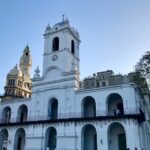
Carrasco’s Avenida Arocena: luxury homes, not just postcards
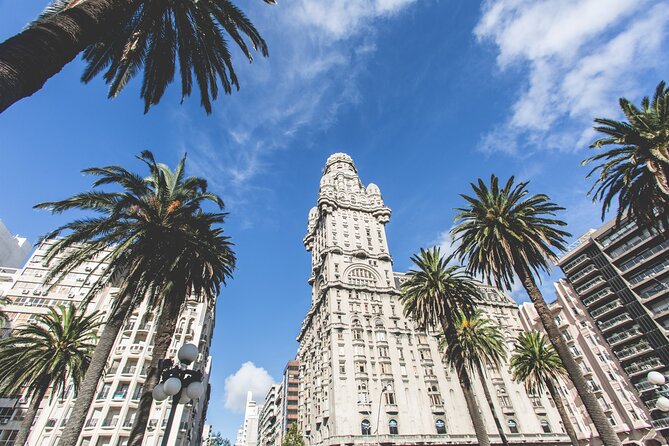
Carrasco is about 15 kilometers southeast of the center, and it’s known as one of Montevideo’s most luxurious residential areas. This is where you’ll feel the city’s “polished” side—wide streets, grand residences, and a more upscale commercial strip.
Your stop here is focused on the Boulevard connection around the area of Bolonia 1722 and includes time to stroll along Avenida Arocena, where you’ll find many shops and restaurants.
Two things to keep in mind:
- This isn’t a must-see museum stop; it’s a neighborhood texture stop.
- If you like people-watching and architectural facades, it’s a good use of time. If you only care about landmarks, you may wish you had 10–15 more minutes in Ciudad Vieja later.
Either way, Carrasco gives you balance. Montevideo is not only old buildings and major squares. It has modern comfort and class differences you can see in the streetscape.
Parque Batlle: the green lung and the architecture mix
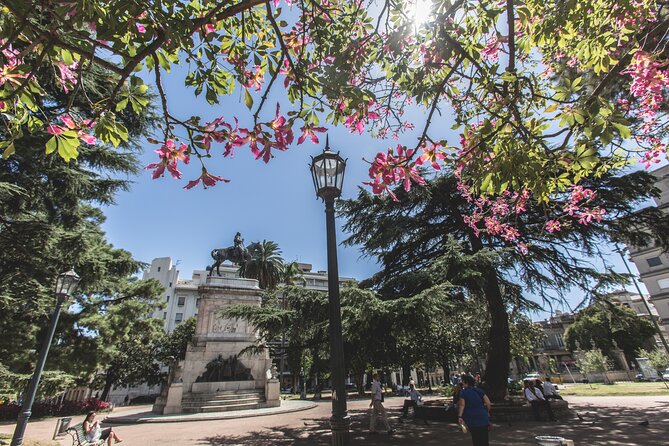
Next up is Parque Batlle, a neighborhood area framed by major roads: south of Italia Avenue and north of Rivera Avenue. It’s named for the “green lung” in the center, so you get a park-and-city-center feeling instead of purely dense urban blocks.
One more helpful orientation detail: Parque Batlle sits between other neighborhoods with different levels of energy and identity, including Tres Cruces, Pocitos, and La Blanqueada. Even if you don’t tour those areas directly, you’ll understand why Montevideo feels layered.
You’ll spend about 30 minutes here. That’s enough to:
- take a breather
- walk through a calmer pocket
- spot the neighborhood’s “peculiar architecture” vibe described for the area
If you’re traveling with kids, a park stop is also a good energy reset before the Old City walking begins.
Ciudad Vieja: colonial, baroque, classic facades and street-level time travel
This is the big walking area: Ciudad Vieja. You’ll see colonial, baroque, and classic buildings with serious architectural and heritage value.
It helps to know what you’re looking at. Ciudad Vieja began as a residential area. Over time, it shifted into offices and shops, and it became the financial center of the country. That explains why the streets feel like they’re designed for both everyday life and “important activity.”
You’ll have around 1 hour 30 minutes, and that’s the right amount of time to do more than take a few photos. In places like this, the facades are the show. The details matter: stonework, front designs, and building rhythm.
Also, this is where the guide commentary really pays off. When someone explains what changed over time—who lived here, what drove commerce, why buildings look the way they do—streets stop being scenery and start becoming understandable.
If you love architecture, this is where you’ll wish you had another hour.
Palacio Legislativo: the neo-classical Greek-influenced centerpiece
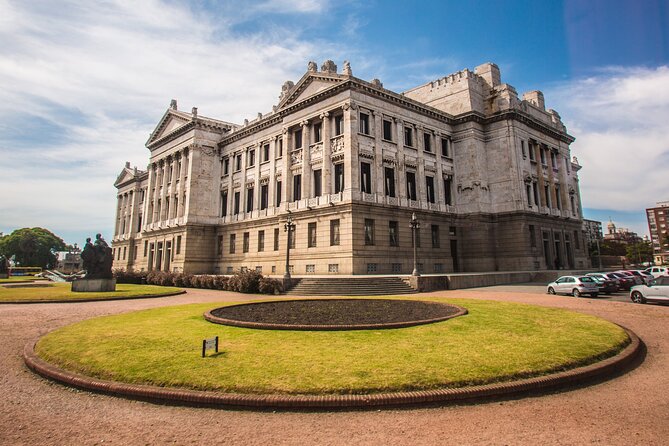
After Old City walking, you’ll stop at the Palacio Legislativo. This is Montevideo’s Legislative Palace, and it’s described as the standout example of Uruguay’s neo-classical architecture.
The key visual detail is the strong Greek inspiration in the exterior facades. That’s the kind of design choice that makes it feel formal, intentional, and built to command respect.
Your stop time is brief—about 10 minutes—but it’s strategically placed. It gives you a landmark anchor after smaller street details, and it’s a natural bridge to history and politics themes your guide has been discussing.
Even if you only get a quick look, I think it’s worth it. It’s one of those buildings where you can immediately see why it became important.
Mercado Agrícola MAM: food shopping without leaving the city tour
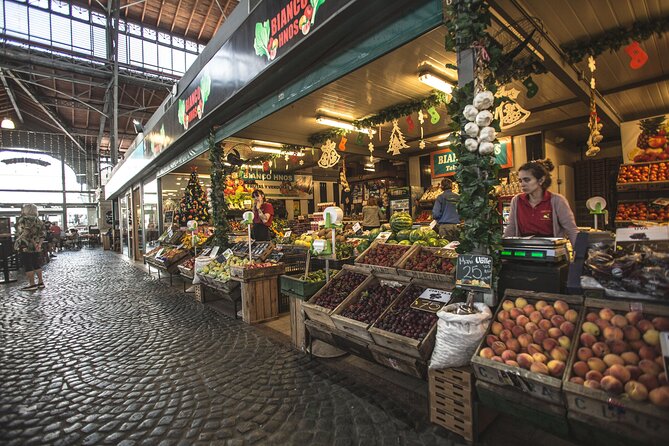
The final featured stop is Mercado Agrícola Montevideo (MAM). This is positioned as a newer tourist spot, but the concept is practical: a retail market focused on non-perishables and fresh foods, with a grocery-and-gourmet approach.
Why this matters: it’s not only about eating. It’s where you can taste and shop a little culture. You can find fruits, vegetables, fresh products, natural specialties, and also more packaged gourmet items. It’s a food stop that gives you options.
You’ll have about 30 minutes. That’s enough to:
- grab a snack or treat if you didn’t eat at lunch
- buy a few easy take-home items
- reset before the long return trip
Lunch earlier is on your own expense, and the day is structured so you eat once and still cover the full set of neighborhoods and landmarks. If you care about local flavor, this market stop is a smart final payoff.
Price and value: what $545 buys you (and what to watch)
At $545 per person, this isn’t a budget excursion. So the real question is whether the price matches what’s included.
Here’s what you’re paying for in plain terms:
- Private guiding (not just an audio app)
- Hotel pickup and drop-off
- Ferry tickets
- A planned city route that covers viewpoint, coast, multiple neighborhoods, Old City, and major landmarks
The value case gets stronger if you’re traveling with someone you can share the cost with (couples, families). Private day trips can feel expensive compared to group tours, but when you add ferry transfers and guided time across two countries, the total starts to make more sense.
What to watch: the day can run long. If you’re the type who hates early starts and doesn’t handle time pressure well, this price may feel harsher. Also, since food and drinks aren’t included, budget a bit for lunch.
So I’d frame it like this: if you want a guided “best of Montevideo” day without logistics headaches, the price can be justified. If you’re more independent and want to wander at your own pace, you may find alternatives that cost less.
Who should book this Montevideo day trip from Buenos Aires
This tour fits best if you want:
- a guided first visit to Montevideo
- a route that mixes neighborhoods, not only museums
- the ferry experience as part of the trip
- a private group format with pickup and drop-off
It’s also kid-friendly, since you have open time outdoors (Rambla, park areas) and a route that doesn’t rely only on long indoor visits.
It may be less ideal if you:
- get very tired with early mornings and long days
- prefer fully free time (this is structured and time-based)
- want a cheap day trip where you don’t plan much
If you’re asking yourself whether you can handle a full-day push across borders, be honest: your biggest challenge here is stamina.
Should you book this tour?
If you’re doing Montevideo once and want it to feel organized, this is a strong option. The mix of Mirador Panorámico, the Rambla, Ciudad Vieja, and the Mercado Agrícola MAM covers the city’s main “first impressions” in one day, with a guide who explains what you’re seeing. The ferry crossing and hotel transfers remove the hardest logistics, which is where many DIY attempts get annoying.
I’d book if you want convenience, clear pacing, and landmark-to-neighborhood context. I’d think twice if you hate long days or you’re traveling without flexibility in your schedule, because this excursion depends on time-linked connections and can feel stretched when things run behind.
FAQ
How long is the Montevideo private full-day tour?
It lasts about 18 hours.
What time does the tour start?
The start time is 6:00 am.
What’s included in the price?
Included are a professional guide, hotel pick-up and drop-off, ferry tickets, and a Montevideo city tour.
Is lunch included?
No. Lunch is an own-expense stop at a popular local restaurant.
Do I need tickets or pay entry fees at the stops?
Most listed stops are free. For example, Mirador Panorámico de Montevideo, Rambla de Montevideo, Plaza Virgilio, Parque Batlle, Ciudad Vieja, Palacio Legislativo, and Mercado Agrícola MAM are listed as free. Bolonia 1722 has admission ticket not included.
Is this tour private?
Yes. It’s a private tour/activity, with only your group participating.
Is it kid-friendly?
Yes, it’s described as kid-friendly.
Do I need a passport?
Yes. A current valid passport is required on the day of travel.
Is the tour refundable if I cancel?
The experience is non-refundable and cannot be changed for any reason. Refunds are not issued if the tour is missed due to late or non-arrival of a cruise ship.