REVIEW · BUENOS AIRES
Free Walking Tour of Buenos Aires
Book on GetYourGuide →Operated by Swell Experiences · Bookable on GetYourGuide
Start at Plaza de Mayo, then walk the story. This 2-hour Buenos Aires walking tour is a smart way to get your bearings fast, with guided stops around the city’s power center and classic sights. I like how the route links political landmarks to the human side of the city—Evita Perón’s Casa Rosada balcony story is part of the walk.
I also enjoy the mix of grand monuments and older institutions, like the Café Tortoni stop and the stop for Palacio Barolo. The one drawback you should take seriously: the overall review score is low, and there’s at least one report of the guide not showing up.
If your goal is to see the big-name sights without trying to stitch together routes on your own, this format can work well. Just keep expectations realistic, show up early, and be ready to pivot if plans go sideways.
In This Review
- Key highlights I’d plan my day around
- Why Plaza de Mayo is the best place to begin
- Casa Rosada and the Evita balcony moment
- Cathedral stop and Avenida de Mayo’s European-style stretch
- Obelisco, Café Tortoni, and Palacio Barolo for classic Buenos Aires mood
- National Congress finish: democracy symbolism in a pretty square
- Price and time: when $10 is good value (and when to be cautious)
- Spanish or English: choosing the right start time
- Practical tips for walking the Buenos Aires center like you mean it
- Who this tour is best for
- Should you book this Free Walking Tour of Buenos Aires?
- FAQ
- How long is the Free Walking Tour of Buenos Aires?
- Where do I meet the guide?
- What sights are included on the tour?
- What languages are available?
- Is there a guided component?
- What is the price?
- Is the tour wheelchair accessible?
- Is cancellation allowed?
Key highlights I’d plan my day around
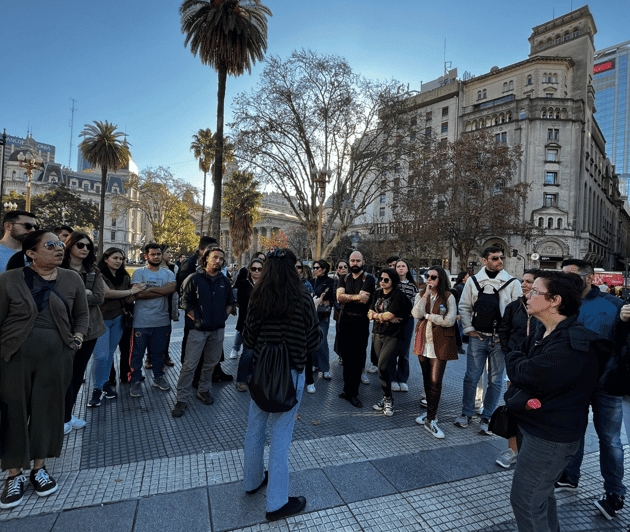
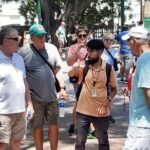
- Meet at Pirámide de Mayo and look for a guide holding a black umbrella labeled SWELL
- Casa Rosada with a guided stop that includes the balcony connection to Evita Perón
- Buenos Aires Metropolitan Cathedral as a key historical stop
- Avenida de Mayo for a full hour of European-style architecture and centenary-building detail
- Café Tortoni + Palacio Barolo for iconic Buenos Aires atmosphere beyond the obvious monuments
- Finish at Congreso de la Nación Argentina, the democracy symbol at the end of the walk
Why Plaza de Mayo is the best place to begin
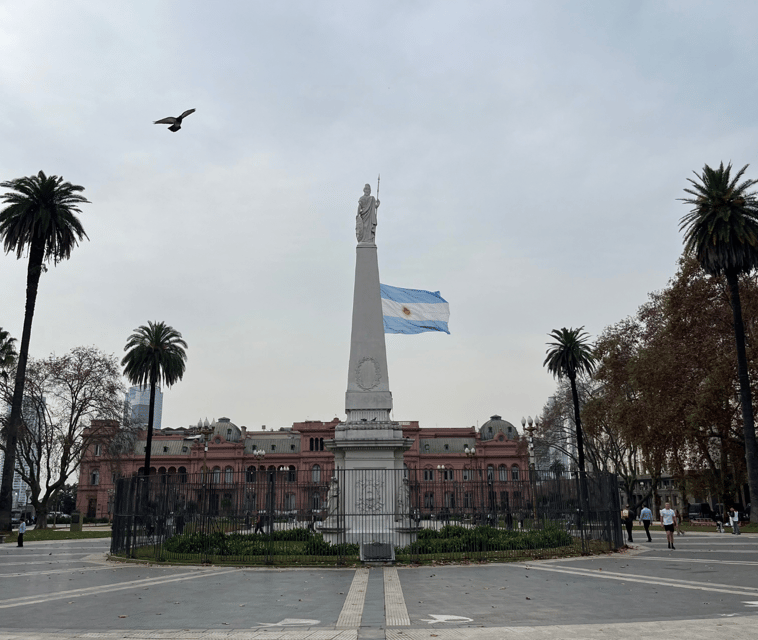
If you want Buenos Aires to click, start where the city’s story got loudest. The tour meets near the Pirámide de Mayo, which puts you right at the center of the action for understanding the capital. From there, you’re set up to walk with context instead of just ticking off famous buildings.
Plaza de Mayo isn’t just a pretty square. It’s where major Argentine events unfolded, and the area naturally ties together government, media attention, and national identity. That matters because Buenos Aires can feel like different eras stacked on top of each other, and this walk is designed to point out those links.
The pacing is built for an easy two hours. You’re not expected to sprint between stops. You’ll get guided time at key photo-and-history points, which helps you notice details you would likely miss while wandering on your own.
One more practical benefit: meeting at a well-known landmark area makes it simpler to coordinate your day. You can plan breakfast nearby, then do the walk as the first “orientation” activity before your afternoon explorations.
You can also read our reviews of more walking tours in Buenos Aires
Casa Rosada and the Evita balcony moment
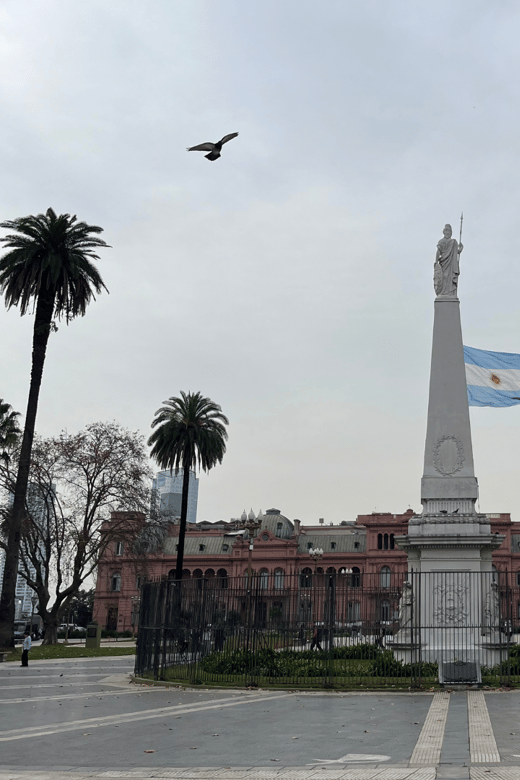
The first big landmark stop is Casa Rosada, the government headquarters. The tour includes a guided visit here for about 20 minutes, so you get more than a quick glance from the sidewalk.
Casa Rosada is one of those places where your brain automatically asks questions: Who runs the country from here? Why does it matter? A good tour makes those questions feel answerable, and this one leans into storytelling. One of the tour’s most memorable beats is the balcony connection to Evita Perón—she sang Don’t Cry for Me Argentina from that balcony area, according to the tour description.
Even if you’re not an Evita superfan, the point is bigger than one figure. You’re seeing a site where public life and performance meet. It’s a reminder that politics here has long been tied to popular culture, not kept locked away behind paperwork.
Possible watch-out: Casa Rosada is a working, high-profile location. If something limits access or viewing angles on the day you go, your best move is to stay patient and keep listening. The guided portion is what you’re paying for—or in this case, what you’re budgeting for as part of a walking tour format.
Cathedral stop and Avenida de Mayo’s European-style stretch
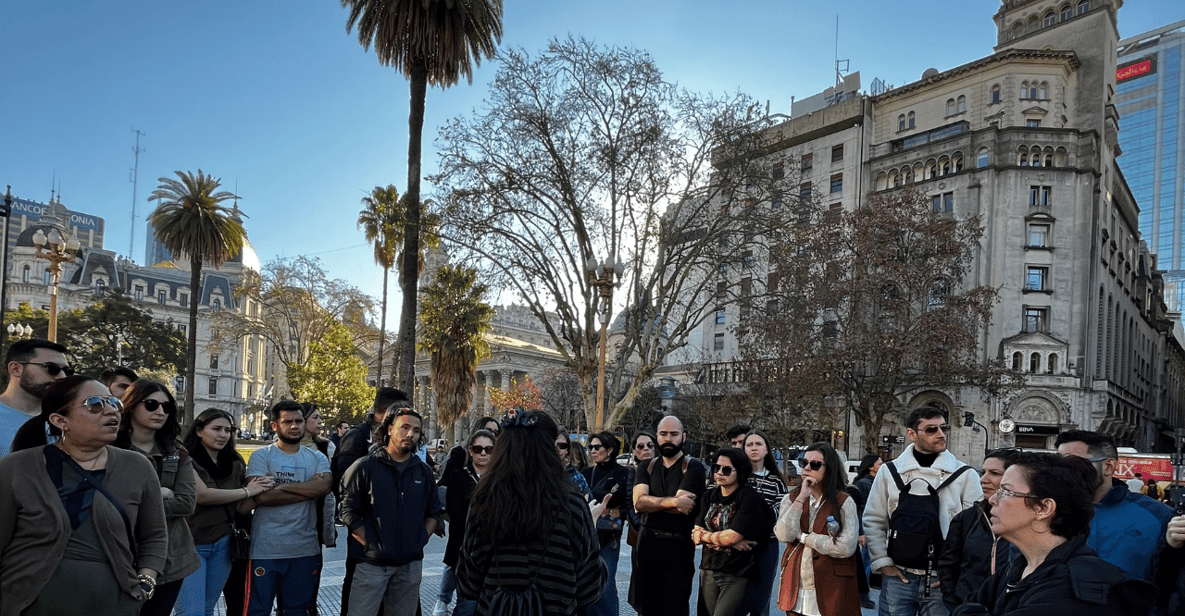
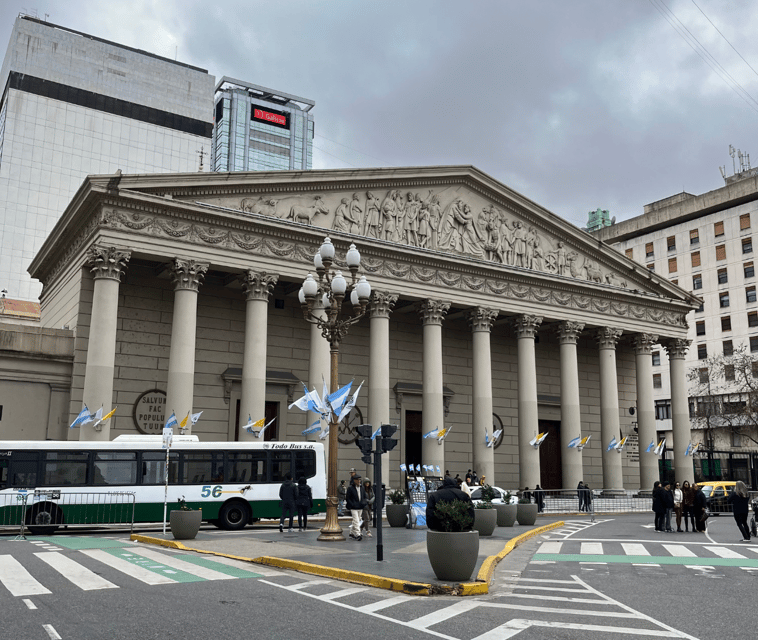
After Casa Rosada, you head toward the Buenos Aires Metropolitan Cathedral, with guided time of around 35 minutes. This is a classic “city power meets faith” kind of stop, and it’s valuable because the cathedral isn’t just architecture—it’s part of how Buenos Aires explains itself. You’ll likely hear the story through the lens of what the city built and why.
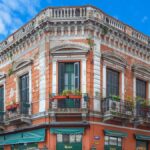
Then comes the longest walking stretch: Avenida de Mayo for about an hour. The tour description calls it filled with European charm, and it’s easy to see what they mean once you’re walking it. This is the kind of avenue where the buildings don’t feel accidental. They look designed to impress.
This section is where I think you get one of the best returns on your time. You’re not only learning about individual landmarks—you’re learning how Buenos Aires “talked” to the world through architecture. The tour specifically mentions centenary buildings and European-style presence, which is the right theme for making sense of what you’re seeing.
Two other named stops that fit this section: La Prensa building appears in the tour’s highlights, and the route also includes iconic downtown monuments like the Obelisco along the way. If you’re the type who likes to understand how a city developed, the avenue section is the part that often makes the rest of the day feel easier.
Drawback to keep in mind: this is a walking-heavy segment. If you’re sensitive to uneven sidewalks or want a lot of downtime, plan a slower afternoon after the tour.
Obelisco, Café Tortoni, and Palacio Barolo for classic Buenos Aires mood
You’ll hit the Obelisco as one of the headline monuments. It’s one of those shapes you recognize instantly from photos, but on the street it becomes a point of scale. It helps you orient not only your map, but also your sense of how central downtown is.
Then you get a stop that changes the tone: Café Tortoni. The tour includes a shorter guided moment here (about 10 minutes), but it’s a smart choice. This is where Buenos Aires stops feeling like a museum of buildings and starts feeling like a place people have sat in for generations. Even if you don’t order anything, the café stop nudges you toward the city’s social side.
After that, Palacio Barolo enters the picture. The tour description gives about 15 minutes of guided time at Palacio Barolo, and it’s the kind of stop that tends to make architecture feel like it has a personality. You’ll also pass other visual landmarks connected to Argentina’s cultural memory, including the Mural of Evita Perón.
What I like about this phase of the walk is that it avoids making the whole tour feel like government-only history. You’re walking through politics, sure. But you’re also seeing how art and everyday institutions sit inside the same downtown space.
One practical tip: these stops are great for photos, but it’s worth listening first. The guided time is short by design, so if you treat it like a photo break only, you may miss the “why” behind what makes each place worth your attention.
National Congress finish: democracy symbolism in a pretty square
The tour ends at Congreso de la Nación Argentina, with the description positioning it outside the Congress building. The National Congress is presented as a symbol of Argentine democracy, and the timing of the walk matters here: you reach it after passing the government landmark at Casa Rosada, so the theme lands with more weight.
The tour also mentions that the Congress sits on one of the prettiest squares in the capital. That matters because it’s a natural finishing point for both your feet and your brain. After two hours, you’re ready to pause, look around, and decide what to do next.
This ending area is useful even if you have a full afternoon planned. Congress is a strong anchor for navigating deeper into downtown or connecting to other sights. It gives you options without forcing you into a hard schedule.
One thing to clarify on the day: the info provided suggests the meeting point is Pirámide de Mayo, and it also says the activity ends back at the meeting point. But the route description says the tour finishes at the Congress. My advice is simple: take a screenshot of the operator’s final instructions when you book, and confirm the exact end point with the guide before you set off on the day.


Price and time: when $10 is good value (and when to be cautious)
The price is listed at $10 per person, and the duration is about 2 hours. That’s a fairly compact block of guided time for Buenos Aires’ biggest downtown landmarks, which is where walking tours can offer real value—if the guiding actually happens.
Here’s how I judge value for tours like this:
- If the guide meaningfully connects sights (not just points them out), two hours is enough to make you feel oriented.
- If you would otherwise spend time figuring out routes, a guided plan saves mental energy.
- If accessibility and logistics are smooth, you gain a lot with very little cost.
Now the caution. The overall review score tied to this experience is low, and one of the notes is very serious: a guide not showing up. I’m not saying that will happen to you. But I am saying you should factor it in when you decide whether this is your only planned activity.
If you have flexible plans that day, this is a reasonable-risk, low-cost way to learn. If you have a tight schedule where you can’t waste time, I’d build a backup option—like a nearby self-guided loop around Plaza de Mayo—so you’re not stuck.
Spanish or English: choosing the right start time
The tour has language options listed by time: 11:00 Español and 14:30 English. That’s a big deal in Buenos Aires, where you’ll often find that English and Spanish experiences can feel different depending on the guide and the group.
If your Spanish is basic, choose the English departure so you can focus on the story instead of decoding. If you want the best practice exposure and you’re comfortable following more details, the Spanish departure can add texture.
Also think about timing. A morning start is often easier for photos and walking comfort, while a later start can work if you’re planning to do museums or neighborhood browsing first. This is a short tour, so the time of day mainly affects comfort and your energy level.
Practical tips for walking the Buenos Aires center like you mean it
For a smooth two-hour experience, I’d do four things:
- Arrive a few minutes early at Pirámide de Mayo and look for the guide holding a black umbrella labeled SWELL.
- Wear shoes you can walk in comfortably. Downtown sidewalks can be uneven, and your stops are spaced out.
- Bring a phone with your map ready. You won’t need to navigate, but it helps when you want to extend your day after the finish.
- Plan to be present. The guided time at each stop is limited, so listen during the walkthrough and save questions for when the group pauses.
Wheelchair accessibility is listed, which is useful if you use mobility support. Still, downtown routes can have curb cuts and surface changes, so you’ll want to move at the guide’s pace and ask about route details if you have specific needs.
Who this tour is best for
This walking tour is a good match if:
- You’re seeing Buenos Aires for the first time and want a structured way into the historic center
- You love landmark clusters, like major government sites plus classic cafés and standout architecture
- You want guided context for places like Casa Rosada, Avenida de Mayo, the Obelisco, and the National Congress
It may be less ideal if:
- This is your only planned activity and you can’t handle possible disruptions
- You prefer long museum-style stops rather than quick guided moments at multiple exterior landmarks
- You dislike walking and want a more sit-down, indoor-heavy format
Should you book this Free Walking Tour of Buenos Aires?
I’d book this only if you treat it as a value-oriented orientation walk, not a perfect guarantee.
If you can handle uncertainty—and you’re excited by the idea of covering Casa Rosada, Avenida de Mayo, Obelisco, Café Tortoni, and finishing at Congreso in about two hours—this can be a smart use of your time. The combination of government landmarks plus old-school Buenos Aires vibe is exactly the kind of mix that helps first-timers understand the city fast.
But because the rating is low and there’s a report of a guide not showing up, don’t go all-in. I’d keep your day flexible and have a backup plan nearby around Plaza de Mayo. If you do that, you can turn a rough start into a still-good Buenos Aires day.
FAQ
How long is the Free Walking Tour of Buenos Aires?
It lasts about 2 hours.
Where do I meet the guide?
You meet at Pirámide de Mayo, looking for a guide with a black umbrella (SWELL).
What sights are included on the tour?
Key highlights include Casa Rosada, Buenos Aires Metropolitan Cathedral, Avenida de Mayo, Obelisco, Café Tortoni, and stops such as Palacio Barolo and the National Congress of Argentina.
What languages are available?
The tour lists Español at 11:00 and English at 14:30.
Is there a guided component?
Yes. The tour includes a live guided tour, and the listed inclusion is only the guided tour.
What is the price?
The price is listed at $10 per person.
Is the tour wheelchair accessible?
Yes, it is listed as wheelchair accessible.
Is cancellation allowed?
Free cancellation is listed, with cancellation up to 24 hours in advance for a full refund.