REVIEW · BUENOS AIRES
Premium Day Trip to Colonia del Sacramento
Book on Viator →Operated by Tours Buenos Aires · Bookable on Viator
Colonia del Sacramento feels like time travel. You’ll cross the Río de la Plata to a UNESCO old town shaped by Portuguese streets, watch the day’s highlights with a local guide, and still get real breathing room for lunch and wandering, all capped at 15 guests. I especially like the worry-free ferry and hotel transfers that handle the hard parts up front. The one catch: it’s not a quick escape from customs—plan for a long day and bring a passport.
The tour works best when you want structure without losing freedom: a guided run through the core sites, then time to explore on your own. I also like how the route mixes headline places (like the lighthouse and the basilica) with small details (like the famous drainage-slope street). The possible drawback is cost; at $248 per person, the value depends on whether you’ll use the included guidance and transfers rather than doing it DIY.
In This Review
- Key highlights worth caring about
- Buenos Aires to Colonia: a 12-hour day that starts early
- Why Colonia feels like a Portuguese postcard
- The guided city tour: UNESCO core sites, focused and efficient
- La Calle de los Suspiros and the Portuguese street logic
- Puerta de la Ciudadela: a defensive entrance with pirate pressure
- Faro de Colonia: red flashes, river light, and old tower re-use
- Basilica del Santísimo Sacramento: a back-lit monstrance focal point
- Lunch time in Colonia: plan for free exploring, not just photos
- Price and value: what you get for $248 (and what you still pay for)
- Which traveler benefits most from this premium format?
- Should you book the Colonia del Sacramento day trip?
- FAQ
- What time does the tour start?
- Is a passport required for this trip?
- How many people are in the group?
- What’s included in the price?
- What are the main stops in Colonia del Sacramento?
- Is food included?
Key highlights worth caring about
- Max 15 guests keeps the walk feel personal, not like a cattle line.
- Fast round-trip ferry + hotel pickup/drop-off makes Uruguay feel doable in one day.
- A local guide focused on Portuguese/Uruguayan context, not just dates and names.
- Classic Old Town stops like La Calle de los Suspiros, Puerta de la Ciudadela, and Faro.
- Flexible time on your own in Colonia for lunch, shopping, and slower sightseeing.
Buenos Aires to Colonia: a 12-hour day that starts early
This is a full-day operation that begins at 7:00 am. That early start matters because you’re crossing an international border and you’ll need time for check-in, seating, and immigration/customs processing in both directions.
What makes the experience calmer than most DIY attempts is that you get round-trip ferry tickets plus hotel pick-up and drop-off. You’re not scrambling for schedules, tickets, or the right meeting point at the port. One helpful detail: some guides actively help you through the ferry process step-by-step, which is a big deal when the port can feel busy and confusing.
Also, you’ll want to travel with your current valid passport. The operator notes that your passport details (name, number, date of birth, country) are required at booking, and you’ll need the correct identity documents on the day of travel.
Finally, a quick reality check: even when the ferry ride itself is short (reviews mention around 50 minutes), the border side can take time. Build in patience. If you hate lines and long waits, this may test your nerves.
You can also read our reviews of more tours and experiences in Buenos Aires

Why Colonia feels like a Portuguese postcard
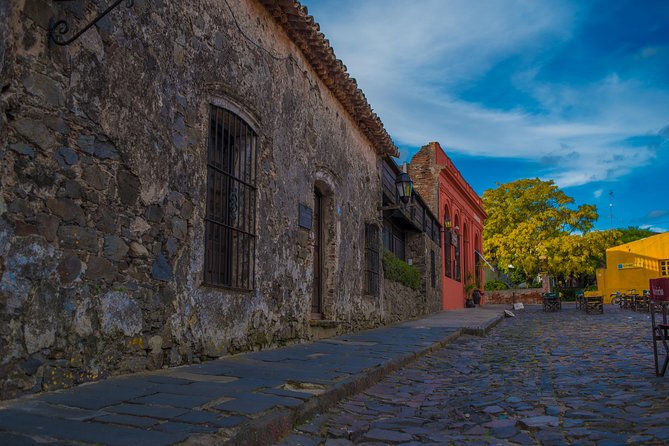
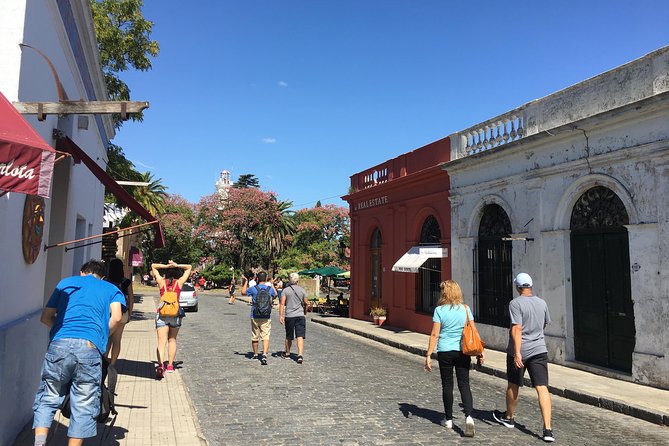
Colonia del Sacramento is on the southwestern coast of Uruguay, across the Río de la Plata from Buenos Aires. The town is officially tied to 1680-era origins, and what you see today reflects that mix of Portuguese influence and colonial-era design. UNESCO named Colonia a World Heritage Site in 1995, and you feel why fast: the streets and architecture don’t look like a generic “old town” set.
On this walk, the guide’s job isn’t just to point at buildings. It’s to explain how Portuguese urban planning and Portuguese-style details shaped the look of the streets you’re stepping into. One of the most memorable things in Colonia is how the town’s old parts feel walkable and human-scale, even when you’re moving through major landmarks.
If you’re craving a break from Buenos Aires energy, Colonia is a solid change of pace. The pace slows naturally because the historic center is compact and designed for walking. It’s the kind of place where you can see the headline sites and still end up discovering smaller corners.
The guided city tour: UNESCO core sites, focused and efficient
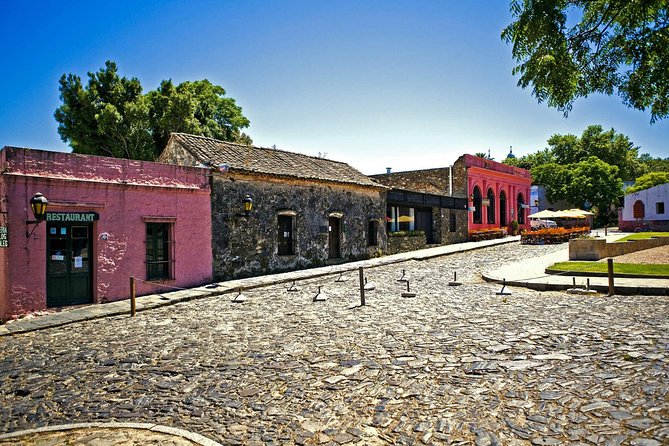
The morning portion is built around a structured guided look at the historic center. Your route starts at the Radisson Hotel Colonia del Sacramento and then transitions into the main sights on foot.
The anchor here is the old-town foundation: the Church Matrix, described as the oldest in the country, plus the Municipal Museum. You’ll also learn about the 17th-century port and how it fits into the river setting. That port detail is key because Colonia’s identity is tied to water—routes, arrivals, trade, and conflict all flowed through this riverside geography.
The guide’s strength on this trip shows up in real ways: they translate the place into story form. Reviews specifically mention guides giving comprehensive context about Uruguay and Colonia, and the best part is how that context changes what you notice as you walk. A door isn’t just a door. A street slope isn’t random. The town’s layout starts making sense.
One practical note: this guided portion includes an admission ticket for the stop tied to the tour’s main visit. Food and drinks are not included, so once the walking tour is done, you’ll need to plan your own lunch and drinks in town.
La Calle de los Suspiros and the Portuguese street logic
Some towns are famous because of big monuments. Colonia also works because of small street engineering details, and you see that early in the route.
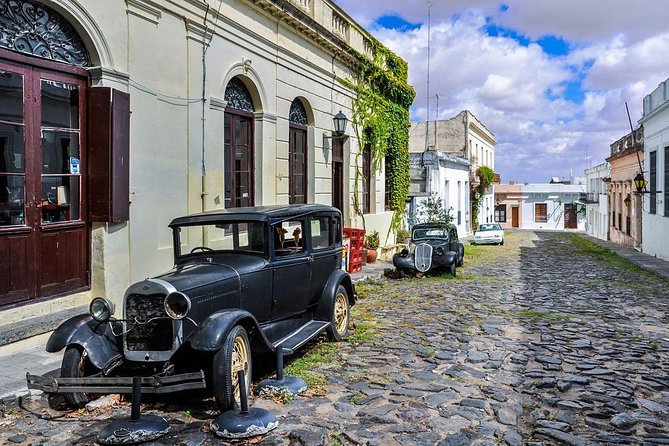
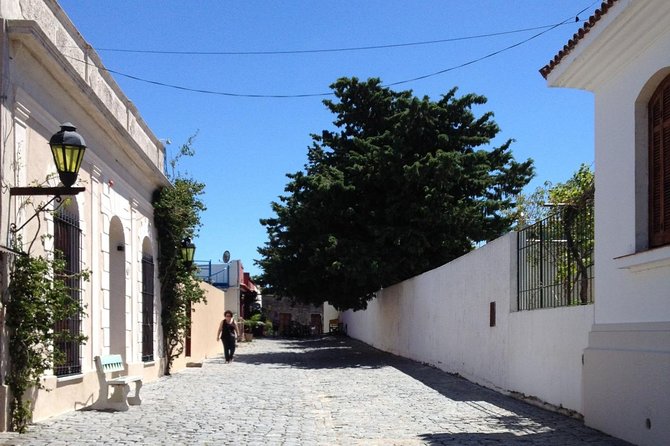
La Calle de los Suspiros is a narrow street that runs from the Plaza Mayor down toward the Río de la Plata. It’s cobbled and Portuguese in character, and the street design funnels water through a drainage channel rather than relying on sidewalks. The houses along it are from the first half of the 18th century, with stone walls, tile roofs, and ceramic floors. Even the preserved gabled-roof houses have small wooden doors and windows—another reminder of how space and architecture were shaped by the era.
This stop is short (it’s listed as 15 minutes), but it’s worth it because it helps you read Colonia. When you understand why the street slopes the way it does, you stop treating the Old Town like a museum display and start seeing it like a working town that adapted to its environment.
Puerta de la Ciudadela: a defensive entrance with pirate pressure
Next up is Puerta de la Ciudadela, built in 1745 on orders connected to the Portuguese governor Vasconcellos. The door’s origin is tied to the portico-like entrance to the colony, and it sat behind protective fortifications—thick walls that made it harder for attackers to get in.
The context here is what makes the stone feel alive. You’ll hear how the area was a frequent target of pirate attacks, plus attacks associated with Spanish and English rivalries. That mix of European power struggles is part of why Colonia’s architecture feels layered: it’s not one empire telling one story. It’s a tug-of-war over trade routes along the Río de la Plata.
Again, this is a quick stop (15 minutes). Think of it as a “set the stage” moment. It frames what you’re walking through next—especially when you keep seeing Portuguese-style details that reflect the influence of those earlier rulers.


Faro de Colonia: red flashes, river light, and old tower re-use
The Faro de Colonia del Sacramento is the kind of sight you notice even if you only spend a few minutes looking. It was built in January 1857 and includes distinct light behavior: two red flashes every nine seconds. If you’re there at the right moment, that rhythm is a neat way to understand the lighthouse as a tool, not just a photo prop.
You’ll see a circular tower of white masonry with a dome featuring white and red radial stripes. The lighthouse is described as having a square base with a cylindrical tower rising to the lantern. It also ties back into the older landscape: it was built on one of the old towers connected to the Convent of San Francisco ruins at the foot of the lighthouse.
The stop is listed as 5 minutes, but the details make it memorable. Plus, lighthouses always do a good job of grounding the town in its geography. Colonia exists because ships needed to find it.
Basilica del Santísimo Sacramento: a back-lit monstrance focal point
The last listed highlight is the Basilica del Santísimo Sacramento. The standout detail is the altar feature: a backlit semi-circular alcove that houses a very large monstrance. The exterior brickwork shows Portuguese influence, which matches the rest of the town’s architectural character.
This stop is short (10 minutes), but it’s visually different from the streets and fortifications you’ve been seeing. It gives you a break from the “defense and navigation” narrative and brings you into the spiritual and cultural side of the Portuguese-colonial blend.
If you like architecture that tells you something about what people valued, this is the stop that tends to stick.
Lunch time in Colonia: plan for free exploring, not just photos
After the guided portion, you’ll have time on your own to eat and explore. Reviews describe this free window as roughly 3 to 3.5 hours, and that timing is usually the sweet spot for a town like this: long enough for lunch, short enough that you don’t feel stuck waiting around.
Use the free time to slow down. The historic center is compact, so you can wander out beyond the headline stops and still feel like you’re seeing the town, not just ticking boxes. One practical tip from experience on similar routes: Colonia can be hot in season, so plan to take shade breaks. People mentioned using gelato shops as a cooling reset, which is exactly the kind of “small plan” that makes a big difference on a long day.
Also, keep an eye out for local stray dogs. One guide shared that the dogs are taken care of by locals and can be very sweet. It’s a gentle reminder that you’re visiting a real town, not a fully controlled tourist village.
Price and value: what you get for $248 (and what you still pay for)
At $248 per person, this isn’t a budget day trip. The honest value question comes down to what you’d do if you weren’t on the tour.
Here’s what’s included that directly saves effort:
- Professional guide (the walking tour and the context)
- Hotel pick-up and drop-off (you don’t have to coordinate transport to the ferry)
- Ferry tickets round-trip
- Colonia city tour
What’s not included:
- Food and drinks
So you’re paying for reduced friction. If you’re the kind of traveler who gets stressed about ports, check-in, and border timing, the included transfers and guided ferry flow can be worth a lot. On the other hand, there’s a very real pricing complaint in the mix: some people feel the tour charges too much for a day built around a short ferry crossing plus a relatively limited walking tour window.
My take for your decision: if you want the experience design—everything planned, a guide to interpret the architecture and history, and someone keeping the timeline from unraveling—then the price can make sense. If your goal is only to reach Colonia and you’re comfortable handling tickets and walking on your own, this can feel pricey.
Either way, budget at least one solid meal in Colonia. Food is part of the day here, not an add-on.
Which traveler benefits most from this premium format?
This trip is best if you’re trying to do Uruguay in one day without turning it into a logistical puzzle.
It fits well for:
- Families and people traveling with kids (the tour is noted as kid-friendly)
- First-timers to Uruguay who want a guided launch into the country’s story
- Travelers who value short, focused stops plus time to wander
- Anyone who prefers small-group touring (maximum 15)
It may be less ideal if:
- You hate early mornings and long border processing windows
- You want maximum free time with minimal guiding
- You’re strongly price-driven and plan to DIY every part
If you fall into the “I want a clean, guided day with no stress” camp, this premium style usually delivers.
Should you book the Colonia del Sacramento day trip?
If you’re short on time in Buenos Aires and want a real day trip into Uruguay, I’d seriously consider booking. The winning combo is guided understanding + included ferry/transfer logistics, plus the fact that Colonia is genuinely rewarding to walk through even beyond the main landmarks.
I’d especially book if:
- You want the guide to explain why the streets, forts, and buildings look the way they do.
- You’d rather spend your energy on lunch and wandering than figuring out port timing.
- You like small-group experiences more than large group chaos.
Skip it or rethink it if the price makes you pause for purely practical reasons. In that case, Colonia can be reachable DIY, and you might feel the tour is charging for convenience rather than for content.
FAQ
What time does the tour start?
The meeting/start time is 7:00 am.
Is a passport required for this trip?
Yes. A current valid passport is required on the day of travel, and passport details are needed at booking.
How many people are in the group?
This experience has a maximum of 15 travelers, so it stays fairly small.
What’s included in the price?
The tour includes a professional guide, hotel pick-up and drop-off, ferry tickets, and a Colonia del Sacramento city tour.
What are the main stops in Colonia del Sacramento?
You’ll visit Colonia del Sacramento highlights including La Calle de los Suspiros, Puerta de la Ciudadela, Faro de Colonia del Sacramento, and Basilica del Santísimo Sacramento, with a guided city tour portion as well.
Is food included?
No. Food and drinks are not included, so you’ll need to budget for lunch while you have free time in town.