REVIEW · BUENOS AIRES
From Colonialism to Eclecticism, Buenos Aires arquitectonica
Book on GetYourGuide →Operated by Viajes de Juani tours · Bookable on GetYourGuide
Buildings talk on this Buenos Aires walk. This 3-hour architecture tour connects the city’s famous landmarks with lesser-noticed facades, walking from Plaza de Mayo into Microcentro and up along Corrientes Avenue toward Teatro Colón. You’ll hear how the style changes over time, with stops that range from colonial-era civic buildings to later 20th-century statements.
What I love most is the way the guides bring the details to life. With Juan Ignacio and Loli, you get facts that land fast: names, time periods, and the kind of design context that makes you look twice at plain stone and iron. I also liked the cultural handoff at the end, especially the mate tasting, paired with a traditional Argentinean snack that feels like part of the neighborhood rhythm, not a random add-on.
One consideration: this is a walking tour, and it moves through some busy areas. If you’re not into lots of street-level seeing (sun, uneven sidewalks, stopping for photos), plan for a slower day after.
In This Review
- Key things that make this architecture tour worth your time
- From Colonial to Eclectic: what this tour actually shows
- Plaza de Mayo meeting point: get your bearings fast
- Cabildo, Cathedral, Casa Rosada, and Banco Nación: the city’s official face
- Heading north via Reconquista Street: where eras overlap
- Banco Hipotecario: the Brutalist facade that changes the mood
- Centro Cultural Kirchner and the Post and Telegraph Palace facade
- Corrientes Avenue: Gran Rex and the Opera as cultural magnets
- Obelisco to Plaza de la República: political symbolism meets skyline shots
- Plaza Lavalle: Courts Palace, Roca School, and the mate break
- Finishing at Teatro Colón: when exterior viewing turns into a choice
- Price and value: what $25 buys you in the real world
- What to bring and how to pace yourself
- Who should book this tour, and who might skip it
- Should you book From Colonialism to Eclecticism, Buenos Aires arquitectonica?
- FAQ
- How long is the Buenos Aires architecture tour?
- Where does the tour start?
- What group size is it?
- What languages are offered?
- What is included in the ticket price?
- Is the entrance to Teatro Colón included?
- Is lunch included?
- Can the tour be customized?
- Is free cancellation available?
Key things that make this architecture tour worth your time
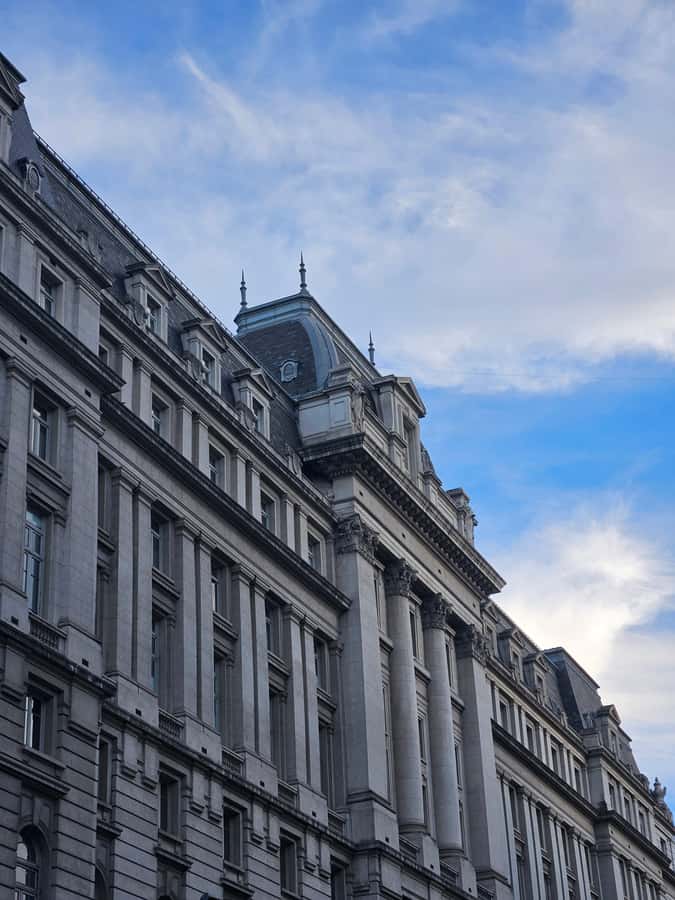
- A real style timeline on foot: you move from Plaza de Mayo outward and watch architectural tastes shift as the city expands.
- Off-the-classic-circuit facts: you’ll spend time on buildings you may not pick on your own.
- Brutalist meets civic grandeur: the Banco Hipotecario stop turns a strong visual style into an easy story to remember.
- Corrientes Avenue icons, explained: Gran Rex and the Opera aren’t just street names once you know what they represent.
- Mate tasting with context: you learn the basics and tradition, not just the drink.
- Small group pace: limited to 4 people, so questions and detours feel natural.
From Colonial to Eclectic: what this tour actually shows
This walk is built around one idea: in Buenos Aires, architecture is a public record. You’ll cover major institutions, but the payoff is how the guide connects them to politics, culture, and changing ideas about what buildings should do.
The route isn’t random. You start in the political heart near Plaza de Mayo, then you head north through Microcentro, where different eras overlap on the same streets. By the time you reach Corrientes Avenue, the city starts feeling like it performs. That’s when buildings stop being background and start acting like landmarks in the way locals treat them.
If you like “then and now” stories—how neighborhoods morph and reuse the past—you’ll enjoy how the tour keeps pointing you toward pattern recognition. And if you prefer one style over another, the group can customize based on your interests, so you’re not stuck staring at everything equally.
You can also read our reviews of more tours and experiences in Buenos Aires.


Plaza de Mayo meeting point: get your bearings fast
You meet at Bolívar 65, right at the intersection of Bolívar and De Mayo Avenue in the Plaza de Mayo area. This is a smart place to start because it puts you close to the key civic buildings and gives you a sense of the city’s original center.
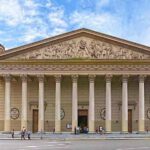
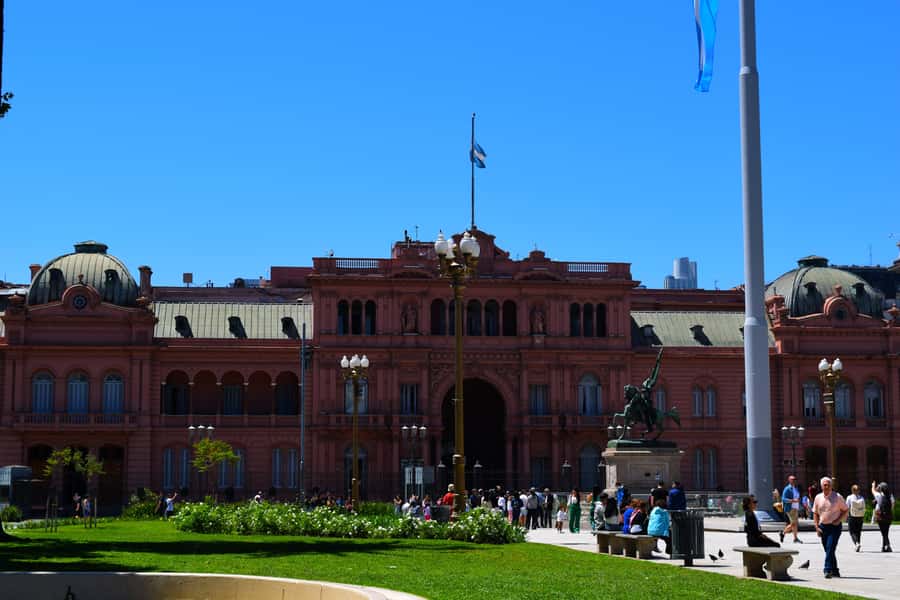
Early in the walk, you see the Cabildo, plus the Metropolitan Cathedral and the Casa Rosada. The Banco Nación stop fits in here too, because the tour doesn’t treat these as separate sights. It treats them as a cluster with shared influence: government power, public identity, and the look of authority.
I like how this first stretch helps you “read” the city. You start noticing façade rhythm, entry placement, and the way architects aimed to signal legitimacy. Even if you’re not an architecture nerd, you’ll get the language you need to enjoy what comes next.
Cabildo, Cathedral, Casa Rosada, and Banco Nación: the city’s official face
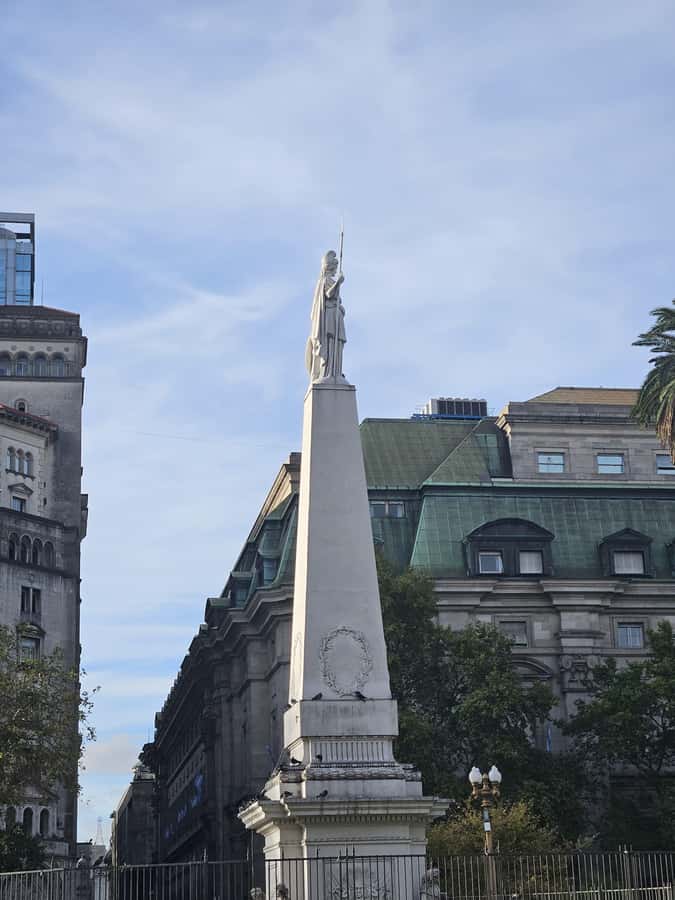
The classic Buenos Aires circuit usually hits big names. This tour goes one step further by explaining what those buildings were trying to communicate.
You’ll spend time at the Cabildo and Metropolitan Cathedral, then move along to Casa Rosada and Banco Nación. The learning goal here is simple: understand why central Buenos Aires looks the way it does. These buildings aren’t just pretty. They’re statements about who held power and how the city wanted to be seen.
One practical note: Plaza de Mayo and the surrounding government area can be busy. You’ll still get photo chances, but expect street-level hustle. If you’re aiming for crisp photos, wear sunglasses and keep your phone ready during the guide’s “look here” moments.
Heading north via Reconquista Street: where eras overlap
After you finish the Plaza de Mayo cluster, you head north on Reconquista Street. This part of the route is all about showing you how Microcentro can hold multiple styles side by side without blinking.
The streets here feel layered—commercial, administrative, and cultural at the same time. That means the buildings you pass aren’t just one style. They’re mix-and-match responses to different periods and different design priorities.
The tour uses this walking corridor to bridge what you saw earlier with what you’ll see later. You start noticing contrasts more clearly: older civic forms vs. later institutional ambition, and decorative details vs. cleaner, more modern lines.
Banco Hipotecario: the Brutalist facade that changes the mood
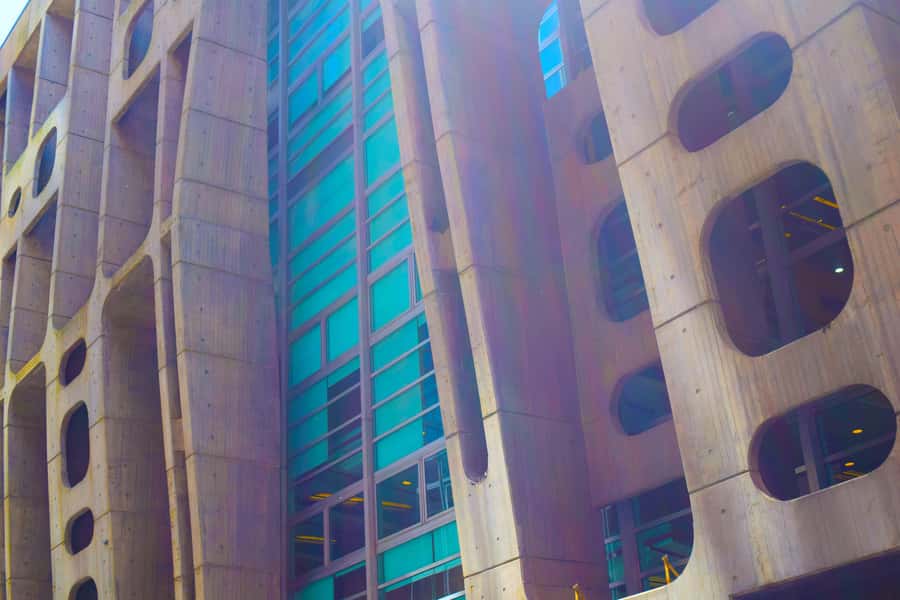
One of the best-known “not-in-every-photo” moments on the walk is the stop at the Banco Hipotecario headquarters and its Brutalist facade.
Even if Brutalism isn’t your favorite style, the way the guide explains it helps. Instead of treating it like a visual shock, you learn how it fits into broader shifts in architecture—ideas about function, mass, and how a building should project permanence in a modern city.
This stop also works well because it breaks the rhythm. You’ve just been in the more traditional civic atmosphere. Then suddenly you’re in a style that feels more direct and less ceremonial. That contrast makes the rest of the tour easier to understand.

Centro Cultural Kirchner and the Post and Telegraph Palace facade
As you continue, you reach the Centro Cultural Kirchner, and the tour connects it to the former Palacio de Correos y Telégrafos—the Post and Telegraph Palace.
This is a great mid-tour stop because it turns “historic building” into “historic job.” Communication infrastructure matters. It shaped how cities functioned and how people moved information across distance, and the architecture reflects that importance.
You’ll see the facade and hear its story, with enough context to understand why a building that once handled mail and telegraph service still matters. Even if you skip the inside of places like this on your own, the exterior-focused explanation here gives you something usable: a way to appreciate the building as a piece of city technology and civic ambition.
Corrientes Avenue: Gran Rex and the Opera as cultural magnets
Then you shift into the energy of Corrientes Avenue, often described as the center of nightlife and culture. At street level, it doesn’t take much imagination to see why. It’s full of show-business momentum.
The tour passes by two iconic anchors: the Gran Rex and the Opera. You’ll hear about their heyday and why they remain gathering places for performances today. The value here is that you don’t just learn names. You learn how these venues fit into the social life of the city.
This stretch can feel crowded, so keep your expectations flexible. If you’re sensitive to noise, plan to keep headphones off and let the guide’s commentary do the heavy lifting. The stop-and-walk rhythm helps, and you’ll get photo chances without the tour turning into a long standstill.
Obelisco to Plaza de la República: political symbolism meets skyline shots
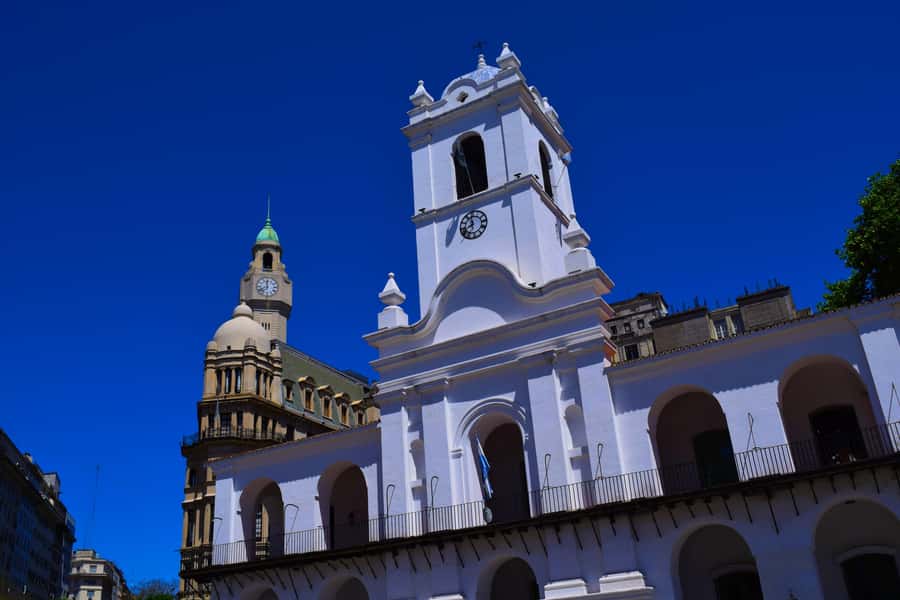
The first big arc of the tour ends at the Obelisco and Plaza de la República. This is where the walk makes its political and social connection more explicit.
You’ll learn about the Obelisk’s history and its role in the country’s life—how it became a reference point for people, events, and public identity. This matters because Buenos Aires isn’t just a museum city. Its landmarks still function as meeting points for collective moments.
Then you keep going with a brief pause at the Obelisk staircase, moving toward Diagonal Norte. You’ll get a panoramic view opportunity for one of the busiest intersections, the area around Av. 9 de Julio and Corrientes. If you’ve never stood there, it’s a fast education in how scale works in Buenos Aires: the city can feel both grand and cramped, often in the same block.
Plaza Lavalle: Courts Palace, Roca School, and the mate break
In the last segment, the tour arrives at Plaza Lavalle, where you see the Courts Palace and the Julio Argentino Roca School.
This part is especially useful if you like “civic buildings that educate.” Schools and courts tell you what the city values and how institutions wanted to look when they served the public. The guide helps you connect the design language to the role each building played.
Then comes one of the tour’s most enjoyable practical breaks: mate tasting. You’ll have the drink and learn a little about its history and tradition in Argentine culture. This isn’t presented like a performance. It’s more like a short cultural lesson you can actually carry home with you. And yes, you’ll have time with the group for a calm pause before the final destination.
Finishing at Teatro Colón: when exterior viewing turns into a choice
The walk finishes at Teatro Colón, one of Buenos Aires’s most famous performance spaces. The tour focuses on getting you to the area and soaking up the sense of place from the outside.
There’s an important practical detail: entrance to Teatro Colón isn’t included, so if you want to go inside, you’ll need to book or pay for the guided visit separately. The good news is the tour gives you the option rather than forcing it. If you’re tired from walking, you can simply enjoy the exterior and the street atmosphere.
This final stop feels like a reward for the earlier parts. You’ve already seen how the city signals importance through architecture. Now you end at one of the places where culture itself becomes architecture.
Price and value: what $25 buys you in the real world
The price is $25 per person, and for a 3-hour walk it can feel like a deal if you care about more than quick photos.
Here’s what’s included:
- an English-speaking tour guide throughout (Spanish and English are offered)
- water
- a traditional Argentinean snack
- mate tasting
Also, the tour is built for small groups (up to 4 people). That’s not just a comfort perk. It changes the experience. You can ask questions and get answers tailored to what you’re noticing in front of you. A large-group tour often rushes you past the “wait, why is that building like that?” moments. This one is designed to slow down just enough.
What’s not included:
- entrance to Teatro Colón
- lunch
So if you’re counting costs, think of it as a guided cultural walk plus tasting and snack. Plan lunch separately.
What to bring and how to pace yourself
This tour is outdoors and you’ll be moving. Bring:
- comfortable shoes
- sunglasses
- a hat
- sunscreen
- comfortable clothes
If you’re photo-minded, you’ll want to wear something that lets you move quickly for quick shots. Also, don’t overpack your bag. You’ll want your hands free for mate tasting moments and for grabbing your water.
The mate break helps with pacing, but you still need to be ready for a steady walk across central Buenos Aires.
Who should book this tour, and who might skip it
I think this tour is a strong fit if you want:
- architecture explained in plain terms, not in jargon
- a walk that ties buildings to culture and social life
- time with a small group where questions are welcome
- a real Buenos Aires taste moment via mate
You might choose something else if you hate walking, dislike crowded city-center streets, or only want interior access. Since Teatro Colón entrance is optional and not included, people who want a strict “inside only” itinerary may get frustrated.
Should you book From Colonialism to Eclecticism, Buenos Aires arquitectonica?
Yes, if you like your Buenos Aires practical and personal. For $25, you’re getting a focused 3-hour route through major civic buildings and iconic cultural spots, plus the kind of architecture storytelling that makes the city feel readable instead of random.
The strongest reasons to book are the small-group format and the guide team’s style of teaching—Juan Ignacio and Loli share details and answer questions with real confidence, and the mate tasting lands as an Argentine cultural moment that isn’t forced. If you’re the type who usually walks past buildings without noticing, this tour flips that switch.
FAQ
How long is the Buenos Aires architecture tour?
It lasts about 3 hours.
Where does the tour start?
The tour starts in Plaza de Mayo at the intersection of Bolívar 65 and De Mayo Avenue.
What group size is it?
It’s a small group limited to 4 participants.
What languages are offered?
The tour is offered in Spanish and English, with an English-speaking guide throughout.
What is included in the ticket price?
The ticket includes the guide, water, a traditional Argentinean snack, and mate tasting.
Is the entrance to Teatro Colón included?
No. Entrance to Teatro Colón is not included, though there is an option to take the guided visit inside.
Is lunch included?
No. Lunch is not included.
Can the tour be customized?
Yes. You can customize the tour based on your tastes and/or interests.
Is free cancellation available?
Yes. You can cancel up to 24 hours in advance for a full refund. You can also reserve now and pay later.