REVIEW · BUENOS AIRES
Buenos Aires: 7 Hour Small Group “BA 101” Walk
Book on GetYourGuide →Operated by BuenosTours · Bookable on GetYourGuide
One day, four neighborhoods, zero guessing. This small group walk uses an English expert guide to connect Recoleta Cemetery, Plaza de Mayo, and San Telmo Market to how Buenos Aires actually thinks, eats, and celebrates. The main tradeoff: it’s a full 7 hours with plenty of walking, so it’s not a fit if you need wheelchair access or you’re traveling with a cold.
You start in Barrio Norte near El Ateneo Grand Splendid and finish in San Telmo near Plaza Dorrego, after coffee, a local lunch, and a few public transport hops. The route is built around big-photo landmarks like Recoleta Cemetery and the San Telmo Indoor Market, so you get both the headlines and the neighborhood texture in one day.
In This Review
- Key highlights that make BA 101 worth your day
- Buenos Aires in One Day: What This 7-Hour Walk Actually Gives You
- Starting in Barrio Norte near Santa Fe and Callao: Bookstore wow and education-square context
- Palacio de Aguas Corrientes: The city’s surprises aren’t always museums
- Recoleta Cemetery and Plaza Francia: Evita’s legacy plus colonial-era architecture
- San Nicolas: Teatro Colón, the Supreme Court area, and Plaza Lavalle
- Avenida 9 de Julio and Corrientes: The Obelisk, the green BA sign, and an old café stop
- Plaza de Mayo and Casa Rosada: The founding square and the balcony story
- Florida Street and Galería Güemes: Pedestrian shopping with architecture texture
- San Telmo’s Plaza Dorrego, Indoor Market, and Defensa Street: antiques, ironwork, and cobbles
- Price and value: Why $160 makes sense for a 7-hour day
- Pace and comfort: How to enjoy a long walk without getting grumpy
- The guide factor: How Tracy and Chris-shaped stories can change your day
- Should you book BA 101?
- FAQ
- Where does the BA 101 walk start and end?
- How long is the tour?
- How big is the group, and what language is the guide?
- What food and drinks are included?
- Are entrance fees included?
- Do you use public transport during the tour?
- Is the tour suitable for kids or everyone with mobility needs?
Key highlights that make BA 101 worth your day
- Recoleta Cemetery + Eva Perón (Evita): elaborate tombs and a very specific Buenos Aires story all in one place
- El Ateneo Grand Splendid: a stunning bookstore that’s also a clue to the city’s past tastes and changing eras
- Metro and local transport included: you don’t waste time figuring out how to move between districts
- Avenida 9 de Julio + Obelisk photo moments: the classic skyline view, plus the green BA photo sign
- Teatro Colón and Plaza Lavalle: culture and power in the same corridor, with context that makes it click
- San Telmo Indoor Market + Defensa Street: iron-market browsing and cobblestone antiques without guesswork
Buenos Aires in One Day: What This 7-Hour Walk Actually Gives You
BA 101 is the kind of tour that helps you orient fast. Buenos Aires can feel huge, so the value here is that you get a guided path through the parts you’ll almost certainly want to revisit: Barrio Norte, Recoleta, the City Center, and San Telmo. It’s a semi-private style walk limited to 7 participants, which means you can ask questions without shouting over a megaphone—or a crowd.
You also get practical “how-to” experience, not just monuments. The itinerary mixes major sights with coffee, lunch, and public transport (bus/subway) taken during the tour, so you learn the city’s rhythm as you move through it. If your plan is only a day in town, this is a strong way to build a to-do list for later.
The realistic drawback is time-on-feet. Seven hours ends at 5pm, and the tour is not framed as a slow stroll. Wear comfortable shoes, pace yourself, and you’ll be happier with every plaza.
You can also read our reviews of more tours and experiences in Buenos Aires.

Starting in Barrio Norte near Santa Fe and Callao: Bookstore wow and education-square context
The tour begins at 10am in the Recoleta/Barrio Norte area, near the corner of Av. Santa Fe and Av. Callao, then you’ll work your way across the city. This first stretch is a smart warm-up because Barrio Norte is where Buenos Aires shows off its “polished” side—tree-lined streets, elegant buildings, and classic urban design.
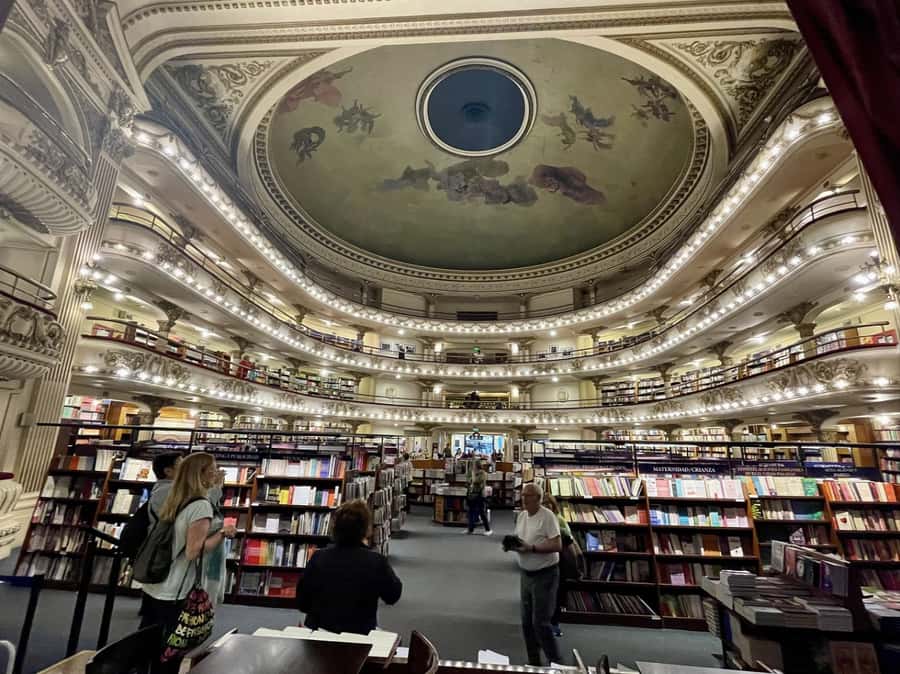
One stop that turns heads right away is El Ateneo Grand Splendid. It’s famous for being a bookstore inside a former theater, and your guide helps you read what that transformation says about the city—how culture keeps reusing space instead of losing it. Even if you’re not a book shopper, you’ll likely want a minute just to look.
Then you’ll pass Plaza Rodriguez Peña and the Palacio Sarmiento, Argentina’s Ministry of Education. This is where a walking tour earns its keep: instead of treating plazas like scenery, it explains why they’re shaped the way they are and how institutions grew around them.
You also get a look at how the city routes movement. The tour includes public transport, so you’re not only walking; you’re learning transit connections that can save you time later.
Palacio de Aguas Corrientes: The city’s surprises aren’t always museums
After the early neighborhood highlights, you’ll visit Palacio de Aguas Corrientes, described as a stunning surprise building with a fascinating story behind it. This stop is valuable because it reminds you Buenos Aires didn’t just develop through palaces and churches. It also grew through infrastructure—systems that affected daily life long before modern conveniences.
Why I like this for first-timers: it breaks the usual “plaza, cemetery, cathedral, repeat” pattern. A tour that includes at least one unexpected architectural stop helps you see Buenos Aires as a living place, not a checklist.
You’ll likely enjoy this even more if you like architecture details, but it also works if you just want the guide’s explanation in plain language.
Recoleta Cemetery and Plaza Francia: Evita’s legacy plus colonial-era architecture
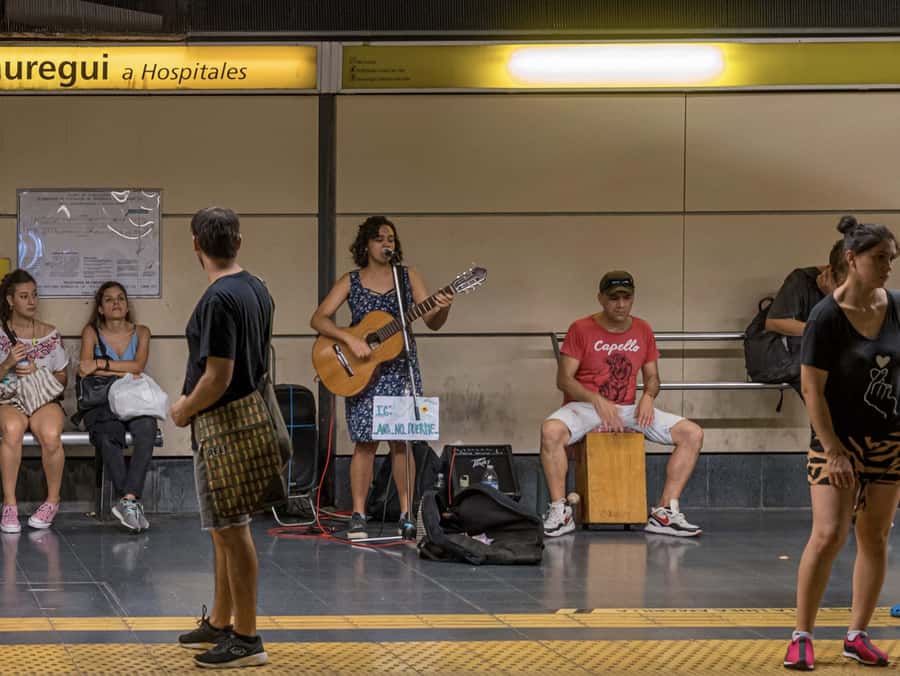
Recoleta is where the tour hits one of its biggest anchor points: Recoleta Cemetery. You’re not just looking at graves; you’re walking through a city within a city, packed with elaborate tombs of Argentina’s rich and famous. The guide’s job here is to help you understand why these monuments look the way they do and what they represent culturally.
The cemetery’s most famous connection is the final resting place of Eva Perón (Evita). Seeing that alongside the surrounding mausoleums gives you a clearer sense of how public memory works in Buenos Aires—how personality, politics, and art-style symbolism all end up living together.
Next comes Plaza Francia and Our Lady of Pilar Church, highlighted as one of the best-preserved examples of colonial architecture. This is a good contrast after the cemetery: the day shifts from memorial space to preserved building heritage, and you’ll feel the city’s layered timeline as you walk.
One consideration: cemeteries can take more mental energy than people expect, especially with close-up tomb viewing. If you’re sensitive to that kind of atmosphere, take short pauses and let the guide steer your attention.
San Nicolas: Teatro Colón, the Supreme Court area, and Plaza Lavalle
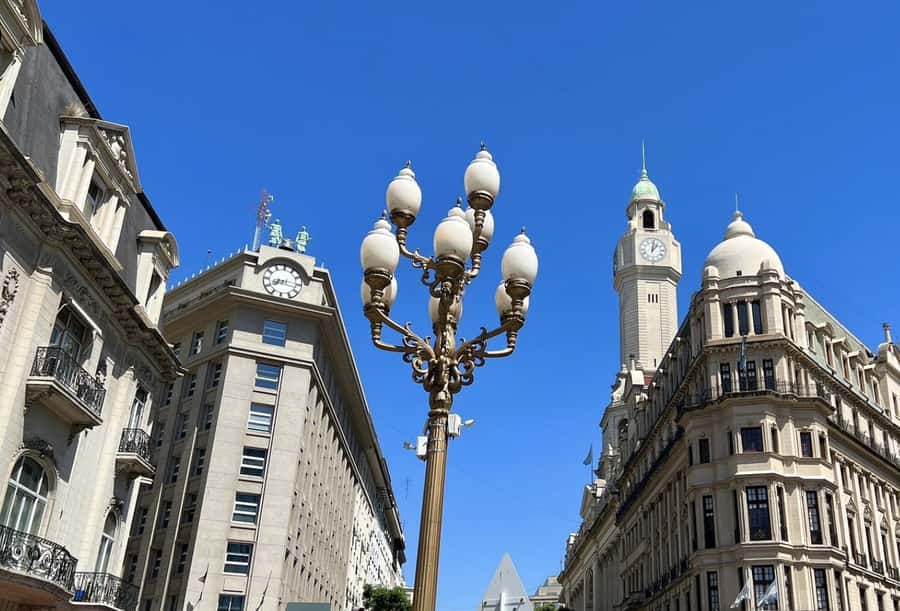
After Recoleta, the route continues into San Nicolás, where culture and power sit side-by-side. You’ll see Teatro Colón, one of the most famous opera houses in the world. You don’t need to be an opera fan to appreciate the presence of Colón; the building signals what Buenos Aires wanted to be, and it helps explain why the city puts so much weight on arts and public spectacle.
Next you’ll stroll through Plaza Lavalle, including Palacio de Justicia de la Nación, home to Argentina’s Supreme Court. This part of the walk is where the guide’s Q&A style pays off. When you understand why the court and the arts district share the broader city center fabric, the landmarks stop feeling random.
This section also helps you learn orientation. You start to recognize corridors—how plazas link, where major streets start to broaden, and which areas tend to concentrate official architecture.

Avenida 9 de Julio and Corrientes: The Obelisk, the green BA sign, and an old café stop
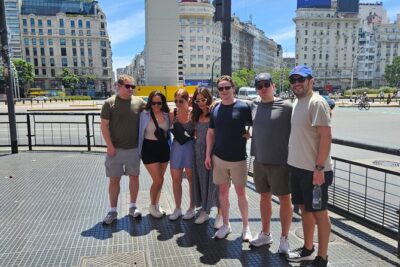
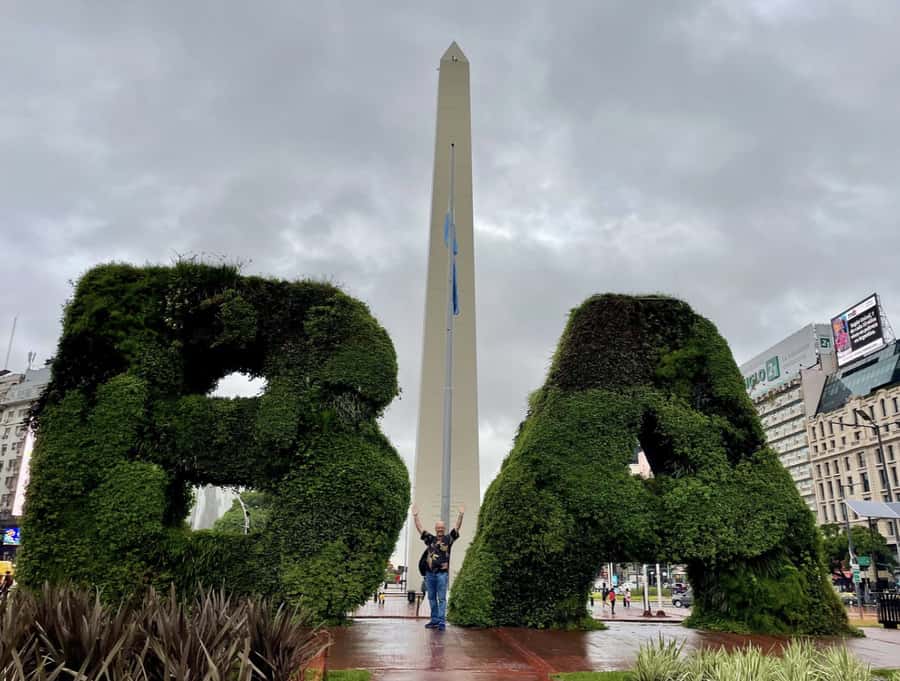
Then you hit Avenida 9 de Julio, known for being one of the widest avenues in the world, with the Buenos Aires Obelisco monument as the visual centerpiece. This is your classic skyline moment, and the tour gives you an intentional way to see it—without spending half the day hunting for the best angle.
There’s even a photo-op with the green BA sign. It’s simple, but it’s also practical. If you’re trying to get your bearings and capture proof you were really here, this cuts decision fatigue.
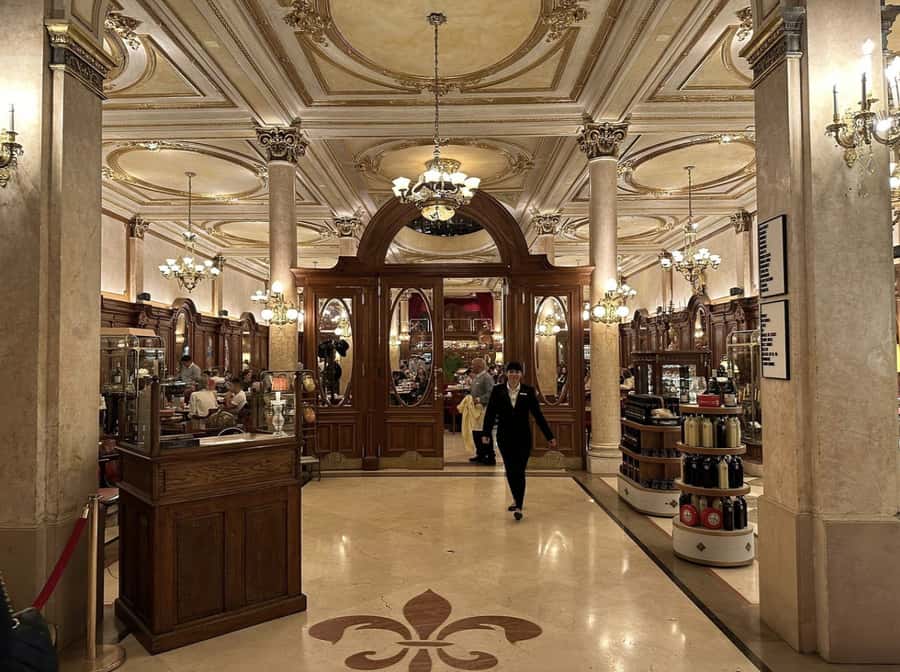
From there you head down Avenida Corrientes, nicknamed the street that never sleeps, and stop at Confiteria La Ideal, a restored old café. This is the kind of pause that helps the day feel human. You’re not just walking between points; you’re getting a “linger” moment in a historic place where people once did the same thing—grab something, talk, watch the street.
Plaza de Mayo and Casa Rosada: The founding square and the balcony story
The City Center stretch moves into Monserrat, and then you get to Plaza de Mayo. You’ll learn that the city was successfully founded in 1580, and this square is where it started growing outward. That date matters because it reframes the city’s landmarks: they aren’t random; they’re the scaffolding for centuries of political and civic life.
You’ll also see Casa Rosada, the Pink House, home to Argentina’s executive government branch. The balcony where President Perón and first lady Evita addressed crowds is a big storytelling moment on this tour. Even if you don’t know the political details, you’ll understand the symbolism of that balcony in Buenos Aires public imagination.
Then you’ll visit Buenos Aires Cathedral, described as where Argentina’s independence hero is laid to rest, and where Pope Francis used to give mass. Again, this is not just a look-at-building stop. The guide links why the cathedral matters to national identity and civic rituals.
You’ll also pass some of the oldest sites in the city, including the first church, street, and business, plus the oldest subway line in the southern hemisphere. Those details can feel abstract until they’re attached to where you’re standing. When you’re walking, the layers become clearer fast.
Florida Street and Galería Güemes: Pedestrian shopping with architecture texture
You’ll stroll along Florida Street, Buenos Aires’s main pedestrian shopping area, and check out Galería Güemes. This is a nice balance after the political center. It gives your brain a break while keeping the tour grounded in real urban life.
If you enjoy design, arcades, and the way buildings shape strolling, this section will feel rewarding. If you don’t, you can treat it as a breather before San Telmo, because it’s still part of how the city breathes—moving people, not just displaying monuments.
San Telmo’s Plaza Dorrego, Indoor Market, and Defensa Street: antiques, ironwork, and cobbles
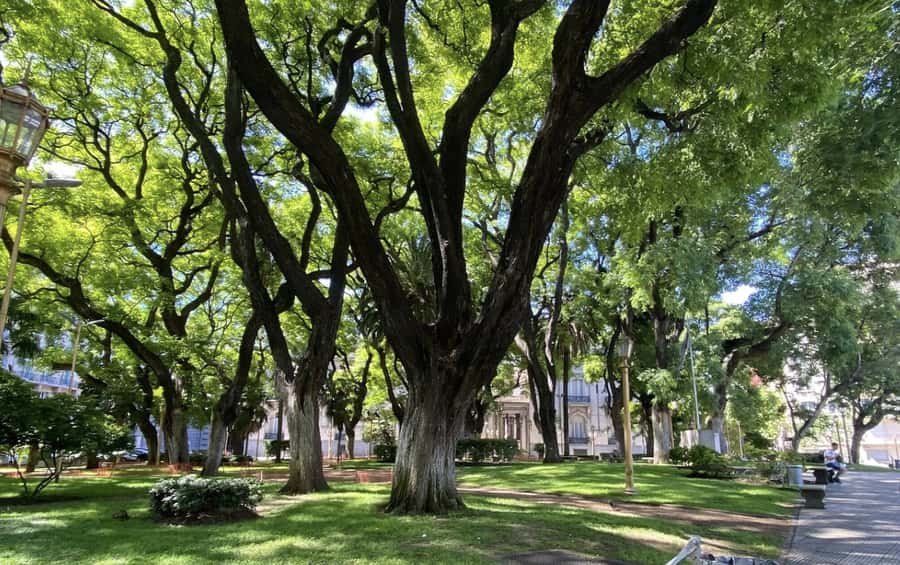
The final neighborhood is San Telmo, and it’s a strong way to end. The tour finishes around 5pm in San Telmo near lots of places to eat, drink, and shop—so you’re not locked into the tour experience once it’s over.
The centerpiece early on is Plaza Dorrego, one of the city’s oldest and most popular squares. It’s dotted with bars, restaurants, and handicraft sellers, which means you see how the neighborhood makes its social space. This is where you get the street-energy contrast to the more formal city center you saw earlier.
Then comes San Telmo Indoor Market, housed in an impressive iron structure built in 1897. It’s described as filled with antiques, souvenirs, and restaurants, alongside local vendors of fresh food and produce. This stop is valuable because it’s not only about objects. It’s about how locals shop and gather under a roof that still feels historic.
To wrap up, you’ll walk down Defensa Street, a cobblestone road famous for antique dealers and original Spanish and Italian architecture. Cobblestones change how you move, and that slow-down effect helps you notice details. It’s a good closing chapter after the long transit-and-plaza rhythm.
Price and value: Why $160 makes sense for a 7-hour day
At $160 per person for a 7-hour small-group tour, the big question is what you actually get besides walking.
Here’s the value logic:
- Entrance fees are included, including Recoleta Cemetery, which is listed as US$15+ per person value.
- You get morning coffee (or an equivalent-priced drink) and a tasty local lunch with main + beverage.
- Public transport used during the tour is included (bus/subway), plus a bottle of water.
- You’re not just getting sights; you’re getting an English live guide who answers questions and adds culture and fun facts as you go.
If you were doing this on your own, you’d spend time figuring out transit routes, paying for at least one major entrance, and trying to stitch together lunch with the right timing. This tour bundles those headaches into one guided day. The small group cap matters too—7 people is small enough that you can ask follow-ups.
What you should plan for separately: your transport to and from the start/end points. The tour starts at 10am and ends in San Telmo near fun spots, so build your own arrival plan.
Pace and comfort: How to enjoy a long walk without getting grumpy
This isn’t a wheelchair-friendly itinerary and it’s not aimed at people who want minimal walking. The day runs roughly from 10am to 5pm, and it mixes outdoor plazas with indoor/architectural stops.
Practical advice:
- Bring comfortable shoes. Cobblestones on Defensa Street can wear you down faster than you expect.
- Expect a steady flow of walking between districts, plus brief transit segments.
- If you’re sensitive to crowds, plan to take quick breaks when the guide stops for explanations.
Also, if you’re traveling with a cold, this tour is noted as not suitable. That’s a sign it’s meant to keep moving rather than slow down for health needs.
The guide factor: How Tracy and Chris-shaped stories can change your day
The reviews emphasize that the guides bring more than facts—they bring a way of talking about the city that makes it stick. For example, Tracy is praised for local history and language proficiency paired with a friendly approach. Chris is praised for history lessons with personality and for answering questions while pointing out details you’d likely miss solo.
That matters because Buenos Aires is full of landmarks that look obvious on a map. The difference is knowing what to look for: the reason a building matters, why a plaza is shaped the way it is, and what a name like Palacio Sarmiento signals about institutions in the city.
So yes, you’ll see famous places. But the higher value is how the guide ties them together in a way that helps you make decisions later—where to return, what to read about, and what to prioritize.
Should you book BA 101?
Book BA 101 if you want a smart first-day route that covers the essentials—Recoleta, City Center, and San Telmo—while keeping you fed, hydrated, and moving with local transport built in. The $160 price feels more like a “day package” than a pure sightseeing fee because lunch, coffee, entrance to Recoleta Cemetery, and transport are part of the deal.
Skip it or rethink if you need wheelchair access, are traveling with a cold, or you’d struggle with 7 hours of walking. Also think twice if you’re the type who hates structured days; this tour is guided and paced to fit multiple neighborhoods.
If your schedule gives you only one day and you want to come away knowing where you’ll spend more time, this walk does exactly that.
FAQ
Where does the BA 101 walk start and end?
It starts at 10am in the Recoleta/Barrio Norte area near the corner of Av. Santa Fe and Av. Callao. It ends around 5pm in San Telmo near plenty of places to eat, drink, and shop. Exact meeting spot instructions are sent in your confirmation email.
How long is the tour?
The duration is 7 hours.
How big is the group, and what language is the guide?
The tour is a small group limited to 7 participants, and the guide speaks English.
What food and drinks are included?
You get morning coffee (or an equivalent-priced drink), plus a local lunch that includes main + beverage. You also receive a bottle of water.
Are entrance fees included?
Yes. Entrance fees are included for historical sites, including Recoleta Cemetery.
Do you use public transport during the tour?
Yes. All public transport taken during the tour is included (local bus or subway).
Is the tour suitable for kids or everyone with mobility needs?
It’s not suitable for children under 10, wheelchair users, people with a cold, or people over 95 years.